New Mexico isn't like most states when it comes to accident coverage. It's a fault-based state, it carries one of the highest uninsured driver rates in the country, and its reporting rules trip up plenty of longtime residents. This guide walks through New Mexico's fault system, what your policy actually covers, the steps to take at the scene, and when a local agent can save you real money.
Key Takeaways
- New Mexico is an at-fault state — the driver who causes a crash pays for damages
- State minimum liability coverage is $25,000/$50,000/$10,000, yet roughly 1 in 4 NM drivers carries none
- Pure comparative negligence lets you recover damages even if you're partially at fault
- Crashes over $500 in damage require immediate police notice and a written report within 5 days
- Uninsured/underinsured motorist coverage isn't optional advice in New Mexico — it's a financial necessity
Is New Mexico a Fault or No-Fault State?
New Mexico runs on a traditional tort/fault-based system. The New Mexico Office of the Superintendent of Insurance (OSI) is direct about it: when a driver is found at fault, that driver's insurance pays for the other party's property damage and medical expenses, up to policy limits.
That's different from no-fault states, where each driver's own insurer pays first regardless of who caused the wreck.
Minimum Liability Requirements
Under NMSA 1978, Section 66-5-215, New Mexico drivers must carry:
| Coverage | Minimum Required |
|---|---|
| Bodily injury, one person | $25,000 |
| Bodily injury, two or more people | $50,000 |
| Property damage | $10,000 |
These numbers get shorthanded as "25/50/10." They're the legal floor, not a recommendation — plenty of Santa Fe drivers find these limits fall short after a serious wreck involving medical bills or a totaled vehicle.
The Uninsured Driver Problem
Here's where New Mexico gets genuinely risky. According to the Insurance Research Council's 2025 report on uninsured and underinsured motorists, 24.1% of New Mexico drivers were uninsured in 2023 — the second-highest rate in the nation. The national average sits at 15.4%.
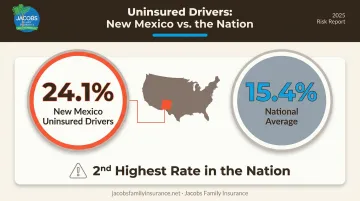
That means roughly one in four drivers you share the road with has no insurance backing them up, and if one of them hits you, their liability coverage simply isn't there to pay your bills. A local agent can walk you through uninsured motorist coverage options that fill this gap.
Comparative Negligence: Partial Fault Still Pays
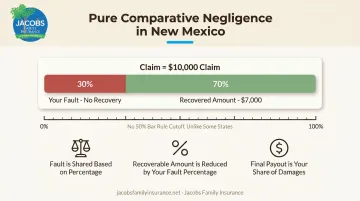
New Mexico follows pure comparative negligence, established in the 1981 case Scott v. Rizzo. This matters because:
- You can still recover damages even if you're 40%, 60%, or 90% at fault
- Your recovery gets reduced by your percentage of fault
- Unlike states with a 50% bar, there's no cutoff where you lose your right to claim entirely
For example, if you're found 30% at fault for a $10,000 claim, you'd recover $7,000, not zero. Given how easily fault gets split and how many uninsured drivers are on New Mexico roads, carrying coverage above the state minimum is worth a closer look.
What to Do Immediately After an Accident in New Mexico
The first few minutes after impact set the tone for everything that follows.
Safety First, Then Documentation
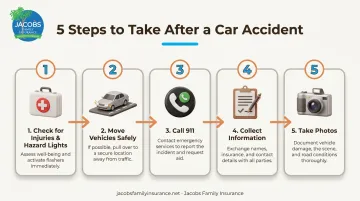
- Check for injuries and turn on hazard lights before doing anything else
- Move vehicles out of traffic only if it's safe to do so — leave them in place if anyone's hurt
- Call 911 and request police response
- Collect information: the other driver's name, license number, plate, insurance details, and contact info for any witnesses
- Take photos of vehicle damage, the scene, road conditions, and weather — especially relevant given New Mexico's mix of desert highway and icy mountain passes
Once the scene is documented, New Mexico's legal reporting requirements kick in. State law (NMSA 66-7-206) requires immediate police notice for any crash involving injury, death, or apparent property damage of $500 or more. A separate written report is due to NMDOT within 5 days under NMSA 66-7-207, though if an officer investigates and files a report, you typically don't need to file your own.
Mistakes to Avoid
- Don't admit fault at the scene, even casually. "Sorry, I didn't see you" can be used against you later.
- Don't sign anything the other driver hands you on-site.
- Don't accept a quick cash offer from the other driver to "handle it privately." It rarely covers the full cost once repairs or medical bills come in.
Once the scene is secure, call your insurance agent — not a call center, but someone who knows your policy and your area. Waiting days to report can complicate your claim and slow down repairs.
Understanding Your Accident Coverage Policy
A standard New Mexico auto policy isn't one single thing — it's five separate coverages that respond to different situations.
| Coverage Type | What It Pays For | Required in NM? |
|---|---|---|
| Liability | Others' damages when you're at fault | Yes (25/50/10 minimum) |
| Collision | Damage to your car, regardless of fault | Optional (lenders may require) |
| Comprehensive | Non-collision losses: theft, hail, fire, animal strikes | Optional (lenders may require) |
| UM/UIM | Your damages if the at-fault driver is uninsured/underinsured | Must be offered; can be declined in writing |
| Medical Payments | Medical/funeral costs for you and passengers | Optional |
Liability covers the other guy. Collision covers you. That distinction trips up a lot of first-time claimants.
What Collision Coverage Won't Pay For
Collision coverage has real limits. It typically excludes:
- Mechanical or electrical breakdowns unrelated to a crash
- Normal wear and tear on tires, brakes, or other components
- Weather damage that didn't result from an actual collision (that's comprehensive's job)
- Aftermarket equipment beyond your policy's stated limits
- Damage while using your vehicle for unlisted purposes, like rideshare driving, unless you've added a specific endorsement
Deductibles and Why They Matter
Your deductible is what you pay out of pocket before collision or comprehensive coverage kicks in. Choose wisely:
- Higher deductible = lower monthly premium, but more cash needed after a claim
- Lower deductible = higher premium, but less financial shock post-accident
Your deductible choice matters less, though, if the other driver has no coverage at all. An estimated one in four New Mexico drivers carries no insurance, which makes UM/UIM coverage worth serious consideration, not a passing thought. If an uninsured driver totals your car, your own liability coverage won't touch it — only UM/UIM steps in.
When the Accident Isn't Your Fault: Third-Party Claims
If someone else caused the crash, New Mexico's fault system means you have options.
You can file directly against the at-fault driver's liability insurer, rather than automatically going through your own policy. Their insurance is supposed to cover your vehicle damage and medical costs, up to their policy limits.
But if that driver is uninsured or their limits are too low to cover your losses, you're left with a gap. That's where your own UM/UIM coverage steps in, standing between you and paying out of pocket — which is exactly why it matters so much given how many uninsured drivers are on New Mexico roads.
Your claim options generally break down like this:
- Direct claim: File against the at-fault driver's liability insurer for damages and medical costs
- UM/UIM claim: Turn to your own policy when the at-fault driver has no insurance or insufficient limits
How Subrogation Works
Even when you use your own coverage first, your insurer may still recover costs from the at-fault party. Say your own collision coverage pays for your car repairs first, minus your deductible. Your insurer can then pursue the at-fault driver's insurer to recover what they paid — this is called subrogation. The National Association of Insurance Commissioners defines it as an insurer's legal right, on behalf of its policyholder, to pursue the party that caused the loss.
If your insurer successfully recovers funds, you may get your deductible reimbursed. It's not guaranteed, and the amount depends on how much your insurer actually recovers.
Filing Your Claim and Getting Local Guidance
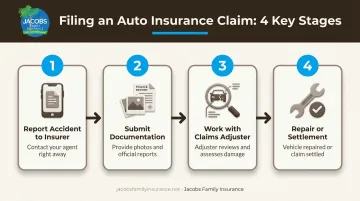
The claims process generally follows a predictable path:
- Report the accident to your insurer as soon as possible
- Submit documentation — photos, the police report, and any witness information
- Work with a claims adjuster who reviews the damage and provides a repair estimate
- Get your vehicle repaired or receive a settlement, depending on the extent of damage
Once your claim is settled, one consequence often follows: your rates may increase after an at-fault accident. Some policies include accident forgiveness features that can help offset that increase for a first at-fault claim, though eligibility varies by policy and provider.
Knowing whether you qualify for accident forgiveness — before you need it — is exactly where a local agent pays off. Jacobs Family Insurance has served Santa Fe and communities across northern New Mexico for more than a decade as an Allstate Elite agency. Instead of routing you through a call center after a crash, you get a familiar voice who already knows your policy.
A local agent can:
- Review your coverage before an accident happens, so you're not caught underinsured
- Walk you through what your policy actually covers when you're filing a claim
- Help you understand how New Mexico's fault rules apply to your specific situation
If you're in Santa Fe, Taos, Albuquerque, or anywhere in northern New Mexico and want your policy reviewed before you ever need it, reach out to Jacobs Family Insurance or call (505) 557-2067.
Frequently Asked Questions
Is New Mexico a no-fault insurance state?
No. New Mexico is an at-fault (tort) state, meaning the driver who caused the accident is financially responsible for damages. This differs from no-fault states, where each driver's own insurance pays regardless of fault.
What is the accident coverage policy?
A standard New Mexico auto policy typically includes liability, collision, comprehensive, uninsured/underinsured motorist (UM/UIM), and medical payments coverage. Each responds to a different type of loss after a crash.
How does insurance work when it's not your fault?
You can file a claim directly against the at-fault driver's liability insurance. If that driver is uninsured or underinsured, your own UM/UIM coverage protects you from covering the costs yourself.
What does collision coverage not cover?
Collision typically excludes mechanical breakdowns, normal wear and tear, and weather damage that didn't result from an actual collision. Aftermarket equipment beyond policy limits and unlisted commercial use, like rideshare driving, are also commonly excluded.
What are New Mexico's minimum auto insurance requirements?
New Mexico requires minimum liability coverage of $25,000 for bodily injury per person, $50,000 per accident, and $10,000 for property damage, often written as 25/50/10. A local agent can help you determine whether these minimums fit your actual risk.
How long do I have to report an accident in New Mexico?
Report immediately to police for crashes involving injury, death, or property damage of $500 or more. If no officer files a report, submit a written report to NMDOT within 5 days.