
Introduction
A letter arrives in the mail. Your condo association needs $8,000 from every unit owner for emergency roof repairs. The master policy didn't cover the full cost, and reserves came up short.
This scenario plays out more often than most condo owners expect. Aging buildings, rising repair costs, and underfunded reserve accounts make special assessments a genuine financial risk for unit owners.
Condo special assessment insurance, also called loss assessment coverage, exists to soften that blow. It's an endorsement added to your HO-6 policy that can reimburse your share of certain assessments tied to covered losses.
This guide walks through what special assessments actually are, how loss assessment coverage works, and what it typically costs. You'll also learn how New Mexico condo owners can stay properly protected before that letter shows up.
Key Takeaways
- Special assessments occur when association reserves can't cover a shared repair bill
- Loss assessment coverage is affordable, but most standard policies don't include enough of it
- Coverage applies only when the assessment stems from a covered peril
- Reviewing your association's master policy annually helps you avoid financial surprises
What Is a Condo Special Assessment?
A special assessment is a one-time or installment fee your condo association charges unit owners when the master policy, reserves, or deductible don't fully cover a shared-property repair.
Unlike your regular monthly HOA dues, this isn't a predictable, budgeted cost. It shows up when something goes wrong, or when something's been neglected for too long.
Common triggers include:
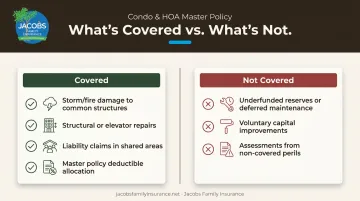
- Storm or fire damage to common areas like roofs, hallways, or parking structures
- Structural or safety repairs, such as aging elevators, plumbing systems, or building envelopes
- Underfunded reserve accounts that can't absorb a large, unexpected expense
- High master policy deductibles that get passed directly to owners
How the Math Actually Works
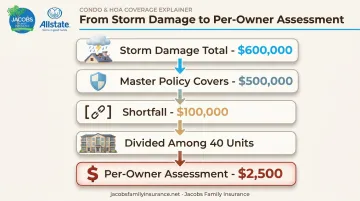
Here's a simplified version of how these bills get calculated:
- Storm damage totals $600,000
- The master policy covers $500,000, leaving a $100,000 gap
- The association has no reserves to absorb the shortfall
- With 40 units splitting the gap equally under the declaration, each owner's assessment comes to $2,500
Fewer units sharing the same repair bill means a bigger check for each owner, so smaller associations carry more per-unit risk.
New Mexico's condo communities carry some unique exposure here. Older buildings in Santa Fe, mountain properties in areas like Taos, and associations facing climbing insurance premiums can all find themselves staring down a larger-than-expected bill. Under New Mexico's Condominium Act, when repair costs exceed insurance proceeds and reserves, the shortfall becomes a common expense billed to owners.
Tax treatment adds another wrinkle: special assessments are generally not tax-deductible, unlike some property taxes. If the assessment funds an improvement rather than a repair, it may adjust your unit's tax basis instead, but that's a conversation for your tax professional, not your insurance agent.
What Is Condo Special Assessment Insurance and How Does It Work?
Condo special assessment insurance, known formally as loss assessment coverage, is an optional endorsement added to your HO-6 condo policy. It reimburses your share of a special assessment when that assessment traces back to a loss the master policy was supposed to cover.
Most standard condo policies include only a modest built-in loss assessment limit as part of the base policy. For anything beyond a minor shared expense, that built-in amount typically isn't enough to make a real dent in a major bill.
That's where the endorsement comes in. Insurers offer meaningfully higher limits for a relatively small premium bump.
West Bend, for instance, starts owners at a $5,000 aggregate limit but allows increases well beyond that. According to West Bend's guide to condo and HOA cost protection, one owner with $50,000 in coverage fully absorbed a $25,000 assessment. Limits vary by carrier, but many owners choose coverage well into the tens of thousands.
Consider a real-world example from Allstate. Fire damage totals $550,000, but the association's master policy limit tops out at $500,000.
Split across 50 owners, Allstate's condo loss assessment example works out to a $1,000 assessment per unit. With loss assessment coverage in place, your policy pays that $1,000 bill instead of you writing the check.
One important clarification: this coverage responds to the association's insurable loss, not to any assessment you simply disagree with. If the board mismanaged funds or the assessment stems from something outside the master policy's covered perils, the endorsement won't help.
Where Condo Special Assessment Insurance Comes Into Play
This coverage typically activates in scenarios like:
- Damage to shared structures, including roofs, hallways, stairwells, and elevators
- Liability claims arising in common areas, such as pools, clubhouses, or shared walkways
- A master policy deductible that gets divided among owners after a covered claim
What Special Assessment Insurance Typically Does NOT Cover
Loss assessment coverage has real limits, and understanding them matters just as much as understanding what it covers.
Generally excluded scenarios:
- Assessments caused by underfunded reserves or years of deferred maintenance
- Voluntary capital improvements, like adding a new fitness center or upgrading landscaping
- Any assessment where the underlying cause isn't a peril covered by the master policy
If your association simply didn't save enough money and now needs to catch up, that's a reserve problem, not an insurable loss. Your policy won't step in.
Even when a peril is covered, another limit applies: your coverage limit is a cap, not a guarantee. If your assessment exceeds your purchased limit, say a $30,000 bill against a $25,000 limit, you're responsible for that remaining $5,000 out of pocket.
Ask your HOA board for the master policy's declarations page before buying a loss assessment endorsement. Match your limit to what your association's governing documents allow it to assess per unit.
Is Condo Special Assessment Insurance Worth It?
For most condo owners, yes. The premium for adding or increasing this coverage tends to be low relative to what a single special assessment can cost. According to Progressive, the cost typically stays low and varies mainly based on the limit selected and the carrier, making this one of the more efficient endorsements available on an HO-6 policy.
How to Decide on a Coverage Limit
A few factors should drive your decision:
- Number of units in the building — fewer units sharing a repair bill means a larger individual share for you
- Age and condition of the building — older roofs, plumbing, and elevators mean higher repair likelihood
- Value of shared amenities — pools, elevators, and clubhouses all add potential liability and repair exposure
The Simple Cost-Benefit Case
Weigh it out:
- Cost now: A modest annual premium increase for a higher limit
- Cost later: Potentially thousands of dollars in unplanned expense if you're underinsured
- Added benefit: Real peace of mind, especially for owners on fixed or retirement budgets
Beyond the math, there's real value in checking your association's most recent reserve study and master policy limits every year. New Mexico doesn't mandate reserve studies for condo associations, so some buildings may be operating with outdated or nonexistent funding plans. That makes your personal coverage limit even more important as a backstop.
How New Mexico Condo Owners Can Get the Right Coverage
Getting properly protected starts with information, not guesswork.
Steps worth taking:
- Request your association's master policy declarations page. This shows coverage limits, deductibles, and which perils are actually covered before you decide on your own limit.
- Pair this review with a broader condo insurance check-in. Repair costs and insurance markets shift, and your coverage should keep pace.
- Ask specific questions about deductible allocation. Some associations pass their master policy deductible directly to owners after a claim.
This is where having someone local who understands New Mexico's condo landscape pays off. Jacobs Family Insurance is a family-owned Allstate Elite Agency serving Santa Fe and communities across northern New Mexico.
Our team can review your condo policy alongside your association's master policy, walk through available loss assessment limits, and help you choose coverage that actually fits your building.

No call centers, no generic scripts—just a conversation with someone who lives here too.
Frequently Asked Questions
Can condo insurance cover special assessments?
Standard condo insurance includes a small built-in loss assessment limit, but it's rarely enough for a major shared-property loss. Most owners need to add or increase this endorsement for meaningful protection.
Is condo special assessment insurance worth it?
Given its low cost compared to the potential size of an assessment, most condo owners find this added coverage a smart, worthwhile investment.
Do condos have special assessments?
Yes, special assessments are common in condo living, especially in older buildings or associations with underfunded reserves. They can happen at well-managed and poorly-managed properties alike.
What's the difference between a special assessment and loss assessment coverage?
A special assessment is the bill your association sends you. Loss assessment coverage is the insurance that may reimburse you for that bill, but only when it's tied to a covered peril.
How much loss assessment coverage should I buy?
Base your decision on building size, number of units, amenities, and building age. Speaking with a local agent helps you compare limit options against premium cost.
How much does condo special assessment insurance cost?
The endorsement is inexpensive compared to the protection it provides, though exact pricing depends on your carrier and the limit you select. A local agent can give you an actual quote based on your policy.