Introduction
Picture this: a hurricane tears through the marina, your boat is wrecked, and you file a claim — only to learn it's denied. The reason? You carried liability-only coverage, or you failed to haul the vessel out before the storm. It's a costly mistake that thousands of boat owners make every year.
According to Insurance Journal, Hurricanes Harvey and Irma alone damaged or destroyed more than 63,000 recreational boats and caused $655 million in combined losses in 2017. Hurricane Sandy caused even more — over 65,000 boats damaged and $650 million in losses.
So, does boat insurance cover hurricane damage? Yes — but only under specific conditions. The type of policy you carry and whether you've met every requirement determines whether a claim gets paid or rejected.
Those conditions involve coverage type, policy exclusions, hurricane deductibles, and haul-out obligations. This guide breaks down each one — and walks through how to file a claim if the worst happens.
Key Takeaways
- Comprehensive coverage (not liability-only) is required for hurricane damage to your boat to be covered
- Hurricane deductibles are separate and higher — typically a percentage of the insured value, not a flat dollar amount
- Haul-out clauses are mandatory in many policies; non-compliance can void all hurricane coverage
- Wear and tear, negligence, and navigational territory violations are excluded even under comprehensive coverage
- Review your policy before storm season starts — waiting until after damage occurs puts your claim at risk
What Type of Boat Insurance Covers Hurricane Damage?
What determines your hurricane payout isn't the storm itself — it's the type of policy you held before it hit. Two boat owners with identical damage can walk away with very different outcomes based on their coverage.
Liability-Only vs. Comprehensive Coverage
There are two fundamentally different types of boat insurance:
- Liability-only coverage pays for injuries or property damage you cause to others. It does not cover damage to your own vessel under any circumstances — including storms.
- Comprehensive (physical damage) coverage protects your boat against events outside your control, including weather-related damage, theft, vandalism, and fire.
Progressive confirms that if a boat is damaged in a storm or hurricane, insurance can provide protection only if the policyholder carries comprehensive coverage. BoatUS describes liability-only as its lowest-cost marine policy specifically because it excludes hull coverage entirely.
If you're unsure which you have, check your declarations page now — not after a storm warning is issued.
What Comprehensive Coverage Typically Includes
A comprehensive boat policy generally covers storm-related damage such as:
- Structural damage from wind and rain
- Collision with docks or other vessels during the storm
- Boat sinking as a result of the storm event
- Wreckage removal when required
- Storm surge flooding that submerges or swamps the hull
Optional Add-Ons Worth Considering
Standard comprehensive coverage has limits. These add-ons can fill critical gaps:
- Fuel spill liability — covers remediation costs if storm damage causes a fuel leak
- Full replacement cost vs. actual cash value — determines how much you receive in a total loss
- Wreckage/salvage removal — especially important after major storms, as removal can be extremely expensive
These must be added intentionally. They don't appear automatically in a standard policy.
Agreed Value vs. Actual Cash Value
This distinction matters most when you file a total loss claim after a hurricane:
- Agreed value policies pay the pre-set amount you and the insurer agreed upon when the policy was written — no depreciation applied
- Actual cash value policies factor in depreciation, meaning a five-year-old boat may pay out significantly less than its purchase price
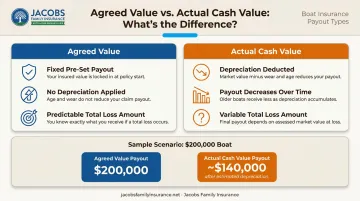
Allstate notes that agreed amount coverage helps pay for repairs based on the boat's value at policy inception, while actual cash value accounts for depreciation. On a $200,000 boat, the difference in payout could be substantial.
Check your policy type before a storm. Switching to agreed value typically requires action at renewal — not after damage has occurred.
What Does Boat Insurance Cover in a Hurricane?
Comprehensive boat insurance covers a wide range of hurricane damage, but sub-limits and geographic conditions often surprise policyholders at claim time.
Core Hurricane Damage Coverage
When a named storm causes direct damage, comprehensive coverage typically pays for:
- Structural wind and water damage to the hull, deck, and mechanical systems
- Collision damage when the vessel breaks free and strikes docks or other boats
- Sinking caused by the storm, including wreckage removal if the vessel must be raised
- Storm-related debris impacts to the vessel
Keep in mind that wreck removal coverage for sinking is tied to navigational territory restrictions — the boat must have been within the policy's approved geographic zone when the storm hit.
Personal Property and Equipment Sub-Limits
Most policies cover onboard electronics, gear, and personal belongings — but under separate, lower limits. For example, Progressive offers personal effects coverage up to $10,000 for items like phones, scuba gear, and other belongings carried onboard.
If you carry expensive electronics or gear, request a full coverage schedule from your insurer — the standard sub-limit may fall well short of replacement cost.
Storm Surge: A Coverage Gray Area
Storm surge ranks among the costliest hurricane perils, yet whether it's covered depends entirely on how your policy defines "storm damage" versus "flood damage." Some policies include storm surge as a named storm peril. Others exclude it under flood provisions.
Ask your insurer directly and request written confirmation. Don't assume storm surge is covered just because you have comprehensive coverage.
Hurricane Deductibles: What Boat Owners Often Don't Expect
Many boat owners discover their hurricane deductible for the first time while reading a denial letter. It's one of the most financially impactful details in a marine policy — and one of the least reviewed before storm season hits.
How Hurricane Deductibles Work
Named storm deductibles work differently from standard claims. Instead of a flat dollar amount, they're typically calculated as a percentage of the insured hull value:
| Insured Value | 2% Deductible | 5% Deductible |
|---|---|---|
| $50,000 | $1,000 | $2,500 |
| $100,000 | $2,000 | $5,000 |
| $300,000 | $6,000 | $15,000 |
Practical Sailor reports that most lenders allow a maximum 2% hull deductible — which suggests percentage-based deductibles are standard practice in marine insurance.
When the Hurricane Deductible Triggers
The named storm deductible doesn't activate at landfall — it typically triggers when the National Hurricane Center officially names a tropical system. Once that designation is made, any damage that occurs within the policy's defined storm window falls under the higher deductible.
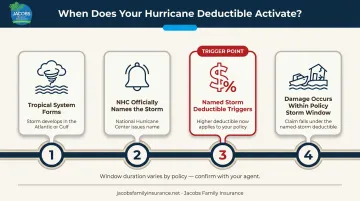
That window varies by policy and insurer. Read your specific policy language carefully, and confirm the trigger conditions with your agent before hurricane season — not during an active storm watch.
Geographic Variation
Just as trigger windows vary, so do the percentages themselves. Boats in high-risk coastal zones generally face higher named storm deductibles than vessels kept inland or in northern regions.
If you're a New Mexico boat owner who trailers your vessel to the Gulf Coast, your policy's territorial provisions and deductible structure both become directly relevant the moment your boat crosses state lines.
Haul-Out Requirements and Policy Compliance
Of all the hurricane coverage requirements, haul-out clauses are the most commonly misunderstood — and the most strictly enforced.
What Haul-Out Requirements Are
Many comprehensive boat policies include a named storm clause or hurricane warranty requiring owners to remove their vessel from the water when a hurricane warning is issued for their area. This isn't a suggestion. It's a mandatory policy condition.
A 2023 federal appellate case — Great Lakes Insurance SE v. Gray Group Investments LLC — illustrates exactly how strictly these clauses are enforced. The insurer denied a hurricane damage claim after the vessel was destroyed during Hurricane Ida, citing breach of the hurricane protection plan submitted with the policy application. The Fifth Circuit ruled for the insurer.
What Happens If You Don't Comply
Failing to haul out typically results in complete claim denial — regardless of how long you've been paying premiums or how severe the storm was. All hurricane repair costs become your sole financial responsibility.
Documentation of compliance is essential:
- Marina receipts showing haul-out date (before the storm)
- Photos of the vessel hauled and secured
- Any written confirmation from the marina or boat yard
Haul-Out Reimbursement
Some policies offset the cost of compliance. GEICO Marine and BoatUS both offer haul-out coverage reimbursing 50% of professional costs, up to $1,000 per event, when a NOAA named storm threatens the area. Practical Sailor confirms similar limits of $1,000–$1,500 across specialty marine insurers.
Policies may also allow vessels to remain in approved hurricane holes (protected anchorages) with proper securing. Never assume this exception applies to your policy — get written confirmation from your insurer before relying on it.
What Boat Insurance Doesn't Cover During a Hurricane
Even with comprehensive coverage, certain losses won't be paid. Knowing these gaps before a storm hits can save you from a costly surprise at claims time.
Common Exclusions
- Pre-existing wear and tear exposed or worsened by the storm — BoatUS and the Insurance Information Institute both list this as a standard exclusion
- Failing to properly secure the vessel before landfall, which insurers can classify as owner negligence and use to void coverage
- Mechanical failure that predates the storm, even if the hurricane made it worse
- Damage occurring outside approved navigational territory — Progressive lists navigational limits as a key coverage condition, and that boundary doesn't expand for emergencies
Geographic and Seasonal Restrictions
Some policies exclude or limit coverage in high-risk zones during peak hurricane season. Practical Sailor notes that extended Caribbean cruising policies may require the vessel to return to U.S. waters between June 1 and October 30.
Operating in an excluded zone voids coverage — even if the rest of your policy is fully active.
What's Usually Not Included
Beyond the core exclusions, several losses fall outside standard hull coverage entirely. These items typically require separate endorsements or riders:
- Loss of use or charter income during repairs
- Depreciation in the boat's market value after storm damage history
- Loose personal equipment not permanently attached to the vessel
How to File a Hurricane Damage Claim for Your Boat
Speed and documentation determine whether a hurricane claim gets paid quickly — or disputed for months.
Immediate Steps After the Storm
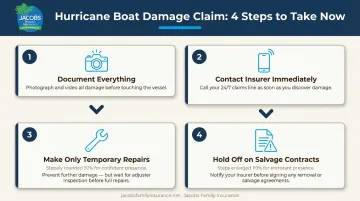
- Photograph and video everything before moving or touching the vessel — document all visible damage thoroughly
- Contact your insurer promptly — BoatUS recommends calling their 24/7 claims line immediately after discovering damage
- Make only temporary emergency repairs — address active leaks and weather exposure but don't start permanent work until the adjuster has inspected
- Don't sign salvage or wreck-removal contracts without notifying your insurer first — BoatUS specifically cautions against this
What Documentation You'll Need
Insurers will typically require:
- Proof of haul-out compliance — marina receipts dated before the storm, photos of the vessel hauled and secured
- Damage inventory — detailed written and photographic record of every affected component
- Emergency repair receipts — any costs incurred to prevent further damage
- All insurer communications — written records of every conversation and submission
Thorough documentation is your best defense — gaps in the record tend to favor the insurer, not the policyholder.
Review Your Policy Before a Storm — Not After
The single best time to address coverage gaps is before hurricane season starts. Speak with your insurance agent to confirm your coverage type, understand your hurricane deductible, verify haul-out obligations, and update coverage if your boat's value has changed. A quick pre-season policy review costs nothing and could save you thousands. A local Allstate agent — like the team at Jacobs Family Insurance in Santa Fe — can walk you through all of it in a single conversation.
Frequently Asked Questions
Does boat insurance cover hurricane damage?
Yes, but only if your policy includes comprehensive (physical damage) coverage. Liability-only policies don't cover damage to your own vessel. You also must comply with any policy requirements — particularly haul-out clauses — for a claim to be paid.
Do I have to haul out my boat before a hurricane for insurance to cover the damage?
Most comprehensive boat insurance policies include a haul-out requirement that activates when hurricane warnings are issued for your area. Failing to comply typically voids all hurricane coverage — review your specific policy language before storm season.
What is a hurricane deductible, and how is it different from a regular deductible?
A hurricane deductible is separate from your standard deductible and is typically calculated as a percentage of the boat's insured value rather than a flat dollar amount. On a $200,000 vessel, even a 2% deductible means $4,000 out-of-pocket before coverage begins.
Does boat insurance cover storm surge or flooding from a hurricane?
Coverage hinges on whether your policy treats storm surge as a named storm peril or excludes it under flood provisions — and those two approaches lead to very different outcomes. Ask your insurer directly and get the answer in writing.
How much is insurance on a $500,000 boat?
Costs vary based on vessel type, navigational territory, coverage type, and claims history. Progressive's data shows average annual premiums ranging from $267 in Minnesota to $839 in Florida, but high-value vessels run considerably higher — get a personalized quote from a licensed agent for an accurate figure.
What should I do immediately after hurricane damage to my boat?
Take these steps before anything else:
- Document all damage with photos and video before touching anything
- Contact your insurer immediately and preserve all damaged parts and receipts
- Hold off on permanent repairs until the insurer completes their inspection