That assumption isn't quite right. Whether coverage is required depends on how the vehicle is financed, where you ride it, and how it's registered, not one blanket rule.
This article breaks down when ATV/UTV insurance is legally or contractually required, why carrying it makes sense even when it's optional, and how to get properly covered here in New Mexico.
Key Takeaways
- New Mexico doesn't require ATV/UTV insurance for private land, but financing, leasing, and many trails do
- Liability coverage protects your savings if you injure someone or damage property
- Comprehensive and collision coverage guard your vehicle against theft, weather, and crash damage
- Premiums depend on vehicle value, riding history, and location, and bundling often lowers costs
- A local agent can confirm exactly what your lender, park, or state requires
When Is ATV or UTV Insurance Legally or Contractually Required?
Three situations typically trigger a hard insurance requirement: your financing agreement, the location where you ride, and whether your vehicle has been registered for street use. Here's how each one works.
The Financing or Leasing Requirement
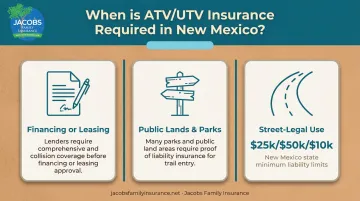
If you financed or leased your ATV/UTV, your lender almost certainly requires comprehensive and collision coverage, similar to a car loan. The lender has a financial stake in the vehicle until it's paid off, so they want it protected against theft, fire, and collision damage.
Skipping this coverage can violate your loan terms. Lenders routinely check for lapses, and a gap in coverage can put your entire financing agreement at risk, sometimes triggering default clauses you didn't know existed.
Riding on Public Lands, Parks, and Trails
Many organized trail systems and OHV parks require proof of liability insurance for entry, even when the state itself doesn't mandate it for off-highway use. New Mexico's public land rules on off-highway riding focus on registration and equipment like spark arresters, but that doesn't mean every trail system follows the same policy.
Before you head out, verify requirements for the specific area:
- BLM land generally defers to state registration rules rather than imposing a separate insurance mandate
- National forests use Motor Vehicle Use Maps to define legal routes, but don't typically list insurance as a standalone requirement
- New Mexico State Parks currently prohibit recreational OHV use in many locations, so check current alerts before loading up the trailer
Street-Legal Registration
New Mexico doesn't convert an ATV or recreational off-highway vehicle into a standard street-legal vehicle, even with modifications. It stays registered as an off-highway vehicle (OHV) unless a local government or the State Transportation Commission specifically opens a paved road for OHV use and issues a paved-road plate.
Once that happens, the rules change. An adult operator on an authorized paved road must carry a valid driver's license and proof of financial responsibility. New Mexico's minimum liability limits apply here, and they're the same figures used across the state's auto insurance requirements:
- $25,000 for bodily injury or death of one person
- $50,000 for bodily injury or death of two or more people in one accident
- $10,000 for property damage in one accident
These minimums come directly from the New Mexico Motor Vehicle Division's insurance requirements. If your ATV/UTV ever touches an authorized paved road, this is the coverage floor you need to meet.
Why You Should Carry Coverage Even When It's Optional
Even without a legal mandate, off-road riding carries real financial exposure. A policy exists to absorb exactly that kind of risk.
Liability Protection for Accidents You Cause
If you're found liable for an injury or property damage during a ride, legal fees and settlement costs come straight out of your pocket. There's no insurance company standing between you and the bill.
The financial stakes are significant. A peer-reviewed study of Montana workers' compensation claims from 2007 to 2019 found that 951 ATV/UTV injury claims generated $13,324,881 in medical costs and $4,681,404 in wage loss, according to CDC-published research on ATV and UTV injuries.
Those numbers reflect workplace claims specifically, but they illustrate how quickly medical and recovery costs stack up after a single serious accident.
Physical Damage Protection for Your Vehicle
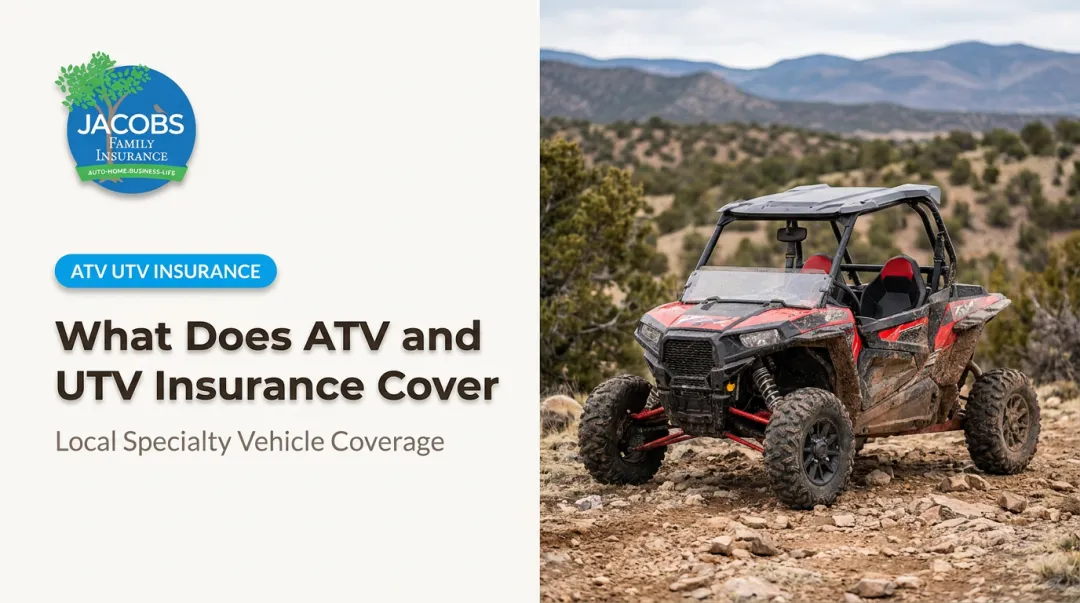
Comprehensive and collision coverage pay to repair or replace your ATV/UTV after collisions, theft, vandalism, fire, or severe weather. That matters more in New Mexico than in flatter terrain.
Northern New Mexico's landscape, think rock formations, arroyos, and open ranch and desert land, raises the odds of rollover or collision damage during a typical ride. Rough terrain that makes for great riding also makes for harder impacts when things go wrong.
Protection From Uninsured Riders and Medical Costs
Two coverages fill gaps that liability alone doesn't cover: uninsured/underinsured motorist coverage, which protects you if another rider without adequate coverage causes your accident, and medical payments coverage, which helps with your injury costs regardless of who was at fault.
Off-road environments tend to have higher rates of uninsured operators than paved roads. That makes this coverage particularly valuable for group rides and busy trail weekends, when you're sharing space with riders you don't know.
What Happens If You Skip Coverage?
Riding uninsured means you're personally on the hook for every consequence. There's no buffer if something goes wrong.
Here's what that looks like in practice:
- You pay settlements and legal fees yourself if you're found liable for an accident
- You risk loan default if the vehicle is financed and you've let coverage lapse
- You get turned away at trails and parks that require proof of insurance before entry
- Your exposure compounds if an uninsured third party causes your accident, since neither side has a safety net
The scale of the risk isn't small. The Consumer Product Safety Commission (CPSC) puts hard numbers behind it:
The 2024 OHV Annual Report found 2,577 reported ATV, ROV, and UTV deaths between 2019 and 2021, plus an estimated 99,000 emergency-department-treated injuries in 2023 alone.
Riding unprotected against that backdrop is a real gamble, not just a technicality.
Coverage Options, Cost Factors, and Finding the Right Policy
Once you've decided coverage makes sense, the next question is what to actually buy.
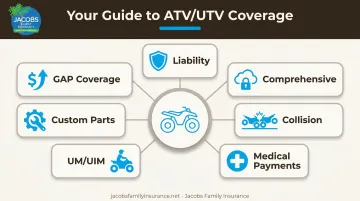
Core Coverage Types to Discuss With an Agent
Bring these coverages up in your conversation, even if you don't end up needing all of them:
- Liability coverage for injuries or damage you cause to others
- Comprehensive coverage for theft, fire, and weather-related damage
- Collision coverage for crash damage to your own vehicle
- Medical payments coverage for your own injury costs
- UM/UIM coverage for accidents involving uninsured riders
- Custom parts and equipment coverage if you've added aftermarket accessories
- GAP coverage if you financed the vehicle and owe more than it's currently worth
Not every insurer packages all of these the same way, and availability can depend on your specific vehicle and how it's used. That's exactly the kind of detail worth confirming before you sign anything.
What Affects Your Premium
Your rate isn't random. It's shaped by a handful of factors:
- Vehicle value and type: a high-performance UTV typically costs more to insure than a basic ATV
- Rider history: prior claims or violations raise your rate
- Where and how you ride and store the vehicle: frequent trail use versus occasional weekend rides
- Coverage limits selected: higher limits mean higher premiums, but more protection
You can bring costs down in a few practical ways. Bundling ATV/UTV coverage with an existing auto or home policy often unlocks multi-line discounts. Completing a safety course or insuring multiple vehicles together may also help, though these vary by carrier, so it's worth asking directly.
Getting Local Guidance Instead of a Generic Quote
A generic online quote can't tell you what your specific lender requires, whether your favorite trail demands proof of insurance, or how New Mexico's paved-road rules apply to your vehicle. A local agent can.
Jacobs Family Insurance, a Santa Fe-based Allstate Elite agency, works with New Mexico riders to sort out exactly what coverage fits their situation, alongside their existing auto, home, and other policies. Instead of a call center reading from a script, you get a neighbor who knows the local trail systems and state requirements firsthand.
You can request a personalized quote and bring your financing paperwork if you have it, so the coverage matches what your lender actually requires.
Conclusion
Whether ATV/UTV insurance is technically "required" comes down to financing terms, where you ride, and registration status. But protection holds real value in nearly every scenario, mandated or not.
Liability and physical damage risks don't shrink the longer you go without coverage. They grow. Treat insurance as a standard part of responsible ownership, not something you scramble for after an accident. Jacobs Family Insurance can help you find the right ATV/UTV coverage today.
Frequently Asked Questions
Do I need ATV insurance?
It depends on financing, where you ride, and state or local rules. Even when it's not legally required, it's strongly recommended for liability and physical damage protection.
Why can't I get insurance for my ATV?
Some insurers limit or decline coverage for older, heavily modified, high-performance, or non-street-legal vehicles. An independent agent, like our team at Jacobs Family Insurance, can help you locate a carrier willing to insure it.
How much does ATV or UTV insurance typically cost?
Costs vary widely based on vehicle value, rider history, and the coverage you select. Getting a personalized quote is the only way to get an accurate number for your situation.
Does my homeowners insurance cover my ATV?
Homeowners policies typically offer limited or no coverage for ATVs and UTVs, especially away from your property. A dedicated ATV policy is usually necessary to close that gap.
Is UTV insurance more expensive than ATV insurance?
UTVs generally cost more to insure due to higher vehicle values and repair costs. Pricing still depends heavily on individual rider history and coverage choices, though.
What's the difference between liability-only and full coverage for an ATV/UTV?
Liability-only covers injuries or damage you cause to others. Full coverage adds comprehensive and collision protection for your own vehicle on top of that.