
Introduction
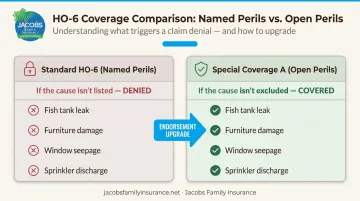
Many condo owners assume their HO-6 policy works like a standard homeowners policy — covering damage from most reasonable causes. That assumption can be costly. Under a standard, unendorsed HO-6, Coverage A only pays for losses caused by perils specifically named in the policy. If the cause isn't on the list, the claim is denied — full stop.
The fix is straightforward: an endorsement called Unit Owners Special Coverage A. It converts your dwelling coverage from a named-perils basis to an open-perils basis, meaning all direct physical losses are covered unless specifically excluded. For condo owners in Santa Fe and across New Mexico, this shift can mean the difference between a covered claim and a five-figure out-of-pocket repair.
Here's what you need to know to decide whether Special Coverage A belongs on your policy.
Key Takeaways:
- Standard HO-6 Coverage A only covers 16 named perils — losses outside that list are denied
- Special Coverage A upgrades dwelling coverage to open-perils (all-risk), reversing the burden in your favor
- It applies only to Coverage A (dwelling) — not personal property, which requires a separate endorsement
- Flood and earth movement remain excluded even with Special Coverage A
- Review your HOA master policy type to understand how much Coverage A you actually need
What Is Coverage A in an HO-6 Condo Policy?
An HO-6 is the policy form specifically designed for condo unit owners. Unlike a standard homeowners policy, it doesn't insure a building — it insures the interior of your unit. Coverage A is the dwelling portion of that policy, and it's where most condo owners either get the protection they need — or discover a gap after a loss.
What "The Unit" Typically Includes
According to the ISO HO 00 06 form, Coverage A covers alterations, appliances, fixtures, and improvements that are part of the building within your residence premises, real property pertaining exclusively to your unit, and property you're responsible for under your HOA agreement. In plain terms, that typically means:
- Interior wall, floor, and ceiling coverings
- Built-in appliances, cabinets, and countertops
- Electrical fixtures, plumbing, and water heaters
- Improvements or upgrades you've made to the unit
The HOA's master policy generally covers the building exterior and common areas — not these interior elements.
How Your HOA Master Policy Changes the Picture
The Insurance Information Institute identifies three common master policy types, and each shifts a different level of responsibility onto your Coverage A:
| Master Policy Type | What the HOA Covers | What Falls to Your HO-6 |
|---|---|---|
| All-in / all-inclusive | Unit as originally built, including standard fixtures | Improvements, upgrades, and betterments beyond original specs |
| Bare walls / walls-out | Only bare walls, floors, and ceiling surfaces | Everything inside — cabinets, plumbing, appliances, wiring, flooring |
| Single-entity (excluding improvements) | Original standard finishes | Any renovation or remodel you've done |
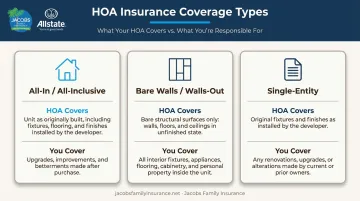
If your HOA has a bare-walls policy, your Coverage A needs to account for the full value of your interior — which can be substantial. Getting that wrong means a covered loss could still leave you paying tens of thousands out of pocket — so identifying your master policy type is the starting point for setting your Coverage A limit correctly.
The Limits of a Standard Named-Perils Condo Policy
How Named-Perils Coverage Works
Named-perils coverage is straightforward: if the cause of your loss isn't specifically listed in the policy, the claim is denied. It doesn't matter how significant the damage is or how reasonable the cause seems.
The standard ISO HO 00 06 form covers exactly 16 named perils for Coverage A:
- Fire or lightning
- Windstorm or hail
- Explosion
- Riot or civil commotion
- Aircraft
- Vehicles
- Smoke
- Vandalism or malicious mischief
- Theft
- Falling objects
- Weight of ice, snow, or sleet
- Accidental discharge or overflow of water or steam
- Sudden and accidental tearing apart, cracking, burning, or bulging
- Freezing
- Sudden and accidental damage from artificially generated electrical current
- Volcanic eruption
That list is longer than most people expect — and still leaves meaningful gaps.
Where the Named-Perils List Falls Short
Water damage is only covered if it comes from "accidental discharge or overflow" — a very specific source. That language typically covers a burst pipe, but it may not extend to:
- Rainwater seeping through a window or around a window frame
- A leaking fish tank or waterbed
- Roof leak water entering your unit from above
Allstate's own guidance notes that whether a water damage claim is covered depends entirely on the facts and the specific policy language — so reading the fine print before a claim arises is worth the time.
Unusual causes of loss present the same coverage gap. If a heavy piece of furniture crushes your flooring, or a guest damages a wall in a way that doesn't fit neatly into any named peril, the default answer under a standard HO-6 is a denial.
What Is Unit Owners Special Coverage A?
The Open-Perils Shift
Unit Owners Special Coverage A is an endorsement — ISO form HO 17 32 05 11 — that modifies the Coverage A section of your HO-6. The operative language replaces the named-perils list with a single standard: coverage for "direct physical loss to property described in Coverage A."
That one change reverses the logic of the policy entirely. Instead of asking "is this peril listed?", the question becomes "is this peril excluded?" If it's not excluded, it's covered.
What This Covers That Standard HO-6 Doesn't
Losses that would likely be covered under Special Coverage A but denied under a standard HO-6 include:
- Water seeping in through windows or around frames during a storm
- Damage from a leaking aquarium or waterbed
- Roof leak water entering your unit
- Accidental spillage damage to flooring or cabinetry
- Weight of people or animals causing structural damage to flooring
- Sprinkler discharge (outside of a fire event)
- Hard-to-categorize accidental damage scenarios
Important Boundaries to Understand
Special Coverage A is an endorsement, not a standalone policy. Two points condo owners frequently misunderstand:
It only upgrades Coverage A. Your personal property (Coverage C) remains on a named-perils basis unless you separately add the Unit Owners Coverage C Special Coverage endorsement (ISO form HO 17 31 05 11).
Wording can vary by carrier and form edition. Two versions of the endorsement exist — HO 17 32 04 91 and HO 17 32 05 11 — with different exclusion language and vacancy thresholds. Always request the actual endorsement from your agent rather than assuming coverage is identical across all carriers.
If you're unsure whether this endorsement is already built into your current policy, Jacobs Family Insurance in Santa Fe can pull up your HO-6 and walk you through exactly what's covered — and what isn't.
What Special Coverage A Does NOT Cover: Key Exclusions
The HO 17 32 05 11 endorsement is broad, but it still contains specific exclusions. Even under open-perils language, the following causes of loss are not covered:
- Wear and tear, marring, or deterioration
- Rust or other corrosion
- Settling, shrinking, bulging, or expansion of foundations, walls, or floors
- Mechanical breakdown, latent defect, or inherent vice
- Mold, fungus, or wet rot (subject to form conditions)
- Birds, rodents, or insects (including your own pets)
- Faulty, inadequate, or defective construction or materials
- Weather conditions that contribute to an otherwise excluded cause of loss
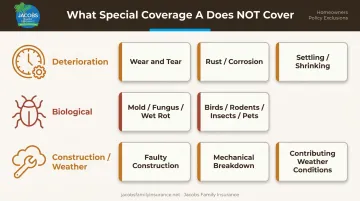
These exclusions hold regardless of how sudden or unexpected the damage appears — the cause of loss is what determines coverage, not the result.
Vacancy Thresholds Matter
The endorsement also cuts off vandalism and malicious mischief coverage once a unit sits vacant beyond a threshold period. The threshold varies by form edition:
- HO 17 32 04 91: Vacancy over 30 consecutive days
- HO 17 32 05 11: Vacancy over 60 consecutive days
Know which form applies to your policy — especially if you own a vacation condo or seasonal property.
Flood and Earth Movement: Always Separate
Neither Special Coverage A nor the base HO-6 covers flood or earth movement. The standard HO 00 06 form explicitly excludes surface water, flood, waves, sewer backup, and earth movement including earthquakes, landslides, and sinkholes. Separate flood coverage through the NFIP is required — and the New Mexico OSI confirms that standard home policies do not cover flood damage.
Real-World Scenarios: When Special Coverage A Makes the Difference
Scenario 1: The Fish Tank Leak
A 75-gallon aquarium develops a slow crack and water damages the hardwood flooring and lower cabinetry beneath it. Under a standard HO-6, this likely isn't covered — a fish tank isn't a plumbing system, so "accidental discharge or overflow of water" probably doesn't apply. Under Special Coverage A, the loss is direct physical damage with no applicable exclusion, so coverage applies.
Scenario 2: The Unexplained Floor Damage
A heavy armoire shifts during a move and crushes a section of engineered hardwood flooring. The cause doesn't fit any of the 16 named perils. Under a standard HO-6, the claim is denied. Special Coverage A flips the analysis: weight damage from furniture doesn't appear on the exclusion list, so coverage applies without further debate.
Scenario 3: Rain Seeping Through a Window Frame
Water intrudes through aging window seals during a heavy storm, damaging the drywall and trim. This isn't "accidental discharge" from a plumbing system, so a standard HO-6 named-perils claim would likely be denied. Special Coverage A covers it — no matching exclusion, no denial.
Condo owners carry full financial responsibility for interior finishes and fixtures — flooring, cabinetry, drywall — that can cost tens of thousands of dollars to repair or replace. One denied claim can wipe out years of premium savings from carrying a leaner policy.
Is Unit Owners Special Coverage A Worth the Cost?
No authoritative primary source — including ISO, NAIC, or major carrier rate filings — has published a verified annual cost range for this endorsement. Commonly cited figures in agency-level articles exist, but they aren't backed by primary data, so treat them as anecdotal.
Endorsements that modify coverage form rather than adding new limits are typically among the most affordable additions to a policy. The cost is individualized based on your unit's replacement value, location, and HOA master policy structure.
A single denied water damage claim involving flooring, cabinetry, and drywall can easily run into thousands of dollars. The endorsement cost — whatever it is for your specific situation — is unlikely to come close to that exposure.
To find out if Special Coverage A is already on your policy or what it would cost to add it:
- Check your declarations page or existing endorsement schedule for the endorsement listing
- If it's not there, contact a local agent to review your HO-6 and identify gaps
Jacobs Family Insurance serves condo owners across Santa Fe and northern New Mexico. As an Allstate Elite Agency, they can review your current policy and walk you through endorsement options — call (505) 557-2067 or stop by their office at 1547 South St. Francis Drive in Santa Fe.
Frequently Asked Questions
What is Special Coverage A on a condo policy?
Special Coverage A is an endorsement added to an HO-6 condo policy that upgrades Coverage A (dwelling) from named-perils to open-perils (all-risk). All direct physical losses to the unit interior are covered unless a specific exclusion in the endorsement applies.
What is typical condo insurance coverage?
A standard HO-6 includes Coverage A (dwelling), Coverage C (personal property), personal liability, medical payments, additional living expenses, and loss assessment. Coverage A defaults to named perils unless Special Coverage A is added.
How much does Unit Owners Special Coverage A cost?
Pricing varies by carrier, unit value, and location — there's no published standard rate. Contact your agent for a quote specific to your policy. New Mexico condo owners can reach Jacobs Family Insurance for a no-obligation review.
What does Special Coverage A not cover?
Key exclusions include wear and tear, deterioration, rust and corrosion, settling or structural movement, pest infestation, damage by insured-owned animals, vacancy-related vandalism (after 30 or 60 days depending on form edition), flood, and earth movement. Always review your actual endorsement language for the full list.
Do I need Special Coverage A if my HOA already has a master policy?
Yes — the HOA master policy covers the building exterior and common areas, not your interior finishes and fixtures (or in a bare-walls arrangement, almost nothing inside). The two policies serve complementary roles; Special Coverage A fills the gap the master policy leaves.
Is Unit Owners Special Coverage A the same as open-perils or all-risk coverage?
Yes — it functions as an open-perils (all-risk) endorsement for the dwelling portion of your HO-6. It is distinct from Unit Owners Special Coverage C (ISO form HO 17 31), which provides the same open-perils upgrade for personal property.