Introduction
You're closing on a home, and your lender's paperwork suddenly mentions "hazard insurance." You already bought a homeowners policy, so is this something extra? Many buyers pause right here, unsure if they need a second policy or if they've missed a requirement entirely.
This confusion is common, and it often leads to unnecessary calls to lenders, duplicate coverage purchases, or last-minute scrambling before closing. The term itself is outdated industry jargon that never quite went away, but understanding it clears up the confusion fast.
This guide breaks down exactly what hazard insurance means, what it covers, what it costs, and how New Mexico-specific risks like wildfire and hail affect your coverage decisions.
Key Takeaways
- "Hazard insurance" isn't separate — it's Coverage A, the dwelling part of your policy
- Lenders require it because your home secures the mortgage loan
- Covers named perils like fire, wind, and hail, but excludes flood and earthquake damage
- New Mexico's wildfire zones and hailstorms create unique coverage needs
- A local Allstate agent helps you avoid gaps and skip costly lender-forced policies
What Is Hazard Insurance for Homeowners?
Here's the short answer: hazard insurance isn't a real product. It's a term banks and mortgage lenders use for the dwelling coverage, or Coverage A, built into your standard homeowners insurance policy. According to Progressive, hazard insurance is not a distinct insurance product or separate coverage type — it's simply the structural piece of the policy you already own.
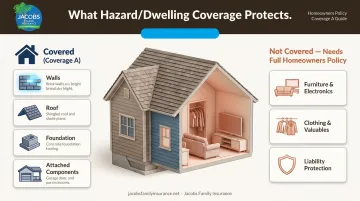
Coverage A protects the physical structure of your home: the walls, roof, foundation, and attached components. If you already carry a homeowners policy, you've automatically satisfied your lender's hazard insurance requirement. No second purchase, no separate application.
The Origin of the Term and Why Lenders Still Require It
The phrase stuck around from decades-old mortgage industry language, long before "homeowners insurance" became the standard consumer term. Closing disclosures and loan servicing statements still use it out of habit, not because it represents a distinct product.
Lenders still have a real stake in this coverage. Your home serves as collateral for the mortgage, and if a fire or storm destroys the structure without insurance backing it, the lender's financial interest in that collateral disappears. The Consumer Financial Protection Bureau confirms that lenders generally require proof of homeowners insurance specifically so the mortgaged property stays protected throughout the loan term.
One important limit: hazard/dwelling coverage protects only the structure itself. It doesn't extend to:
- Furniture and electronics inside your home
- Clothing, valuables, and other personal belongings
- Liability protection if someone is injured on your property
Those protections come from other parts of your broader homeowners policy.
Hazard Insurance vs. Homeowners Insurance: What's the Difference?
Think of homeowners insurance as the full package. Hazard insurance is just one piece inside it, not a competing product you'd choose between.
A standard homeowners policy bundles four main protections:
- Dwelling coverage (Coverage A) — the structure itself, what lenders call "hazard insurance"
- Personal property coverage — your belongings inside the home
- Liability protection — legal costs if someone is injured on your property
- Additional living expenses — temporary housing costs if you're displaced
Here's the side-by-side breakdown:
| Coverage Type | What It Protects |
|---|---|
| Hazard/Dwelling Coverage | Structure only (walls, roof, foundation) |
| Homeowners Insurance | Structure + belongings + liability + living expenses |
Condo and Co-Op Owners Face a Different Split
If you own a condo or co-op, your HOA's (or co-op corporation's) master hazard policy typically covers the building shell and common areas. That leaves a gap: your interior finishes, personal belongings, and liability exposure aren't protected by that master policy.
This is where an HO-6 condo policy fills in. It typically covers:
- Interior upgrades like custom flooring or cabinetry
- Personal property inside your unit
- Liability if a guest is injured in your unit
- Loss assessment coverage when a shared loss exceeds the master policy's limits
Jacobs Family Insurance writes HO-6 policies for condo and co-op owners throughout Santa Fe and northern New Mexico specifically to close this gap.
This nested structure explains why lenders sometimes list "hazard insurance" as its own line item on closing disclosures, even though it's really just one component of the single policy you're already purchasing.
What Does Hazard Insurance Cover (and What It Doesn't)?
Dwelling coverage protects your home's structure against a defined list of named perils. Under a standard policy, that typically includes:
- Fire and smoke damage
- Lightning strikes
- Windstorm and hail
- Weight of ice, snow, or sleet
- Theft and vandalism
- Falling objects
- Power surges
What's Excluded
Two major perils fall outside standard dwelling coverage entirely: flood and earthquake damage. The CFPB confirms that standard homeowners insurance does not cover earthquake or flood damage. Homeowners in flood-prone or seismically active areas need separate NFIP flood insurance or an earthquake endorsement to close that gap.
New Mexico's Regional Risk Factors
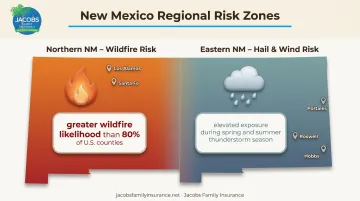
Location matters more than most homeowners realize. Santa Fe County carries elevated wildfire exposure — Wildfire Risk to Communities data shows Santa Fe County has greater wildfire likelihood than 80% of U.S. counties. Los Alamos and other wildland-urban interface communities face similar risk, largely due to surrounding forest terrain that can't be fully cleared of fire risk.
Meanwhile, eastern New Mexico tells a different story. Communities like Roswell, Hobbs, and Portales sit in a corridor known for frequent hail and windstorm activity during spring and summer thunderstorm season. This pattern can shape both premium pricing and claims history in that region.
These regional differences matter for coverage decisions. Bare-minimum dwelling limits might leave WUI homeowners underinsured after a major wildfire, while eastern plains homeowners may want to confirm their policy adequately handles repeat hail claims. Wherever you live, one habit keeps coverage aligned with actual risk.
Annual checkup worth doing: Pull out your declarations page once a year and compare your dwelling coverage limit against current rebuild costs. Reconstruction costs, including materials and labor, rose 3.8% nationally between October 2024 and October 2025, so a limit that was accurate two years ago may already be outdated.
Why Do Mortgage Lenders Require Hazard Insurance?
Lenders aren't being arbitrary. Your mortgage is secured by the home itself. If that collateral burns down or gets destroyed by a storm with no insurance behind it, the lender's financial position collapses along with the structure.
Most lenders don't just require proof of coverage once and move on. They roll the premium into your monthly mortgage payment through an escrow account, then pay the insurer directly each year. This is exactly why "hazard insurance" shows up as a line item on your mortgage statement even though you never bought it as a separate product.
The Force-Placed Insurance Trap
Here's where things get expensive if you're not careful. If your coverage lapses and your lender can't verify proof of insurance, they're allowed to purchase a policy on your behalf, known as force-placed insurance.
Federal rules under Regulation X set a strict notification timeline before charging you:
- Initial notice: Sent at least 45 days before the servicer purchases coverage on your behalf
- Reminder notice: Sent no sooner than 30 days after the first notice, giving you a final window to provide proof of insurance
Force-placed insurance is typically far more expensive than a policy you'd shop for yourself, and it usually protects only the lender's interest, not yours. It often skips personal property and liability coverage entirely.
The fix is straightforward: keep your policy active and your paperwork current. Working with a local, licensed agent who tracks your renewal dates and lender notifications helps you avoid this scenario altogether. Jacobs Family Insurance handles this kind of ongoing documentation support for clients throughout Santa Fe and northern New Mexico.
How Much Does Hazard Insurance Cost in New Mexico?
Since hazard insurance is really your dwelling coverage, its cost is baked into your overall homeowners premium. A few factors drive that number:
- Replacement/rebuild cost: what it would actually cost to reconstruct your home today
- Location and regional risk zone: wildfire exposure in the north, hail and wind exposure in the east
- Coverage amount: higher dwelling limits mean higher premiums
- Deductible: a higher deductible typically lowers your annual premium
What New Mexico Homeowners Actually Pay
The Insurance Information Institute reports a New Mexico HO-3 homeowners policy averaged $1,322 per year based on 2022 NAIC data, compared to $1,569 nationally. That's a full homeowners policy figure, not a stand-alone "hazard insurance" price, since no such separate product exists.
Ways to Lower Your Premium
- Bundle home and auto policies for multi-line discount savings across your portfolio
- Install safety features like fire alarms, burglar alarms, or sprinkler systems
- Pursue wildfire mitigation credentials, such as the IBHS Wildfire Prepared Home designation ($125 application fee, valid three years)
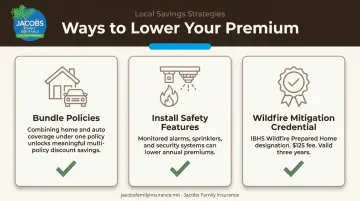
Discounts tied to wildfire mitigation vary by insurer and aren't guaranteed, so ask your agent directly which discounts apply to your policy.
This is where a local agency earns its keep. Jacobs Family Insurance, an Allstate Elite agency based in Santa Fe, works directly with homeowners across Santa Fe and northern New Mexico to identify every discount they qualify for.
There's no anonymous call center here. You talk to the same local agent every time, someone who actually understands adobe construction and high-altitude wildfire exposure firsthand.
Frequently Asked Questions
How much does fire hazard insurance cost?
Cost depends on your home's rebuild value, location and risk zone, coverage limits, and deductible. See the cost section above for New Mexico-specific premium figures.
Why am I being charged fire hazard insurance on my mortgage?
Your lender requires this coverage, bundled into your escrow account, to protect their financial interest in the property that secures your loan. This coverage is built into your existing homeowners policy, not sold as a separate product.
What does fire insurance actually cover?
Fire and smoke damage is typically covered under standard dwelling coverage, including damage from wildfires, electrical malfunctions, and lightning-caused fires. Specific exclusions may apply depending on your policy.
Is hazard insurance the same as homeowners insurance?
No. Hazard insurance refers only to the dwelling portion of your policy, while homeowners insurance is the full package including personal property and liability protection.
Is hazard insurance required by law?
It's not legally mandated, but it's typically a mortgage loan requirement. Once your home is paid off, it becomes optional, though dropping it entirely isn't recommended.
Does hazard insurance cover flood or earthquake damage?
No. Both perils are excluded from standard dwelling/hazard coverage. Flood damage requires a separate NFIP flood policy, while earthquake damage needs its own endorsement.