Not owning a car doesn't automatically mean you're off the hook for liability if you cause an accident behind the wheel of someone else's vehicle. That's exactly the gap non-owner car insurance is designed to fill.
This guide covers everything you need to know: what non-owner car insurance is, what it covers (and doesn't), who actually needs it, what it costs in New Mexico, and how to get it.
Key Takeaways
- Non-owner car insurance provides liability coverage for drivers who don't own a vehicle.
- It covers bodily injury and property damage you cause to others, but not damage to the car you're driving.
- It costs significantly less than standard auto insurance, averaging around $293/year for most New Mexico drivers.
- It functions as secondary coverage — it pays out after the car owner's primary policy limits are reached.
- Optional add-ons like MedPay and UM/UIM may be available depending on the insurer.
What Is Non-Owner Car Insurance?
Non-owner car insurance is a liability-based auto policy for drivers who don't own a vehicle but still need protection when behind the wheel of a borrowed, rented, or shared car.
The key distinction from standard auto insurance: a regular policy follows a specific vehicle, while a non-owner policy follows the driver — meaning it applies regardless of which car you're driving, provided you have the owner's permission.
Non-owner policies are secondary coverage. The car owner's primary insurance responds first in an accident. Your non-owner policy only activates if those limits are exhausted. This matters when you're evaluating how much coverage you actually need.
Not every insurer offers non-owner policies. GEICO, Progressive, and Allstate are among the carriers that do — but availability varies.
What Does Non-Owner Car Insurance Cover?
Non-owner policies are narrower than standard auto insurance — they protect others from harm you cause, not the car you're driving or your own losses. Here's what that looks like in practice.
Coverages Typically Included
The core of any non-owner policy is liability protection — two components:
- Bodily injury liability — Covers medical expenses, lost wages, and legal defense costs for people you injure in an at-fault accident while driving a vehicle you don't own.
- Property damage liability — Covers repair or replacement costs for another person's car, fence, building, or other property you damage in an at-fault accident.
Depending on your insurer and state, optional add-ons include:
- Medical Payments (MedPay) — Covers your own medical and funeral expenses regardless of fault.
- Personal Injury Protection (PIP) — Similar to MedPay but can also cover lost wages; applies in certain states.
- Uninsured/Underinsured Motorist (UM/UIM) — Covers you if an uninsured or underinsured driver causes an accident. In New Mexico, insurers are required to offer UM/UIM coverage, though it can be rejected in writing.
What Non-Owner Car Insurance Does NOT Cover
Knowing what's included helps — but the exclusions are where most drivers get caught off guard. A non-owner policy does not cover:
- Damage to the vehicle you're driving — Physical damage to a borrowed or rented car is not your policy's responsibility. That falls to the car owner's collision/comprehensive coverage or a rental company's damage waiver.
- Your own medical expenses — unless you've added MedPay or PIP, injuries you sustain aren't covered under the base policy.
- Vehicles you use regularly or that belong to household members — routinely driving a car owned by someone in your home typically requires being listed on that vehicle's existing policy. A non-owner policy won't substitute for that.
Who Needs Non-Owner Car Insurance?
Situations Where Non-Owner Insurance Makes Sense
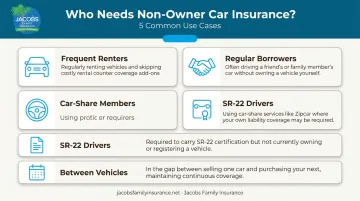
Non-owner coverage fits a handful of specific situations. Here's where it tends to make the most sense:
- Frequent renters — A non-owner policy gives you consistent liability coverage each time you rent, usually cheaper than buying it at the counter. It won't cover damage to the rental itself; a collision damage waiver (CDW) handles that gap, typically at $10–$20 per day.
- Regular borrowers of others' cars — If you frequently drive a friend's or family member's vehicle (someone outside your household), the owner's policy may cover you under permissive use — but only up to their limits. A non-owner policy picks up where those limits leave off.
- Car-share members — Zipcar includes basic liability coverage, but members can face a damage fee of up to $2,500 for collisions or dents. A non-owner policy can supplement the liability side of that coverage.
- Drivers needing an SR-22 — If your license was suspended after a DUI or serious violation, many insurers can attach an SR-22 filing to a non-owner policy so you can meet the financial responsibility requirement without owning a car. Not all carriers offer this, so confirm upfront.
- People between vehicles — Sold your car while waiting to buy another? A non-owner policy keeps your insurance history continuous, which typically means lower premiums when you're ready to insure a new vehicle.
When You Probably Don't Need It
- You drive only a handful of times per year — the cost likely isn't justified given the infrequency.
- You borrow a car from someone in your household — in that case, you should be listed on their policy, not carrying a separate non-owner policy.
How Much Does Non-Owner Car Insurance Cost?
Non-owner car insurance costs less than standard auto insurance because insurers assume people without a car drive less frequently, which translates to lower overall risk.
Here's how the costs compare:
| Coverage Type | National Average | New Mexico Average |
|---|---|---|
| Non-owner car insurance | $506/year | $293/year |
| State minimum auto coverage | $738/year | ~$464–$588/year |
| Full coverage auto insurance | $2,578/year | ~$2,164–$2,198/year |
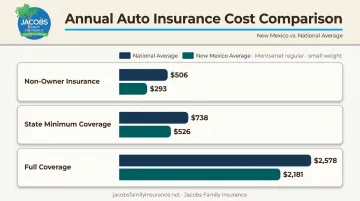
Sources: Insurance.com 2026 data for non-owner and standard averages; NerdWallet and Insurance.com for New Mexico standard auto estimates.
For New Mexico drivers, that $293/year average means saving roughly $170–$295 annually compared to state minimum coverage — without sacrificing liability protection.
Factors That Affect Your Premium
Your actual rate will depend on:
- Driving history and any past violations
- Age and years of licensed driving experience
- Coverage limits you select
- Your ZIP code within New Mexico
- Credit history (New Mexico law permits credit-based insurance scoring with certain restrictions)
Non-Owner Car Insurance vs. Standard Auto Insurance
The two policies serve different purposes. Here's how they compare:
| Feature | Non-Owner Policy | Standard Auto Policy |
|---|---|---|
| Who it covers | The driver | The vehicle and listed drivers |
| Bodily injury liability | ✅ Yes | ✅ Yes |
| Property damage liability | ✅ Yes | ✅ Yes |
| Collision coverage | ❌ No | ✅ Available |
| Comprehensive coverage | ❌ No | ✅ Available |
| Optional MedPay/PIP/UM | ✅ Sometimes | ✅ Yes |
| Primary or secondary | Secondary | Primary |
| Designed for | Drivers without a car | Vehicle owners |
Of all the differences in that table, the primary/secondary distinction has the most practical impact. In an accident, the car owner's policy responds first — your non-owner policy only steps in once those limits are exhausted. For vehicle owners, it works the opposite way: their policy is always the first line of response.
The absence of collision and comprehensive coverage is similarly straightforward: with no owned vehicle to protect against physical damage, there's simply nothing for those coverages to apply to.
How to Get Non-Owner Car Insurance in New Mexico
Steps to Purchase a Policy
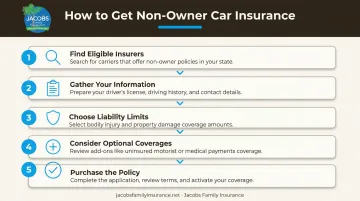
- Find insurers that offer non-owner policies — Not all do. GEICO, Progressive, and Allstate are confirmed options. Call or visit an agent rather than assuming online quote tools will surface non-owner options easily.
- Gather your information — You'll typically need your name, address, driver's license number, Social Security number, and driving history.
- Choose your liability limits — New Mexico's minimums are $25,000 per person / $50,000 per accident for bodily injury, and $10,000 for property damage. Since non-owner coverage is secondary, higher limits give you meaningful protection in serious accidents.
- Consider optional coverages — MedPay covers your own medical costs. UM/UIM coverage adds protection if you're hit by an uninsured driver, which is relevant in New Mexico where uninsured motorists are common.
- Purchase the policy — Many carriers allow purchase by phone or through a local agent. Most policies can be set up in a single call.
Working with a Local Agent in Santa Fe
Jacobs Family Insurance, an Allstate Elite Agency serving Santa Fe and northern New Mexico, can walk drivers through auto insurance options — including whether non-owner coverage fits your needs. With over 10 years in the community, the team knows how to explain coverage limits, optional add-ons, and how non-owner policies interact with New Mexico's state requirements.
You can reach them at (505) 557-2067 or stop by 1547 South St. Francis Drive, Monday through Friday, 9AM–5PM.
Frequently Asked Questions
Can I get car insurance even though I don't own a car?
Yes. Non-owner car insurance exists specifically for this situation. It covers your liability when driving borrowed or rented vehicles and is available from select insurers including GEICO, Progressive, and Allstate.
What is non-owner insurance called?
It's most commonly called "non-owner car insurance" or "non-owner auto insurance." Some insurers use their own branding, such as State Farm's "Personal Mobility Coverage." All refer to the same liability-based policy type for non-vehicle-owning drivers.
Does non-owner car insurance cover rental cars?
A non-owner policy provides liability coverage when driving a rental car, but does not cover physical damage to the rental vehicle. A collision damage waiver from the rental company supplements that gap, typically costing $10–$20 per day at the counter.
Will non-owner car insurance satisfy an SR-22 requirement in New Mexico?
Many insurers can file an SR-22 on a non-owner policy, which can help drivers reinstate a suspended license without owning a vehicle. Not all carriers offer this combination, so confirm SR-22 capability directly when getting quotes.
Do I need non-owner insurance to drive a friend's car?
Your friend's policy typically covers you under permissive use. But if you borrow their car frequently, a non-owner policy adds a safety net in case their liability limits are exceeded in a serious accident.
How long can I keep a non-owner car insurance policy?
These policies work short-term (between vehicles) or long-term for drivers who never plan to own a car. Maintaining continuous coverage also helps avoid premium increases when you eventually buy a vehicle.