Renters insurance and condo insurance are not interchangeable. Using the wrong one creates real gaps in coverage that only become visible after something goes wrong — a fire, a burst pipe, a lawsuit from an injured guest.
This article breaks down what each policy covers, how they differ structurally, and how to determine which one applies to your situation.
Key Takeaways
- Renters insurance covers personal property, liability, and temporary living expenses, but not the unit's physical structure
- Condo insurance covers those same elements plus the interior of your unit (walls, floors, fixtures)
- The key difference comes down to responsibility for the unit's physical interior
- Renters insurance averages $171/year nationally; condo insurance averages $572/year
- Your ownership status determines which policy you need, regardless of building type
Renters Insurance vs. Condo Insurance: Quick Comparison
| Feature | Renters Insurance | Condo Insurance |
|---|---|---|
| Personal Property | ✅ Yes | ✅ Yes |
| Personal Liability | ✅ Yes | ✅ Yes |
| Loss of Use | ✅ Yes | ✅ Yes |
| Interior Dwelling Coverage | ❌ No | ✅ Yes |
| Loss Assessment | ❌ No | ✅ Yes |
| Who Needs It | Tenants | Condo owners |
| Often Required By | Landlords | Mortgage lenders + HOA |
Cost Comparison
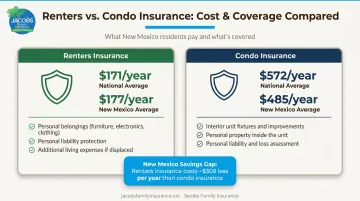
According to Insurance Information Institute data citing NAIC figures, the U.S. average annual premium for renters insurance (HO-4) is $171. In New Mexico specifically, that average is $177.
Condo insurance runs considerably higher. The NAIC's 2022 Homeowners Report puts the U.S. average annual premium for condo insurance (HO-6) at $572. New Mexico condo owners average $485/year — roughly $308 more than renters insurance in the state.
That price difference reflects a fundamental ownership distinction: condo owners insure their unit's interior structure, while renters only need to cover what's inside it.
What Is Renters Insurance?
Renters insurance is designed for tenants — people who live somewhere they don't own. Because the landlord owns the building, their policy covers the structure. Your belongings and your liability? Those are entirely your responsibility.
What It Covers
Personal Property: Your furniture, electronics, clothing, and valuables are covered against perils like fire, smoke, theft, vandalism, and sudden water damage. One key decision here is how your belongings are valued:
- Actual Cash Value (ACV): Reimburses what your items were worth at the time of loss, minus depreciation
- Replacement Cost (RCV): Pays what it actually costs to buy new replacements, with no depreciation deduction — typically about 10% more expensive
For most renters, replacement cost is worth the modest premium increase.
Personal Liability: If a guest slips in your apartment and sues, your renters policy covers medical bills and legal costs up to your policy limit. The landlord's liability coverage does not protect you — only their property.
Loss of Use: If a covered event makes your rental uninhabitable, this pays for hotel stays, meals, and other temporary living expenses while your unit is being repaired. Limits vary by policy.
Who Needs Renters Insurance?
Any tenant who rents their living space — an apartment, a house, or even a condo unit owned by someone else. Worth noting on that last point: if you're renting a condo from its owner, you still need renters insurance, not condo insurance. Ownership is what determines the policy type — not the property itself.
Many renters skip coverage assuming they don't own enough to justify it, or mistakenly believe their landlord's policy protects their belongings. It doesn't. The New Mexico Office of the Superintendent of Insurance notes that a landlord's policy simply does not cover a tenant's personal property.
The New Mexico OSI estimates renters insurance typically costs $15 to $30 per month — less than most streaming subscriptions.
What Is Condo Insurance?
Condo insurance (formally HO-6) covers condominium unit owners. Unlike renting, owning a condo involves two layers of insurance that must work together: the HOA's master policy and your personal HO-6 policy.
The HOA Master Policy — What It Actually Covers
The association's master policy insures shared spaces: the building exterior, roof, hallways, elevators, and common areas. What it covers inside individual units depends on the policy type:
- All-in (all-inclusive): Covers exterior and all interior finishes — doors, windows, cabinetry, flooring — though not owner upgrades
- Bare walls (walls-out): Covers only the structure up to the unfinished drywall; everything inside the unit is the owner's problem
- Single-entity: Covers common areas and standard built-in fixtures as originally constructed, but not improvements made by the owner
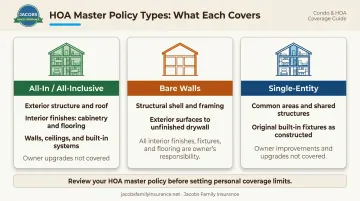
You must review your HOA's master policy before setting personal coverage limits. Most new condo buyers skip this step and end up underinsured.
Interior Dwelling Coverage — The Key Difference
Your personal HO-6 policy fills whatever gap the master policy leaves. In a bare-walls scenario, that means your policy covers the walls, floors, ceilings, built-in appliances, and all fixtures inside your unit.
A concrete example: a pipe bursts and ruins your hardwood floors and custom cabinetry. The master policy covers hallways and common plumbing — not your unit's interior. Your HO-6 picks up that repair cost.
Loss Assessment Coverage
This is the feature that has no equivalent in renters insurance. If a major loss — say, a storm — causes $2 million in damage to the building but the master policy only covers $1.5 million, the HOA divides the $500,000 shortfall among unit owners through a special assessment.
Loss assessment coverage in your HO-6 policy covers your share of that bill.
The New Mexico OSI confirms that if a condominium building is damaged and costs exceed the association's coverage, an HO-6 policy pays for the owner's share of the assessment. That gap between what the HOA carries and what a major disaster actually costs can run into the tens of thousands per unit — which is why condo insurance typically costs more than renters insurance.
Key Differences Explained
Structural Responsibility Is the Core Divide
A renter has no ownership stake in the unit, so structural damage is the landlord's financial problem. A condo owner is responsible for everything from the drywall inward (under a bare-walls policy). That single distinction makes condo insurance broader, more complex, and more expensive.
The Third-Party Policy Problem
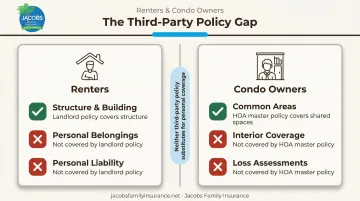
Both renters and condo owners rely on a third-party policy that doesn't fully protect them:
- Renters: The landlord's policy covers the structure but not your belongings or liability
- Condo owners: The HOA master policy covers common areas but leaves interior coverage and assessments to you
Neither third-party policy substitutes for your own coverage — both leave gaps that only a personal policy can close.
Coverage for Improvements and Upgrades
Condo owners who renovate — new countertops, custom tile, upgraded appliances — need to ensure those improvements are reflected in their dwelling coverage. If you installed $15,000 in kitchen upgrades and the original construction was only covered under the master policy, those upgrades could be uninsured after a loss.
Renters don't face this exposure. Because you don't own the unit, structural improvements aren't your responsibility — which is one reason renters insurance stays comparatively simple and affordable.
Which Coverage Is Right for You?
The decision is straightforward once you know your ownership status:
| Situation | Coverage Needed |
|---|---|
| Renting an apartment | Renters insurance |
| Own a condo unit | Condo insurance (HO-6) |
| Renting a condo from its owner | Renters insurance |
| Own a condo, renting it to tenants | Landlord/dwelling fire insurance |
Getting this wrong has real consequences. A condo owner carrying only renters insurance has no interior dwelling coverage — meaning a burst pipe, fire, or vandalism that damages walls, floors, or fixtures comes entirely out of pocket. A renter buying condo insurance is paying for structural coverage that isn't their responsibility.
For New Mexico Residents: Local Factors Matter
Santa Fe sits in an area with meaningful regional risks. The USDA Forest Service's Wildfire Risk to Communities tool classifies Santa Fe as having wildfire risk higher than 87% of U.S. communities — a factor that affects how you think about both personal property limits and loss of use coverage, whether you rent or own.
That wildfire exposure also makes coverage gaps more costly. On top of that, HOA master policy structures vary across Santa Fe's condo communities — so before settling on coverage limits, condo owners need to know exactly what their association's policy covers and where it stops.
Jacobs Family Insurance, a family-owned Allstate Elite agency serving Santa Fe and northern New Mexico for over a decade, helps both renters and condo owners work through these decisions.
If you're unsure whether you need renters or condo insurance — or want to make sure your current coverage actually matches your situation — reach out to the Jacobs Family team at (505) 557-2067, stop by the office at 1547 South St. Francis Drive in Santa Fe, or request a free quote at jacobsfamilyinsurance.net.
Frequently Asked Questions
Is condo insurance more expensive than renters insurance?
Yes. Nationally, condo insurance averages $572/year versus $171/year for renters insurance. The gap exists because condo owners must insure their unit's interior (walls, floors, and fixtures) which renters have no responsibility for.
How is condo insurance different from renters insurance?
The primary difference is dwelling coverage. Condo owners must insure their unit's interior because the HOA master policy only covers common areas and the building exterior. Renters have no interior coverage responsibility; the landlord carries that obligation.
Do I need both condo insurance and renters insurance?
No. You need one or the other based on ownership. If you own the condo, get condo insurance. If you're renting it from someone else, get renters insurance.
What insurance do I need if I rent out my condo?
Condo owners who rent to tenants typically need landlord insurance (also called dwelling fire or rental property insurance) rather than a standard HO-6 policy. Your tenants would carry their own renters insurance separately.
Does my HOA master policy replace the need for condo insurance?
Not even close. The master policy covers shared areas and the building structure — nothing inside your unit. You'd still have no coverage for personal belongings, interior walls and fixtures, personal liability, or special assessments after a major loss.
What happens if I have renters insurance but I actually own my condo?
You'd have significant coverage gaps — specifically, no interior dwelling protection for your walls, floors, fixtures, or any improvements you've made. After a covered loss, those repair costs would come directly out of your pocket.