

The fix isn't working harder. It's planning earlier.
This guide gives renters a phase-by-phase moving timeline — from the first box you pack to the first week you're settled in — so nothing critical falls through the cracks.
Key Takeaways
- Start planning 6–8 weeks before your move date to avoid last-minute scrambles
- Break the process into three phases: pre-move, moving day, and post-move
- Notify USPS, utilities, your employer, and your bank at least 2 weeks before moving
- Secure renters insurance before move-in day — not after
- Document your new apartment's condition within 24–48 hours of move-in to protect your security deposit
Why a Moving Timeline Matters
Most moving stress doesn't come from carrying heavy furniture. It comes from uncoordinated timing — tasks pile up without a plan, and critical steps get buried under the pressure of packing.
The same survey cited above found that 48% of movers identified packing as their top stressor, while 47% said sorting belongings was equally overwhelming. Without a timeline, the operational tasks — utility transfers, address changes, insurance setup — tend to get pushed until the last moment. That's right when you're least equipped to handle them.
A written timeline does two things:
- Distributes the workload across weeks instead of days, so no single point feels overwhelming
- Acts as a checklist so nothing critical — like arriving at your new apartment with no electricity — catches you off guard
Your Apartment Moving Timeline: Phase by Phase
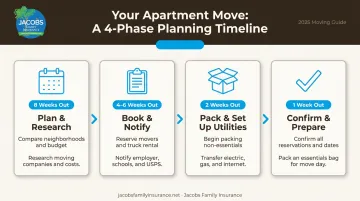
8 Weeks Before Moving Day
This is your planning and research phase. The decisions you make here set everything else up.
What to do at the 8-week mark:
- Confirm your move-out date with your current landlord
- Finalize your new lease or narrow down apartment options
- Set a realistic moving budget — local professional moves average around $1,400, while truck rentals for local moves typically run $175–$590 depending on home size
- Decide between hiring movers or renting a truck
On the mover question: book early. According to Allied Van Lines, 60–80% of all moves happen between May and September, and they recommend booking at least 2 months ahead for local moves. In Santa Fe and Northern New Mexico, demand during summer months is real — don't assume availability.
When vetting movers, get at least 3 estimates and avoid anyone who quotes over the phone without seeing your belongings or demands full payment upfront.
4–6 Weeks Before Moving Day
This is the booking and notifying phase. Once your movers are locked in, shift focus to the paperwork side of moving.
Book and reserve:
- Confirm your moving company or truck rental in writing
- Start collecting packing supplies (boxes, tape, bubble wrap)
Notify these contacts of your upcoming address change:
- USPS (allow up to 2 weeks for mail forwarding to take effect)
- Employer (for payroll and tax records)
- Bank and credit card companies
- Insurance providers
- Subscription services and memberships
This window is also the right time to contact your insurance provider about renters insurance for your new address. You can set up most policies with an activation date tied to your move-in day, so coverage starts the moment your lease begins rather than after everything is already inside.
2 Weeks Before Moving Day
Active packing begins here. Start with non-essential spaces first — guest rooms, storage closets, seasonal items — and work toward everyday rooms last.
Packing tips that save time:
- Label every box with both the destination room and a brief contents description
- Pack heavier items in smaller boxes
- Keep an inventory list as you go (you'll want it on moving day)
Utility setup — don't wait: Contact your providers now to confirm transfer or new-service dates. PNM recommends at least 3 business days' notice to establish electricity service by moving day. For internet, schedule your installation appointment as soon as possible — technician windows can book out quickly.
In Santa Fe, starting water/sewer service through the City requires a signed lease, valid photo ID, and a completed application. Give yourself a full week of lead time.
1 Week Before Moving Day
Use this week for confirmations and final preparations — not new decisions.
- Reconfirm your movers or truck reservation
- Pack an essentials bag: medications, phone chargers, important documents, a change of clothes, and basic toiletries
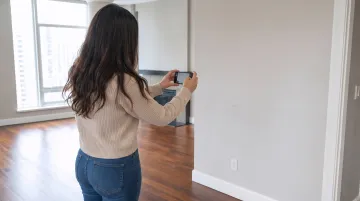
- Do a walkthrough of your current apartment with your phone camera — photograph every room, every wall, every existing scuff or stain
- Review your security deposit return process with your landlord so you know what's expected
Under New Mexico law, landlords must return your deposit with an itemized list of any deductions within 30 days of move-out. Normal wear and tear cannot be deducted. If there's a dispute, your timestamped photos are the evidence that separates a full refund from an unfair deduction.
Moving Day and the First Week After
Moving Day Priorities
Before you hand over your keys:
- Do a final sweep of every room, closet, cabinet, and outdoor space
- Take timestamped photos of your old unit after it's emptied
- Keep an inventory list of everything loaded onto the truck
When you arrive at your new apartment, inspect before you unload. Walk every room and note any pre-existing damage — scratches, stains, broken fixtures — in writing. Send that list to your landlord the same day. Skipping this step is one of the most common ways renters lose security deposits for damage they didn't cause.
Once the inspection is done, confirm utilities are active, then prioritize the essentials: bed, bathroom, and kitchen — in that order.
The First Week After Moving
A few deadlines kick in immediately after move-in:
- Update your address with USPS, your bank, and any financial institutions
- New Mexico MVD: You're required to notify the Motor Vehicle Division of your new address within 10 days of moving — this applies to both your driver's license and vehicle registration
- Voter registration: Update your address if you've changed counties or precincts
- Test smoke detectors and locate your breaker box and water shutoff valve before you need them in an emergency
Review the move-in condition report with your landlord within the first 24–48 hours if you haven't already. That documentation is the only protection you have when it comes time to move out and reclaim your deposit.
Renters Insurance: A Step Most Movers Miss
According to the Harvard Joint Center for Housing Studies, roughly 45% of renter households nationwide don't carry renters insurance. That's a significant gap — and the transition period around a move is precisely when belongings are most exposed.
What Renters Insurance Covers
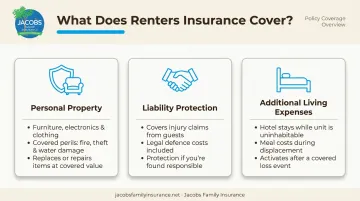
A standard renters insurance policy typically includes:
- Personal property — Covers furniture, electronics, clothing, and other possessions against covered perils like fire, theft, or water damage
- Liability protection — Covers you if someone is injured in your rental unit and pursues a claim
- Additional living expenses (ALE) — Helps pay for hotel stays and extra food costs if a covered loss makes your apartment temporarily uninhabitable
The average annual renters insurance premium in New Mexico was $177 in 2022, according to the Insurance Information Institute — roughly $15 a month.
What It Doesn't Cover
Renters insurance is not the same as moving insurance. Damage caused by your moving company during transit falls under the mover's own liability — not your renters policy. Interstate movers are federally required to offer two options: Released Value (which limits liability to just 60 cents per pound per article) and Full Value Protection (which covers replacement value). Ask your mover explicitly which option you're getting.
Your landlord's property insurance also does not cover your belongings. The National Association of Insurance Commissioners confirms this directly — if there's a fire or theft, the building may be covered, but your furniture, your laptop, and your clothes are not.
Getting covered before your move-in date closes that gap. Jacobs Family Insurance in Santa Fe can set up an Allstate renters policy timed to your move — so your belongings are protected from day one. Call (505) 557-2067 or request a free quote at jacobsfamilyinsurance.net. The office is open Monday through Friday, 9 AM–5 PM.
Common Moving Mistakes to Avoid
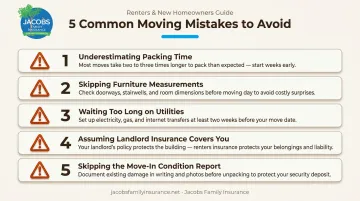
Even well-organized movers run into preventable problems. Here are the ones that come up most often:
- Underestimating packing time. Packing consistently ranks as the top moving stressor for a reason — it takes far longer than most people budget for. Start at least 2 weeks out, not the night before.
- Skipping furniture measurements. A couch that fit perfectly in your old place may not clear the stairwell or doorway in the new one. Measure large pieces against your new apartment's entry points before moving day.
- Waiting too long on utilities. Setting up electricity or internet on moving day often means going days without service. Providers need advance notice — sometimes a week or more.
- Assuming the landlord's insurance covers you. It doesn't. The National Association of Insurance Commissioners (NAIC) is clear: personal belongings damaged or stolen are not covered by the landlord's policy.
- Skipping the move-in condition report. Without documented proof of the apartment's pre-existing condition, you have no defense if a landlord tries to charge you for damage that was already there.
Frequently Asked Questions
How far in advance should I start planning my apartment move?
Six to eight weeks is the right lead time for most apartment moves. That window gives you enough runway to book movers, arrange utilities, notify important contacts, and secure renters insurance before move-in day — without the last-minute scramble.
What documents do I need when signing a lease on a new apartment?
Most landlords require a government-issued photo ID, proof of income (recent pay stubs or an offer letter), bank statements, and sometimes references from previous landlords. Having these ready before your first meeting with a landlord speeds up the approval process considerably.
Should I get renters insurance before I move in or after?
Get coverage before you move in. Your belongings are at risk from the moment they're in transit, not just once they're inside the new unit. Renters insurance policies can typically be set up with an activation date tied to your lease start, so coverage begins on day one.
What happens to my renters insurance when I move and how do I change my address?
Contact your insurance provider before moving day to update your policy with the new address. Your agent will process the transfer, and your premium may adjust based on the risk profile of your new location.
Will renters insurance cover moving expenses or damage caused by movers?
Generally, no. Renters insurance covers personal property loss from covered perils like fire or theft — not moving costs or damage caused by the moving company. For move-related damage, ask your mover directly about their valuation coverage options before the truck is loaded.