Introduction
Many condo owners assume their HOA's master policy has them fully covered. It doesn't.
That policy typically protects the building's exterior, common areas, and shared amenities, like the roof, elevators, and parking structure. What it usually won't touch: your furniture, your kitchen upgrade, or the medical bill if a guest slips on your floor.
That gap is exactly what an HO-6 policy, commonly called condo insurance, is built to fill. Without one, unit owners in Santa Fe, Rio Rancho, Taos, and across northern New Mexico can face thousands of dollars in out-of-pocket costs after a covered loss.
This guide breaks down what HO-6 insurance is, what it covers, what it excludes, and how to find the right level of protection for your condo.
Key Takeaways
- HO-6 insurance covers what your HOA's master policy doesn't: belongings, upgrades, and liability
- Master policies come in three types (bare walls, single entity, all-in), each changing your coverage needs
- Loss assessment coverage often defaults to just $1,000–$2,000, too low for major shared-property claims
- The national average costs $510 per year, though New Mexico risks like wildfire smoke can raise rates
What Is Condo (HO-6) Insurance?
An HO-6 policy is your personal insurance as a condo owner. It's designed to cover what the HOA's master policy leaves out: your unit's interior, your belongings, and your liability if someone gets hurt in your space.
Think of condo ownership as having two layers of protection:
- The master policy — owned and paid for by the HOA or condo association, covering the building structure, roof, common hallways, and shared amenities
- Your HO-6 policy — covering the interior of your unit, your personal property, and your liability exposure
Where one layer ends and the other begins depends entirely on how your association's master policy is written.
Types of Master Policies (and Why They Matter)
Master policies vary widely from one HOA to the next. The type your HOA carries directly affects how much interior coverage you need to buy on your own HO-6 policy.
| Master Policy Type | What It Covers | What You're Responsible For |
|---|---|---|
| Bare walls | Building exterior and shared spaces only | Everything inside your unit, including original fixtures |
| Single entity | Original fixtures and equipment as built | Any renovations, upgrades, or improvements you've made |
| All-in | Structural improvements and upgrades too | Personal belongings and liability |
According to Progressive's breakdown of condo coverage, the master policy structure determines what portion of the unit falls under the association's responsibility versus the owner's. That's a critical distinction, and one worth confirming before you buy coverage.
Before purchasing an HO-6 policy, request a copy of your association's bylaws or master policy summary from your property manager. This tells you exactly where the association's coverage stops and where yours needs to start.
Who actually needs this coverage? A few groups, typically:
- Mortgage lenders often require proof of HO-6 coverage as a loan condition
- HOA bylaws frequently mandate minimum coverage levels, even for owners who don't have a mortgage
- Buyers in ski or resort condos, such as those in Taos, may face additional requirements tied to rental or seasonal-use provisions
Check these requirements directly with your association, since they vary from one condo community to the next.
What Does an HO-6 Policy Cover?
A standard HO-6 policy is built around five core components. Each one addresses a different risk you face as a condo owner, separate from what the master policy handles.
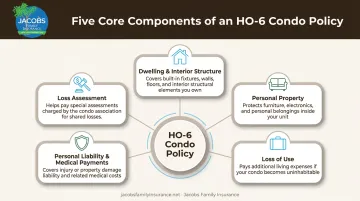
Dwelling and Interior Structure Coverage
This covers the parts of your unit that are your responsibility, such as walls, floors, built-in cabinets, and fixtures, when the master policy doesn't. The amount you need depends heavily on your master policy type.
- Bare walls policy: You'll need a higher interior limit since you're insuring everything inside the unit
- All-in policy: You may need less, since structural upgrades are already covered by the association
Personal Property Coverage
This protects your belongings, such as furniture, electronics, and clothing, against named perils like fire, theft, wind, and vandalism.
Pay attention to how your policy settles a claim:
- Actual cash value pays the depreciated value of your item at the time of loss
- Replacement cost pays what it actually costs to buy a new equivalent, with no depreciation deducted
Replacement cost coverage costs more upfront but pays out far more when you actually need it.
Loss of Use / Additional Living Expenses
If a covered event, like a fire or major water damage, makes your unit temporarily uninhabitable, this coverage pays for:
- Temporary housing (hotel or short-term rental)
- Meals beyond your normal food budget
- Other reasonable costs tied to displacement
Personal Liability and Guest Medical Payments
Liability coverage pays legal and medical costs if a guest is injured in your unit or you accidentally damage someone else's property. Medical payments coverage works differently: it applies regardless of who's at fault, covering minor injuries without the need to prove negligence.
Loss Assessment Coverage
This is where a lot of condo owners get caught off guard. Loss assessment coverage pays your share of costs when the HOA levies a special assessment against unit owners, typically because a shared-property claim exceeded the master policy's limits or deductible.
Default limits are often surprisingly low. According to NerdWallet's 2026 condo insurance guide, many policies include only $1,000 to $2,000 in loss assessment coverage as a baseline.
Here's why that matters. Allstate's own illustration walks through a scenario where a $550,000 covered building loss exceeds a $500,000 master policy limit. That leaves a $50,000 gap. Split across 50 unit owners, each one gets hit with a $1,000 assessment, right at the edge of a default limit.
Now imagine a larger building, a bigger gap, or fewer owners sharing the cost. That default limit can get exhausted fast. An endorsement to raise your loss assessment limit is usually inexpensive relative to the protection it adds.
What's Not Covered—and Optional Add-Ons Worth Considering
What's Not Covered: Optional Add-Ons Worth Considering
Every HO-6 policy has exclusions. Knowing them upfront helps you decide what additional coverage makes sense.
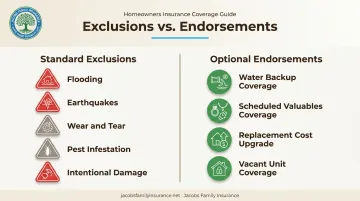
Common exclusions, per State Farm's HO-6 policy overview, include:
- Flooding and earthquakes
- Normal wear and tear or gradual deterioration
- Pest and animal infestations
- Intentional damage
None of these are minor gaps. A flood exclusion, for instance, means you'd need a separate flood policy entirely. Standard HO-6 coverage won't touch it.
Endorsements Worth Discussing
A handful of add-ons regularly close the gaps left by standard policies:
- Water backup coverage: covers sewer or drain backups, which aren't covered by default
- Scheduled coverage for valuables: protects jewelry, art, or collectibles above standard sublimits
- Replacement cost upgrades: swaps actual cash value settlement for full replacement cost on contents
- Vacant or unoccupied unit coverage: relevant if your condo sits empty for extended periods, such as a seasonal property
New Mexico Considerations Worth Raising With an Agent
Two regional risks are worth a specific conversation:
Wildfire smoke damage can harm a home even when the structure never burns. According to FEMA's guidance on residential smoke damage, smoke exposure causes real physical damage—think soot, corrosion, and staining. New Mexico communities can see smoke plumes from regional wildfires even when the fire itself is far away.
Flash flooding is the second risk worth flagging. Burn-scar areas in parts of New Mexico carry elevated flood risk following wildfire seasons, and since flooding is a standard HO-6 exclusion, this is worth a direct conversation with your agent if you live near a burn scar.
How Much Does Condo Insurance Cost—and How Much Coverage Do You Need?
Cost is one of the first questions condo owners ask. The national picture gives a useful starting point, but your actual premium will look different.
National benchmark: According to NerdWallet's 2026 rate analysis, the median condo insurance policy runs about $510 per year, or roughly $43 per month. That figure is based on a sample policy with a $1,000 deductible, $70,000 in dwelling coverage, $50,000 in contents, and $300,000 in liability.
Your rate will move up or down based on:
- Location and regional risk: wildfire exposure, crime rates, and weather patterns all factor in
- Unit value: higher-value condos generally need higher interior and contents limits
- Coverage limits and deductible: raising your deductible typically lowers your premium
- Claims history: a clean history usually earns better pricing
Estimating Your Coverage Needs
A few practical steps help you land on the right numbers:
- Take a home inventory: walk through your unit and list your belongings, with rough replacement values
- **Review your master policy type**: whether it's bare walls, single entity, or all-in determines how much interior coverage you need
- Factor in unit upgrades: new flooring, cabinets, or fixtures may need to be reflected in your interior limit
- Confirm lender or HOA minimums: check your mortgage documents and HOA bylaws for required coverage levels
How to Get the Right Condo Insurance Coverage in New Mexico
Getting this right starts with paperwork, not shopping.
Start by reviewing your HOA's master policy. Knowing whether it's bare walls, single entity, or all-in tells you exactly what your HO-6 policy needs to pick up.
From there, talk with a local licensed agent who understands condo communities across Santa Fe, Taos, Rio Rancho, and Los Alamos. Coverage needs can look different depending on the community and its governing documents.
Jacobs Family Insurance offers that kind of guidance. As a local, family-owned Allstate Elite Agency based in Santa Fe, the team helps condo owners work through interior coverage, personal property limits, liability, and loss assessment protection.

Rather than routing you through a call center, you work directly with a local agent familiar with New Mexico's condo landscape.
A few other things worth doing:
- Ask about bundling. Combining condo insurance with an existing auto or other policy can lower your overall premium across your full insurance portfolio, not just the new policy
- Get multiple quotes before settling on a policy
- Reassess coverage annually, especially after renovations, a change in the HOA's master policy, or a jump in local property values
You can reach out to Jacobs Family Insurance for a free, no-obligation quote and a conversation about how your specific condo community's master policy affects your coverage needs.
Frequently Asked Questions
What kind of insurance do I need if I own a condo?
Condo owners need an HO-6 policy to cover personal belongings, interior upgrades, and liability. This works alongside the HOA's master policy, which covers the building structure and common areas.
How does homeowners insurance work in a condo?
The two policies divide responsibility by location. Your HO-6 policy insures what's inside your unit's walls, while the master policy covers hallways, roofs, elevators, and other areas shared with neighbors.
How much should homeowners insurance cost for a condo?
The national average runs around $510 per year, though your actual cost depends on your location, coverage limits, and deductible choices. New Mexico rates can vary based on wildfire exposure and other regional factors.
What's the difference between an HO-3 and HO-6 policy?
An HO-3 policy covers a full single-family home, including the structure itself. An HO-6 policy is built specifically for condo interiors, belongings, and liability, since the building structure is handled separately by the association's master policy.
Is condo insurance required by lenders or HOAs?
Yes, in most cases. Mortgage lenders typically require HO-6 coverage as a loan condition, and many HOA bylaws mandate minimum coverage levels even for owners without a mortgage.
Does condo insurance cover water damage?
Sudden, accidental water damage, like a burst pipe, is typically covered. Sewer backups and flooding require separate endorsements or policies, since standard HO-6 coverage excludes both by default.