That's where homeowners liability insurance, known in the policy world as Coverage E, comes in. It's one of the most standard parts of a home insurance policy, yet also one of the least understood.
This guide breaks down what Coverage E actually pays for, what it leaves out, how much protection you realistically need, and what New Mexico homeowners should know about local liability rules.
Key Takeaways
- Coverage E pays for injuries or property damage you cause to others.
- Protection typically extends both on and off your property, plus legal defense costs.
- Most policies start at $100,000, though higher-value homes may need $500,000 or an umbrella policy.
- Business incidents, auto accidents, and intentional acts fall outside standard liability coverage.
What Is Homeowners Liability Insurance?
Homeowners liability insurance is third-party protection built into a standard home insurance policy. Unlike dwelling or personal property coverage, which protects your stuff, Coverage E protects you financially when someone else gets hurt or their property gets damaged because of you.
The trigger is legal responsibility. Coverage only kicks in if you, or a household member, bear legal fault or negligence for the incident. If nobody's at fault, there's no liability claim to file.
A few things worth knowing about how this coverage works:
- It generally extends beyond your home, covering incidents that happen elsewhere, subject to your policy's territory and exclusions.
- The same policy typically covers household relatives living with you.
- The policy usually includes pets too, which matters if you own a dog with a bite history.
Liability Coverage vs. Medical Payments Coverage (Coverage F)
Homeowners policies often include a second, smaller layer of protection called Medical Payments to Others, or Coverage F. It's easy to confuse the two, but they work very differently.
| Feature | Coverage E (Liability) | Coverage F (MedPay) |
|---|---|---|
| Trigger | Fault or negligence | No-fault, regardless of blame |
| Typical limit | $100,000+ | $1,000-$5,000 |
| Best for | Lawsuits, settlements, serious injuries | Quick payment for minor medical bills |
| Covers household members? | No | No |
If a guest trips on your porch step and needs a few stitches, MedPay might cover it without any finger-pointing. If that same fall leads to a lawsuit over a permanent injury, Coverage E is what actually protects your assets.
Standard Coverage Limits
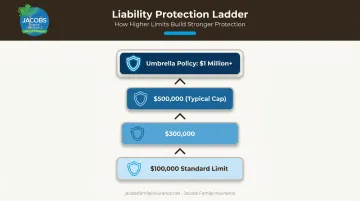
Most homeowners policies start at $100,000 in liability coverage. According to Allstate's guide on homeowners liability coverage, carriers typically offer tiered limits—commonly $100,000, $300,000, or $500,000—so homeowners can scale protection based on their exposure and net worth.
A $100,000 limit might sound like a lot, until you consider a serious injury claim with lost wages, ongoing medical care, and pain-and-suffering damages. That number can disappear fast.
What Does Homeowners Liability Insurance Cover?
This is the part most homeowners actually want to know: what real-world situations does Coverage E respond to?
Injuries on Your Property
If a guest is hurt at your home and you're found responsible, liability coverage can pay for:
- Medical bills and hospital costs
- Lost wages from missed work
- Pain and suffering damages
- Legal costs if the injured party sues
The unshoveled walkway is the classic example, but the same logic applies to a loose stair railing, an unfenced pool, or a dark stairwell nobody warned a guest about.
Injuries or Incidents Away From Your Property
Liability protection doesn't stop at your front door. If you accidentally knock someone over while riding a bike at the park, or damage a hotel room during a vacation, that incident may still be covered under your homeowners policy. This coverage extends away from home, subject to your policy's territory limits and exclusions.
Property Damage Caused by Household Members
Liability isn't limited to injuries, either. A classic scenario: your teenager throws a baseball that shatters the neighbor's window. Liability coverage can help pay to repair or replace the damaged property, up to your policy limits, since a member of your household caused the loss.
Dog Bites and Pet-Related Incidents
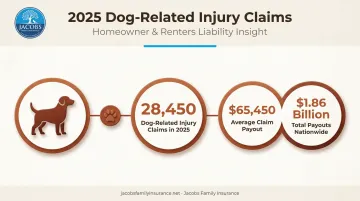
Pets bring their own version of household liability risk. Pet liability is one of the most common, and costly, claims homeowners face. In 2025, the U.S. saw an estimated 28,450 dog-related injury claims, averaging $65,450 each, for a total of $1.86 billion in payouts, according to Triple-I's 2025 report on dog-related injury claims.
Most standard policies cover dog bites up to your liability limit. That said:
- Some insurers apply breed restrictions or exclusions.
- A documented bite history can affect coverage or pricing.
- Rules vary significantly by carrier, so it pays to confirm your specific policy language.
Legal Defense and Lawsuit Costs
If you're sued over a covered incident, liability coverage typically pays:
- Attorney fees
- Court costs
- Settlements or judgments, up to your policy limit
This applies even in cases where the lawsuit ultimately doesn't hold up. Legal defense alone can run into the tens of thousands of dollars, a cost this coverage is built to absorb.
Quick reference: incident to coverage
| Incident | Typically Covered? |
|---|---|
| Guest slips on icy walkway | Yes, medical bills and legal costs |
| Dog bites a visitor | Yes, up to policy limits |
| Child breaks neighbor's window | Yes, repair/replacement costs |
| You injure someone at a park | Often yes, subject to policy terms |
| Client hurt at your home office | No, needs business liability |
What Isn't Covered by Homeowners Liability Insurance?
Coverage E is broad, but it has firm boundaries, and understanding these gaps matters just as much as knowing what's included.
Business-related incidents. If a client slips and falls while visiting your home-based business, standard liability typically won't cover the claim, and you'll need separate business or commercial liability insurance for anything tied to professional activity.
Auto accidents and household injuries create two important exclusions:
- Vehicle-related injuries fall under auto liability insurance, not homeowners coverage.
- Injuries to you or a resident family member aren't covered by Coverage E at all; health insurance handles those instead.
Intentional or criminal acts. If you or a household member deliberately causes harm or damage, liability protection generally won't apply, since this coverage exists for accidents and negligence, not intentional misconduct.
How Much Liability Coverage Do You Need?
There's a simple rule of thumb here: your liability limit should match or exceed your net worth. Add up your savings, home equity, investments, and vehicles. That total gives you a rough benchmark for how much protection you need if you're ever sued.
A few factors that push that number higher:
- Attractive nuisances like pools, trampolines, or detached structures increase the odds of an injury claim.
- Teen drivers or frequent guests raise your overall exposure.
- High-value assets mean more to lose if a judgment exceeds your policy limit.
The good news? Raising your liability limit is typically inexpensive compared to increasing dwelling or personal property coverage. Bumping from $100,000 to $300,000 often costs far less than you'd expect for the added protection.
Once your assets exceed what standard limits (often capped around $500,000) can cover, it's time to consider an umbrella policy. Umbrella insurance sits on top of your existing liability coverage and kicks in once that limit is exhausted, often adding $1 million or more in protection.
If you're not sure where you stand, a personalized review helps.
Jacobs Family Insurance, a family-owned Allstate Elite agency based in Santa Fe, works with homeowners across northern New Mexico to right-size liability coverage based on real assets and real risk, not guesswork. No call centers, just a local agent who knows the area.
Homeowners Liability Insurance for New Mexico Homeowners
New Mexico has its own legal quirks that affect how liability claims play out, from dog bite rules to rural properties and high-value homes in Santa Fe and Los Alamos.
Dog Bite and Premises Liability Rules
New Mexico follows a knowledge-based standard for dog bite liability. Under the state's current jury instruction, an owner is liable if they knew or should have known the dog had a vicious tendency toward a human (New Mexico Supreme Court, UJI 13-506). That's different from a strict "first bite is free" rule; a prior manifestation of aggression, not necessarily a literal bite, can establish that knowledge.
For premises liability more broadly, New Mexico property owners owe visitors ordinary care to keep conditions reasonably safe, whether or not a hazard is obvious.
Rural and Ranch Property Exposures
That same duty of care looks different on rural acreage, though. Northern New Mexico's ranch and rural properties come with liability risks that a typical suburban policy doesn't anticipate:
- Livestock getting loose onto a road or neighboring property
- Outbuildings and equipment storage that can attract injuries
- Remote acreage with ponds, fencing gaps, or elevation hazards
Standard homeowners policies often don't fully account for these farm-style exposures, which means a coverage review matters more for ranch owners than for a typical in-town homeowner.
High-Value Homes in Santa Fe and Los Alamos
Property values factor into liability risk just as much as property type does. Homes in Santa Fe and Los Alamos with higher values often carry higher liability exposure, too, and homeowners with significant assets in these markets frequently need higher Coverage E limits or an umbrella policy layered on top.
Jacobs Family Insurance has spent more than a decade serving Santa Fe and northern New Mexico communities, from Los Alamos to Roswell and Carlsbad, helping homeowners match coverage to their actual risk profile.

Frequently Asked Questions
What does liability mean on homeowners insurance?
Liability means you're financially responsible for injuries or property damage you cause to others. Homeowners insurance builds this protection in as Coverage E, paying for claims where you're found at fault.
Is homeowners liability insurance required by law?
Mortgage lenders almost always require a standard homeowners policy as a condition of your loan, and that policy includes liability coverage. Liability insurance itself isn't legally mandated outside of this lender requirement.
Does homeowners liability insurance cover dog bites?
Most policies cover dog bites up to your liability limit. However, some insurers apply breed restrictions or exclusions based on a dog's bite history.
What's the difference between liability coverage and medical payments coverage?
Liability coverage (Coverage E) is fault-based with higher limits, used for lawsuits and settlements. Medical payments coverage (Coverage F) is no-fault with smaller limits, meant for quick minor medical bill payouts.
How much liability insurance do I need for my home?
A common rule is to match or exceed your total net worth, including savings, home equity, and investments. If that exceeds your policy limit, an umbrella policy adds extra protection.
Does homeowners liability insurance cover injuries that happen away from my home?
Generally, yes. Coverage typically extends beyond your property as long as you're found legally responsible, subject to your policy's specific terms and territory.