Introduction
A pipe bursts overnight. A kitchen fire spreads faster than expected. A wildfire evacuation order forces you out with an hour's notice. Suddenly your apartment is uninhabitable — leaving you facing hotel bills, restaurant meals, and storage fees while still owing rent.
For renters without a clear understanding of their policy, this scenario is financially brutal. According to the Insurance Information Institute, 44.1% of New Mexico renter-occupied units already spend 30% or more of their income on rent and utilities — leaving almost no margin to absorb unexpected displacement costs.
Loss of use coverage (Coverage D) is the part of your renters insurance policy built for exactly this situation. Most standard renters policies include it. Few renters ever think to look it up until they need it.
This guide explains what it covers, what triggers it, how to file a claim, and how much you actually have, with particular attention to wildfire-related displacement risks relevant to Santa Fe and northern New Mexico.
Key Takeaways
- Loss of use (Coverage D) pays extra living costs (hotel stays, meals, storage) when a covered event makes your rental uninhabitable
- It reimburses costs above your normal baseline spending, not your everyday expenses
- Coverage limits are typically a flat dollar amount or a percentage of personal property coverage
- The civil authority provision can trigger coverage during wildfire evacuations, even if your unit wasn't damaged
- Coverage ends when repairs finish or your dollar limit is reached, whichever happens first
What Is Loss of Use Coverage in Renters Insurance?
The Basic Definition
The ISO HO-4 renters policy form labels this protection Coverage D — Loss of Use, and defines it as coverage for additional living expenses when a covered peril makes the residence "not fit to live in." You'll also see it called **ALE (Additional Living Expenses); both terms mean the same thing.
To find it in your policy, check the declarations page for "Loss of Use," "Coverage D," or "Additional Living Expenses." That's where your specific dollar limit appears.
The "Above Normal Spending" Rule
Most renters misunderstand how ALE is calculated. It doesn't pay your regular expenses — it covers the difference between what you normally spend and what you're forced to spend while displaced.
A simple example:
| Expense | Normal Weekly Cost | Displaced Weekly Cost | ALE Reimbursement |
|---|---|---|---|
| Food | $150 | $350 | $200 |
| Laundry | $0 (home washer) | $40 | $40 |
| Housing | $1,200/month rent | $1,400/month hotel | $200/week |
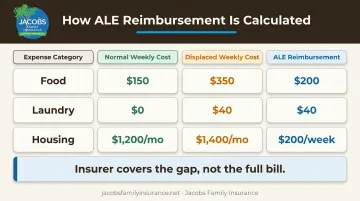
The insurer covers the gap, not the whole bill.
Renters vs. Homeowners: Key Difference
For homeowners, loss of use limits are typically tied to dwelling coverage, which is a much larger number. Renters don't insure the building itself, so Coverage D is set differently:
- Homeowners: Coverage D is often 20-30% of dwelling coverage, which can mean $60,000+ in ALE protection
- Renters: Coverage D is typically a percentage of personal property coverage or a flat dollar amount, often $5,000–$30,000
Limits are smaller partly because apartment repairs tend to move faster than rebuilding a house. But a short displacement in an expensive rental market can burn through that limit quickly — worth knowing before you need it.
What Loss of Use Coverage Pays For — and What It Doesn't
Typically Covered Expenses
When a covered loss displaces you, ALE can reimburse:
- Hotel stays, Airbnb rentals, or other short-term housing
- Restaurant meals above what you'd normally spend on groceries
- Laundry and dry cleaning when you can't access your home appliances
- Increased commuting costs caused by displacement
- Pet boarding when temporary accommodations don't allow animals
- Storage unit fees for belongings you can't bring to temporary housing
The civil authority provision is a separate but related trigger worth knowing. If a government authority orders evacuation — as happened during the 2022 Hermits Peak/Calf Canyon fires that displaced residents across San Miguel, Mora, Taos, Colfax, and Santa Fe counties — your policy may cover displacement costs even if your unit wasn't directly damaged. ISO standard forms typically allow up to two weeks under this provision; some policies extend it to 30 days. Check your specific policy to confirm the limit that applies to you.
What Loss of Use Does NOT Cover
| Not Covered | Why |
|---|---|
| Your ongoing rent obligation | Still owed to your landlord during displacement |
| Standard utility bills | Not an additional cost from the covered event |
| Personal property damage | Separate coverage (Coverage C), not Coverage D |
| Lost income from working at home | Income loss is not an ALE expense |
| Luxury accommodations upgrades | Reimbursement is for maintaining normal lifestyle, not improving it |
| Flood or earthquake damage | Typically excluded unless you have separate coverage |
If you stay with family for free during displacement, there is no housing cost to reimburse. ALE only reimburses actual out-of-pocket expenses above your usual spending. If you incur zero extra costs, there's nothing to claim — though documented extra transportation or meal costs from the displacement may still qualify.
What Triggers Loss of Use Coverage?
The Primary Trigger: A Covered Peril + Uninhabitable Unit
Coverage D activates when two conditions are met simultaneously:
- A covered peril causes the damage
- The damage makes the unit not fit to live in
Covered perils under standard HO-4 renters policies typically include fire, lightning, windstorm, hail, explosion, smoke, vandalism, theft, burst pipes, and accidental water discharge. New Mexico's Office of the Superintendent of Insurance confirms renters policies cover these categories of events.
The uninhabitable threshold carries real weight — minor inconvenience doesn't qualify. GEICO describes an uninhabitable rental as one that is unsafe or unsuitable due to structural damage, health hazards, or loss of essential utilities.
What Does NOT Trigger Coverage
- Landlord negligence — if your landlord fails to maintain the unit, that's generally not a covered peril under your renters policy
- Pest infestations — bed bugs, rodents, and cockroaches are typically excluded
- Voluntary relocation — choosing to move or breaking your lease doesn't activate Coverage D
- Lease disputes or eviction — displacement must stem from a covered physical event
- Floods or earthquakes — excluded from standard policies unless you've purchased separate coverage
The civil authority provision follows separate trigger logic. It applies when a government order legally prohibits access to the area due to covered physical damage on neighboring premises, not simply any declared emergency.
The 2022 Hermits Peak/Calf Canyon fire is a real-world example where such orders were issued, and the NM Office of the Superintendent of Insurance specifically addressed ALE claims arising from that event. Whether your policy's civil authority clause applies depends on its exact language, so verify the terms before assuming coverage.
How Loss of Use Coverage Works: Filing a Claim
Start the documentation process on day one of displacement — waiting even a few days can complicate your reimbursement claim.
Step 1: Contact Your Insurance Company Immediately
Notify your insurer as soon as the covered event occurs and the unit is confirmed uninhabitable. You'll typically need to provide a description of the event, confirmation the unit isn't livable, and an initial estimate of your needs. Ask the claims adjuster directly what qualifies as reimbursable under your Coverage D limit.
Step 2: Document Every Expense from Day One
The NAIC advises keeping all receipts for additional costs, because the insurer needs documentation to reimburse you. Track:
- Hotel invoices and confirmation numbers
- Restaurant receipts (separate from your normal grocery spending)
- Rideshare and transit records if displacement changed your commute
- Storage unit contracts and payment records
- Pet boarding invoices
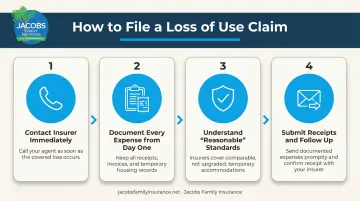
There is no flat daily stipend. Reimbursement is based on what you actually spent and documented.
Step 3: Understand What "Reasonable" Means
Insurers reimburse for reasonable expenses, not luxury ones. A mid-range hotel qualifies; a resort suite does not.
The standard is maintaining your normal lifestyle during displacement, not upgrading it. If you're unsure whether a specific accommodation meets the threshold, confirm with your adjuster before booking.
Step 4: Submit Receipts and Follow Up
Compile an itemized expense record with all receipts attached and submit to your claims adjuster. Reimbursements are typically issued after the fact, not as advance payments. Stay in regular contact to track processing and confirm any outstanding documentation needs.
How Much Loss of Use Coverage Do You Have?
Understanding Your Limit
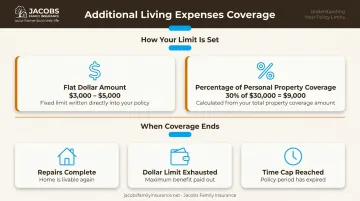
Renters loss of use limits come in two forms:
- A flat dollar amount — Progressive notes this often falls between $3,000–$5,000
- A percentage of personal property coverage — for example, if your personal property coverage is $30,000 and loss of use is calculated at 30%, you have $9,000 available
The practical problem with flat-dollar limits becomes clear when you look at local costs. GSA FY 2026 lodging benchmarks put Santa Fe hotel rates at $122–$167 per night before taxes. A $3,000 limit covers roughly 18–24 nights of lodging alone.
That's before adding meals, storage, pet boarding, and transportation. For displaced renters in a higher-cost market, that ceiling closes faster than most people expect.
Where to Find Your Number
Check your policy's declarations page for any of these terms:
- Loss of Use
- Coverage D
- Additional Living Expenses (ALE)
If it's unclear, call your agent and ask three specific questions: What is my Coverage D limit? Is it a flat amount or a percentage? Is there a time cap on how long coverage applies?
When Coverage Ends
Once you know your limit, it helps to understand what ends coverage. It stops at whichever threshold hits first:
- Repairs are complete and the unit is livable again
- The dollar limit is exhausted
- A policy time cap is reached (some policies set a 12- or 24-month maximum)
Renters who feel their current limit is too low — especially those in larger households or higher-cost areas — can often request an adjustment. Jacobs Family Insurance serves Santa Fe and northern New Mexico as an Allstate Elite Agency. If you want to check your current Coverage D limit against what hotels and living expenses actually cost here, give them a call at (505) 557-2067 or stop by 1547 South St. Francis Drive, Santa Fe.
Common Misconceptions About Loss of Use Coverage
Three assumptions trip up renters most often when a covered event strikes.
"My landlord's insurance will cover my temporary housing." It won't. The NAIC is direct on this: a landlord's insurance protects the building structure, not the tenant's personal property or living expenses. Your renters insurance policy is the only coverage that pays for your temporary housing after a covered event.
"Any displacement qualifies." Not true. Being uncomfortable, choosing to leave, having a lease dispute, or dealing with habitability issues caused by landlord neglect generally won't trigger Coverage D. The displacement must result from a covered peril that officially renders the unit uninhabitable.
"Loss of use covers my damaged belongings too." No — damaged personal property falls under Coverage C (personal property coverage), not Coverage D. Loss of use only addresses the cost of living elsewhere. These are separate coverage components with separate limits. If you're unsure how your policy divides these, your agent can walk you through exactly what each section covers.
Frequently Asked Questions
What does loss of use mean in a renters insurance policy?
Loss of use (Coverage D) is the part of your renters policy that reimburses extra living costs — hotel stays, increased meal expenses, storage fees — when a covered event makes your rental uninhabitable. It covers only costs above your normal baseline spending, not your everyday expenses.
What should my loss of use coverage be?
The right amount depends on local rental and hotel costs, household size, and how long repairs might realistically take. Review your declarations page and compare the limit against local rates — in Santa Fe, even a modest displacement can run $4,000–$5,000 per month.
Is loss of use coverage worth it?
Yes — and it's included in most standard renters policies at no separate cost. Being displaced without it could mean paying $150+ per night out of pocket while still owing rent, a combination most renters cannot absorb for more than a few days.
How long does loss of use coverage last for renters?
Coverage lasts until repairs are complete and the unit is livable again, or until the dollar limit is exhausted — whichever comes first. Some policies also impose a time cap such as 12 or 24 months regardless of remaining dollar limits.
Does loss of use coverage apply if I'm evacuated due to a wildfire?
It may — through the civil authority provision, which covers displacement when a government order restricts access to your home, even if your unit wasn't directly damaged. Coverage is typically capped at 14 to 30 days, making it especially relevant for renters in wildfire-prone areas of northern New Mexico.
Do I need to pay a deductible to use loss of use coverage?
Typically, the deductible applies to the underlying claim (fire, water damage) rather than to the loss of use portion separately — but policy terms vary, so confirm with your insurer before assuming Coverage D kicks in at full value.