Introduction
There's a particular kind of quiet you find on Elephant Butte at sunrise, or drifting across Heron Lake with nothing but a fishing line and a cold cup of coffee. New Mexico's reservoirs offer that kind of freedom.
But one storm, one theft, or one bad afternoon on the water can turn that freedom into a financial headache fast.
Many boat owners assume their homeowners policy already has them covered. It usually doesn't, at least not fully.
This guide breaks down exactly what boat insurance covers and how it differs from your home policy. It also covers what New Mexico boaters need to know before heading out to Navajo Lake, Cochiti Lake, or anywhere else in between.
Key Takeaways
- Boat insurance covers physical damage, liability, medical payments, and uninsured boater protection beyond standard homeowners policies
- Most homeowners policies limit boat coverage to small, low-horsepower craft, leaving larger boats exposed
- Actual Cash Value and Agreed Value policies pay out very differently after a total loss
- Bundling boat coverage with home and auto insurance through a local agent often unlocks meaningful savings
How Does Boat Insurance Work?
Think of boat insurance as a hybrid of your auto and home policies. It insures the physical vessel, similar to how comprehensive auto coverage protects your car. It also provides liability protection if you injure someone or damage property while operating it, much like the liability portion of a homeowners policy.
That combination matters because boats create risks neither policy alone was built to handle: sinking, collision with docks or other vessels, and injuries to passengers on open water.
Why a Homeowners Policy Isn't Enough
Most homeowners and renters policies only extend a small amount of coverage to watercraft, and it's narrower than most people expect.
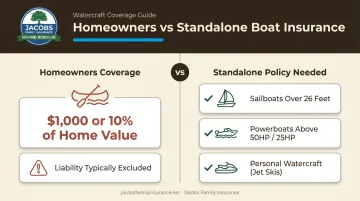
According to Allstate's guidance on boat insurance, typical homeowners coverage is limited to canoes or small boats under 25 total horsepower, capped at roughly $1,000 or 10% of your home's insured value — whichever is less. That figure covers the boat, motor, and trailer combined, not separately.
There's a bigger gap, too: liability for boating incidents is usually excluded entirely unless you add a specific endorsement. If your boat causes an accident on Cochiti Lake, your homeowners liability coverage generally won't step in.
Homeowners insurance is also built around your property address. Boat insurance, by contrast, follows the vessel, whether you're launching at Elephant Butte, trailering to Navajo Lake, or taking it out of state.
When You Need a Standalone Boat Policy
Once your boat exceeds the small thresholds homeowners insurers use, a standalone policy becomes necessary.
NAIC's consumer guidance notes that boats of any significant size typically require separate coverage. As general industry benchmarks, that often means:
- Sailboats longer than 26 feet
- Powerboats above 50 hp (inboard/inboard-outboard) or 25 hp (outboard)
- Personal watercraft like jet skis, which almost always fall outside homeowners limits
Beyond the coverage gap, there are practical reasons to carry a dedicated policy. Marinas frequently require proof of liability insurance before they'll let you dock. Lenders financing a boat purchase typically require comprehensive and collision coverage as a condition of the loan.
What Does Boat Insurance Cover?
A standard boat policy is built around a handful of core coverages, each addressing a different type of risk on the water.
Physical Damage Coverage
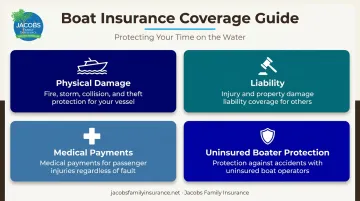
This is the heart of a boat policy. It protects the hull, motor, machinery, fittings, furnishings, and permanently attached equipment against:
- Fire and sinking
- Storm damage
- Collision
- Theft and vandalism
Common exclusions apply, though. Boat insurance generally won't cover normal wear and tear, gradual deterioration, or damage from marine life or animals. Mechanical breakdown caused by poor maintenance is typically excluded as well, though some insurers offer limited mechanical breakdown add-ons for specific components.
Trailers and certain boat accessories may need to be added separately depending on the insurer, so don't assume they're automatically included.
Liability Coverage
If you're found responsible for injuring someone or damaging another person's property, boat liability coverage pays for legal defense and settlement costs. This includes:
- Bodily injury liability: covers injuries to other people
- Property damage liability: covers damage to another boat, a dock, or other property
- Guest passenger liability: protects you if someone using your boat with permission gets hurt and pursues legal action
Without this coverage, a single accident involving another boater at a busy lake could mean paying out of pocket for medical bills, repairs, and attorney fees.
Medical Payments & Uninsured/Underinsured Boater Coverage
Medical payments coverage pays for injuries to you and your passengers regardless of who caused the accident. It's straightforward: someone gets hurt, medical bills get paid, no fault investigation required.
Uninsured/underinsured boater coverage protects you if you're hit by another boater who carries little or no insurance. Since many recreational boaters aren't required by law to carry coverage, this protection fills a real gap, particularly on busy lakes where boat density is high during peak season.
Types of Boat Insurance Policies
How your policy pays out after a loss depends heavily on which valuation method you choose.
| Policy Type | How It Pays | Best For |
|---|---|---|
| Actual Cash Value (ACV) | Pays the boat's depreciated market value at time of loss | Owners prioritizing lower premiums |
| Agreed Value | Pays a pre-agreed amount with no depreciation deduction on a total loss | Owners wanting predictable payout certainty |
Agreed Value policies typically cost more in premium, but they remove the guesswork. If your boat is a total loss, you know exactly what you'll receive rather than negotiating over depreciation.
Cost and coverage also shift based on:
- Boat size and engine horsepower: larger, more powerful boats cost more to insure
- Vessel type: a pontoon, fishing boat, sailboat, jet ski, and yacht all carry different risk profiles
- Usage patterns: how often and where you operate the boat
Some insurers also offer seasonal or "lay-up" policies that reduce premiums during off-season storage months, when the boat isn't in the water. If your boat sits in storage for part of the year, ask your agent whether this option applies to your coverage.
Optional Add-Ons and Discounts
Coverage Add-Ons Worth Considering
Beyond the core coverages, a few optional add-ons can close remaining gaps:
- Towing and emergency service: covers on-water breakdowns or emergencies
- Fishing gear and personal property replacement: protects equipment stored on board
- Wreck and debris removal: pays to remove a sunken or wrecked boat
- Fuel spill liability: covers cleanup costs if fuel leaks into the water
Wreck removal deserves particular attention. Removal is often legally required after a sinking, and going without this coverage means paying that cost entirely out of pocket.
Ways to Save on Boat Insurance
Several common discounts can lower your premium:
- Completing a boating safety course
- Having a diesel-powered engine, often considered lower risk
- Equipping the boat with Coast Guard-approved fire extinguishers
- Maintaining a claims-free history
- Bundling boat coverage with home or auto insurance
That last point is where local agents add real value. Jacobs Family Insurance, for example, helps clients bundle boat coverage with existing home or auto policies. This bundling typically produces multi-line discount savings across the entire insurance portfolio, not just the boat itself.

Boating in New Mexico: What Local Owners Should Know
New Mexico boating looks different from coastal states. There's no ocean, no salt spray, no tidal currents. Instead, boaters cluster around reservoirs like Elephant Butte, Navajo Lake, Heron Lake, and Cochiti Lake, where conditions and risks differ from open-water boating.
A few state-specific requirements to know:
- Registration: New Mexico requires all motorized vessels of any length to be registered; titling applies to motorized and sail-powered vessels 10 feet or longer
- Boater education: Operators born after January 1, 1989 must carry proof of boater education, though nonresidents and renters completing dockside safety instruction are exempt
- Insurance mandate: New Mexico does not legally require boat insurance, but marinas and lenders often make it a contractual condition anyway
That last point trips people up. Skipping the state mandate doesn't mean you're off the hook entirely. If you're financing a boat or planning to dock at a marina, you'll likely need proof of coverage regardless of what state law says.
This is where working with a local agent pays off. Jacobs Family Insurance, a family-owned Allstate Elite agency based in Santa Fe, helps boat owners across northern New Mexico bundle their watercraft coverage with home and auto policies.
Instead of navigating a call center, you get a neighbor who understands the lakes you're boating on and the coverage that fits them.
Frequently Asked Questions
How does boat insurance work?
Boat insurance combines property coverage for the vessel itself with liability protection for accidents you cause, functioning similarly to a blend of auto and home insurance. It follows the boat wherever you use it.
What does boat insurance cover?
A standard policy covers physical damage to the boat, liability for injuries or property damage you cause, medical payments for you and your passengers, and protection against uninsured boaters.
What are the main types of boat insurance?
Policies come in two valuation forms: Actual Cash Value, which pays depreciated market value, and Agreed Value, which pays a pre-set amount with no depreciation. Optional add-ons like towing and wreck removal can be layered on top.
Is boat insurance required by law in New Mexico?
No. New Mexico doesn't legally mandate boat insurance. However, marinas often require proof of liability coverage to dock, and lenders financing a boat purchase typically require it as a loan condition.
How much does boat insurance typically cost?
Cost depends on your boat's type, value, horsepower, usage, and the coverage limits you select. Because these factors vary so widely, contacting Jacobs Family Insurance for a personalized quote is the most reliable way to know your actual cost.
Does homeowners insurance cover my boat?
Only in a limited way. Homeowners policies generally cap boat coverage for small, low-horsepower craft at low dollar amounts and typically exclude liability entirely unless you add a specific endorsement.