
HO-6 insurance is the policy designed to fill that gap. Formally known as the Homeowners 6 – Unit-Owners Form (ISO form HO 00 06 05 11), it's a specialized coverage type built specifically for condo and co-op unit owners — distinct from the HO-3 policy that covers single-family homes.
This guide covers what HO-6 includes, what it excludes, how it interacts with your HOA's master policy, what it costs, and whether you're required to carry it.
Key Takeaways
- HO-6 covers your unit's interior, personal belongings, liability, loss of use, and loss assessments
- Your HOA master policy covers shared spaces and building exteriors — not the inside of your unit
- HO-6 excludes floods, earthquakes, pest damage, and routine wear and tear
- Your required dwelling coverage depends on whether your HOA has bare walls, single entity, or all-in coverage
- HO-6 isn't legally required in most states, but mortgage lenders and many condo associations effectively mandate it
What Does HO-6 Condo Insurance Cover?
A standard HO-6 policy bundles several types of coverage into one policy, protecting you from a burst pipe, a lawsuit from an injured guest, a break-in, and more.
Dwelling (Interior Unit) Coverage
This pays to repair or replace your unit's interior after a covered loss including walls, floors, ceilings, built-in cabinets, and fixtures. Everything from the drywall inward is your responsibility; the building structure itself falls under the HOA's coverage.
How much dwelling coverage you need depends directly on your condo association's master policy type (more on that below).
Personal Property Coverage
Personal property coverage protects your furniture, electronics, clothing, and appliances if they're damaged, destroyed, or stolen due to a covered peril. The ISO base form extends Coverage C to personal property "anywhere in the world," meaning theft from your car or a storage unit can be covered up to policy limits.
Personal Liability and Medical Payments
If someone is injured in your unit, or you accidentally damage a neighbor's property, personal liability coverage pays your legal defense costs and any damages awarded up to your policy limit.
Medical payments coverage handles minor guest injuries without requiring a lawsuit. Under the ISO base form, Coverage F applies to guests injured on your premises up to the limits you select.
Loss of Use Coverage
If a covered event makes your condo temporarily uninhabitable, loss of use coverage reimburses additional living expenses (hotel stays, meals above your usual food budget, and similar costs) while repairs are underway.
Loss Assessment Coverage
This coverage protects you when your condo association assesses individual unit owners to cover shared-area damages or liability claims that exceed the master policy's limit.
Example: A common-area pool deck is damaged, and the repair bill exceeds HOA coverage. Each unit owner gets billed a share. Loss assessment coverage picks up your portion.
The ISO base form includes default limits of $1,000 per covered Section I assessment and $1,000 per covered Section II assessment. For most condo owners, that's not enough. Increasing these limits is typically inexpensive, so it's worth asking your agent about available endorsements.
What HO-6 Insurance Does NOT Cover
HO-6 policies have clear boundaries — and gaps in coverage can be costly if you're not prepared.
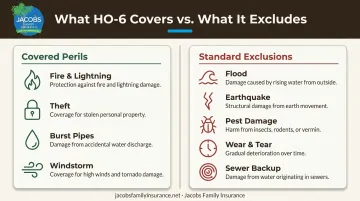
Standard exclusions on most HO-6 policies:
- Flood damage — requires a separate flood insurance policy, such as through the NFIP. Standard HO-6 policies exclude flood entirely
- Earthquake and earth movement — a separate endorsement or standalone earthquake policy is needed
- Pest infestations — termite damage, rodent damage, and similar infestations are not covered
- Routine wear and tear — maintenance-related deterioration is the owner's responsibility
- Sewer and drain backup — excluded under the standard ISO water exclusion, though a separate endorsement is often available
- Intentional damage — not covered under any circumstance
Wildfire is a real exposure for New Mexico condo owners. The 2022 Hermit's Peak/Calf Canyon fire — the largest wildfire in New Mexico history — burned over 342,000 acres and destroyed more than 900 structures, and Santa Fe ranks among the highest wildfire-risk cities in the West.
The good news: fire and lightning are named perils under HO-6, so interior damage from wildfire is typically covered. What's worth reviewing separately are smoke damage limits, extended replacement cost coverage, and whether your loss of use benefit is adequate for a prolonged displacement.
Monsoon season flooding is another New Mexico-specific gap — and one a standard HO-6 won't fill. At Jacobs Family Insurance, we review both your personal policy and your association's master policy to identify exactly where your coverage ends and where you may need a separate flood or endorsement add-on.
HO-6 vs. Your HOA Master Policy: Understanding the Coverage Gap
Your HOA master policy covers shared spaces — hallways, lobbies, parking lots, pools, exterior walls, and the roof. You contribute to this policy through HOA fees, but that doesn't mean your unit is covered.
The Three Types of HOA Master Policies
Which master policy your association carries directly determines how much dwelling coverage your HO-6 needs to provide.
| Master Policy Type | What the HOA Covers | What Your HO-6 Must Cover |
|---|---|---|
| Bare Walls | Building structure and common areas only | Everything from the drywall inward: fixtures, flooring, cabinets, appliances |
| Single Entity | Original unit fixtures and built-ins | Owner-installed upgrades, improvements, and renovations |
| All-In | Fixtures, appliances, and owner improvements | Very little dwelling coverage needed; personal property and liability remain your responsibility |
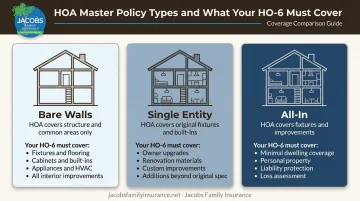
The practical takeaway: review your condo association's declaration or bylaws before setting HO-6 dwelling coverage limits. If your association carries bare walls coverage, you need significantly more dwelling coverage than if they carry an all-in policy.
That review is also where working with an independent local agent pays off. The team at Jacobs Family Insurance in Santa Fe helps New Mexico condo owners compare their association's master policy against their individual coverage needs — so you're not paying for redundant coverage or, worse, left underinsured.
How Much HO-6 Coverage Do You Need — and What Does It Cost?
Coverage Benchmarks
These are starting points, not hard rules. Your specific situation may call for different limits.
- Dwelling coverage: Should reflect the actual cost to restore your unit's interior, based on your master policy type
- Personal property: Informed by a home inventory; typically 20–50% of dwelling coverage
- Liability: At minimum, equal to your net worth; commonly starts at $100,000
- Loss of use: Often set at around 20% of dwelling coverage
- Loss assessment: The ISO base limit of $1,000 is frequently inadequate — consider increasing it
What HO-6 Insurance Costs
According to 2022 NAIC data published in May 2025, the average HO-6 premium is $325 per year nationally and $406 per year in New Mexico. Your actual premium will vary based on:
- Location and local risk factors (wildfire exposure, crime rates, cost of living)
- Coverage amounts and deductible choices
- Your credit-based insurance score and claims history
- Security systems, smoke detectors, and fire safeguards in place
ACV vs. Replacement Cost Value
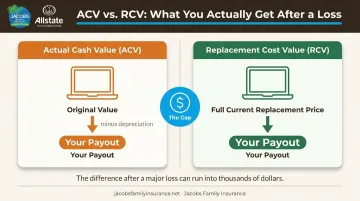
The valuation method on your policy determines how much you actually receive after a loss:
- Actual cash value (ACV): Pays the depreciated value of damaged property. A five-year-old laptop gets paid out at five-year-old laptop prices
- Replacement cost value (RCV): Pays what it actually costs to replace the item new. The same laptop gets replaced at today's price
RCV coverage typically costs more in premiums, but after a major loss — a fire that destroys your furniture and electronics — the gap between what ACV pays and what replacement actually costs can run into thousands of dollars.
Available Discounts
Reducing your premium often starts with bundling. Jacobs Family Insurance offers multi-line bundling through Allstate — pairing your HO-6 with an auto policy often cuts your total premium noticeably. Other common discounts include:
- Home-alert protection for fire, smoke, or burglar alarms
- Automatic sprinkler systems
- Claims-free history
Is HO-6 Insurance Required for Condo Owners?
HO-6 is not mandated by law in New Mexico or most states. The New Mexico OSI notes that condo owners "need" HO-6 for personal belongings and liability — but that's guidance, not a statute.
That said, two practical requirements effectively make it mandatory for most owners:
1. Your mortgage lender will require it. Fannie Mae and Freddie Mac rules (effective July 1, 2026) require individual unit-owner coverage when the master policy doesn't cover all unit interiors and improvements, or when it carries a per-unit deductible. If you have a mortgage, your lender will require HO-6.
2. Your condo association may mandate it. Many associations set minimum HO-6 coverage requirements that unit owners must meet, regardless of your mortgage status.
Even if neither requirement applies to you, going without HO-6 carries real financial risk. A fire, lawsuit, or major theft could easily run into tens of thousands of dollars out of pocket. At an average of $406 per year in New Mexico, the premium is modest compared to that exposure.
Frequently Asked Questions
What is a homeowners 6 policy?
An HO-6 policy is the standard insurance form for condo and co-op unit owners, covering the interior of the unit, personal belongings, personal liability, and additional living expenses. It's distinct from an HO-3 policy, which covers the entire structure of a single-family home.
Does an HO-6 policy cover drywall?
Yes — HO-6 dwelling coverage typically covers drywall from the interior surface inward if damaged by a covered peril, such as fire or a burst pipe. The extent depends on whether your condo association's master policy is bare walls or all-in, which determines what the HOA covers first.
How much does HO-6 insurance cost?
The NAIC reports a national average of $325 per year and a New Mexico average of $406 per year, based on 2022 data published in May 2025. Your actual rate will vary based on coverage limits, deductible, location, and other factors.
Is HO-6 insurance mandatory in Florida?
HO-6 is not required by state law in Florida or most other states. However, mortgage lenders and condo associations typically require it, which makes it effectively mandatory for most condo buyers with a loan regardless of state.
What is the difference between HO-6 and HO-3 insurance?
HO-3 is for single-family homeowners and covers the entire structure. HO-6 is for condo owners and covers only the interior unit — because the building exterior and common areas are the condo association's responsibility under the master policy.
Does HO-6 insurance cover water damage from a neighbor's unit?
Sudden and accidental water damage from a neighbor's unit (like an overflowing tub leaking into your space) is generally covered under HO-6 as an accidental discharge peril, and the neighbor's liability coverage may also apply. Gradual leaks or seepage over weeks are typically excluded.