
That gap catches people off guard. Renters routinely underestimate what they own. Add up your furniture, electronics, kitchenware, and clothing, and the total often surprises you, sometimes by thousands of dollars.
This guide breaks down what personal property coverage actually means, what it covers (and skips), and how to calculate the right amount. We'll also flag a few regional risks that matter if you rent in Santa Fe or northern New Mexico.
Key Takeaways
- Coverage C protects belongings from fire, theft, and vandalism—at home or away
- Standard policies offer $10,000 to $100,000 in coverage, with sublimits on jewelry and cash
- Payouts follow either replacement cost or depreciated actual cash value
- Flood, earthquake, and normal wear and tear are not covered
- A home inventory is the fastest way to find your real coverage number
What Does Personal Property Coverage Mean in Renters Insurance?
Personal property coverage, often labeled Coverage C on your policy declarations page, reimburses you when your belongings are damaged, destroyed, or stolen. Think clothing, furniture, electronics, small appliances, and anything else you own inside the rental.
This coverage protects items you own, not the structure of the apartment, built-in fixtures, or anything belonging to your landlord. That falls under your landlord's policy instead.
How Personal Property Coverage Works
Renters policies are typically named-peril policies, meaning your belongings are covered only when the cause of loss appears on a specific list. Standard covered perils include:
- Fire, lightning, and smoke damage
- Theft and vandalism
- Explosion and windstorm
- Certain sudden, accidental water damage
If the cause of loss isn't on that list, the claim gets denied: no named peril, no payout, regardless of how much damage occurred.
Here's how a claim plays out in practice: a fire damages a $2,000 television, and your policy carries a $500 deductible. Your insurer pays $1,500, with you covering the deductible. Simple math, but it's the number renters forget to budget for when comparing policies.
Replacement Cost vs. Actual Cash Value
This distinction changes your payout more than almost any other policy detail.
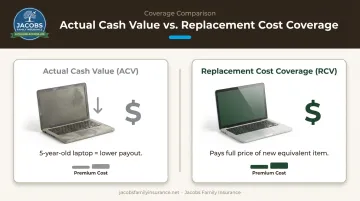
- Actual cash value (ACV): Pays the depreciated value of your item. A five-year-old laptop is worth less than a new one, and ACV reflects that.
- Replacement cost coverage (RCV): Pays what it costs to buy a new equivalent item today, no depreciation subtracted.
Most standard policies default to ACV, though replacement cost coverage costs more and pays out more when you need it most. If your belongings are newer or high-value, upgrading to RCV is worth the extra premium. Ask a Jacobs Family Insurance agent to run both numbers before you decide.
What's Covered vs. What Personal Property Insurance Doesn't Cover
Knowing what falls inside and outside your policy prevents unpleasant surprises during a claim.
Items and Perils Typically Covered
Standard Coverage C protects a wide range of everyday belongings:
- Furniture, clothing, and bedding
- Electronics, laptops, and gaming systems
- Kitchenware and small appliances
- Bicycles and sporting equipment
Coverage often follows you outside the rental unit, too. Off-premises theft, such as a laptop stolen from your car, is typically covered, though the payout is usually limited to about 10% of your total personal-property limit.
High-value categories get sublimits, caps within your overall coverage:
- Jewelry: often capped around $1,000-$1,500 per policy
- Cash: frequently limited to $200-$250
- Firearms: typically capped near $2,000-$2,500
Your $50,000 policy doesn't mean $50,000 for jewelry. Sublimits apply regardless of your total limit.
Common Exclusions to Know
Several situations fall outside standard renters coverage:
- Flood damage (including monsoon-driven flooding)
- Earthquake damage
- Water backup and sewer overflow (unless you add optional coverage)
- Pest damage from rodents, termites, or bedbugs
- Normal wear and tear
Mold coverage depends on the cause. Sudden, covered water damage that leads to mold is usually treated differently than gradual moisture issues, which are typically excluded.
One more distinction matters here: structural damage to your unit (cracked walls, a failing roof) falls under your landlord's responsibility, not your personal property coverage.
How Much Personal Property Coverage Do You Need?
Guessing your coverage number is how renters end up underinsured. Two steps fix that.
Take a Home Inventory First
Walk through each room and document what you own. This sounds tedious, but it takes less time than most people expect.
- Photograph each room, including closets and storage areas
- List items by category: furniture, electronics, clothing, kitchenware
- Keep receipts for higher-value purchases when possible
- Record serial numbers for electronics and appliances
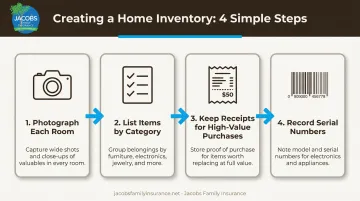
Inventory apps or a basic spreadsheet work fine. If you have roommates, this step matters even more since it clarifies who owns what before a claim, not during one.
Choosing the Right Coverage Limit
Most policies default to $10,000-$25,000 in coverage. For many renters, that's not enough once you add up furniture, electronics, and clothing.
A practical approach: total your inventory's replacement value, then round up to the nearest $10,000 tier. Standard renters policies generally offer selectable limits between $10,000 and $100,000, so there's flexibility to match your actual belongings.
Coverage limits affect your premium directly. National modeled data shows the pattern:
| Coverage Limit | Annual Premium | Monthly Premium |
|---|---|---|
| $10,000 | $112 | $9 |
| $30,000 | $151 | $13 |
| $50,000 | $192 | $16 |
| $70,000 | $240 | $20 |
| $100,000 | $306 | $26 |
These figures come from NerdWallet's 2026 modeled national rates, using a standardized renter profile. Your actual quote will vary by location and deductible.
If you're splitting a place with roommates, don't assume one policy covers everyone's stuff equally. Each renter typically needs their own policy, or a clear, documented agreement on how a shared policy's limit applies to each person's belongings.
Is Personal Property Coverage Worth It for Renters?
Renters insurance is inexpensive relative to what it protects. A $30,000 coverage policy runs about $13/month nationally, and roughly $14/month in New Mexico based on NerdWallet's rate modeling. Compare that to replacing an apartment's worth of belongings after a fire or theft, and the math favors coverage every time.
Beyond affordability, coverage often isn't optional. Many landlords now require proof of renters insurance before handing over the keys, making it a standard lease condition in plenty of rental markets rather than just a suggestion.
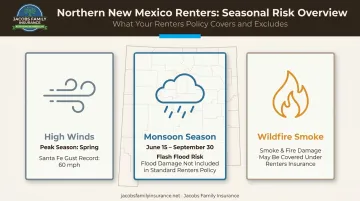
Meeting that requirement is easier when your coverage limits reflect local risk factors. Northern New Mexico renters face a few regional wrinkles worth flagging:
- High winds are common in spring, particularly April and May, though strong gusts can occur outside that window too, as Santa Fe's 60 mph gust in February 2024 showed. Windstorm damage is a named peril under most policies
- Monsoon season runs June 15 through September 30, bringing flash flood risk, though flood itself is excluded from standard Coverage C
- Wildfire smoke damage typically falls under fire-related coverage, which matters given the region's fire season
Jacobs Family Insurance, an Allstate Elite agency based in Santa Fe, works with renters across northern New Mexico. The team matches coverage limits to these regional realities instead of applying a blanket coverage amount.
Protecting High-Value Items Beyond Standard Limits
Standard sublimits work fine for most renters, but they fall short for anyone owning an engagement ring, fine art, or a professional musical instrument. That's where scheduled personal property endorsements come in.
Scheduling an item means listing it individually on your policy with its own coverage limit, separate from the Coverage C sublimit. Common categories include:
- Engagement rings and fine jewelry
- Fine art and antiques
- Musical instruments
- Firearms and collectibles
The tradeoff is straightforward: scheduling raises your premium slightly. In exchange, it often removes the deductible for that item and can cover accidental loss, like a ring lost down a drain, that standard coverage wouldn't touch.
That added protection typically comes with one condition: documentation upfront. A receipt or professional appraisal is usually required before an insurer will schedule a high-value item. If you're not sure whether something qualifies, a local Jacobs Family Insurance agent can review your inventory and flag what's worth scheduling separately.
Frequently Asked Questions
What does personal property coverage mean in renters insurance?
It's the part of your policy, often called Coverage C, that reimburses you for damaged, destroyed, or stolen belongings up to your policy limit. It doesn't cover the rental unit's structure.
What does personal property insurance not cover?
Standard exclusions include flood, earthquake, water backup or sewer damage, and normal wear and tear. Pest damage and gradual mold issues are usually excluded too.
How much personal property coverage do I need?
Start with a home inventory, total the replacement value of your belongings, then round up to the nearest coverage tier. Most renters land between $20,000 and $50,000.
Is personal property coverage worth it?
Yes. Monthly premiums typically run $9-$26 depending on your coverage limit, far less than replacing belongings after an uninsured fire or theft.
Does personal property coverage protect belongings outside the home?
Generally, yes. Off-premises theft or damage is often covered, though usually capped around 10% of your total personal-property limit.
How do I file a personal property claim?
Document the damage with photos, gather proof of ownership like receipts, and contact your agent or insurer promptly. Fast reporting helps avoid claim delays.