Introduction
Picture this: a tenant's space heater tips over, sparks a small fire, and the flames spread through a rented casita before anyone can grab an extinguisher. The tenant's renters policy covers their own damaged belongings. But who pays to rebuild the landlord's walls, flooring, and wiring?
Many New Mexico renters, landlords, and business owners assume their existing policy has them covered here. It often doesn't.
Standard property and liability policies typically exclude damage to property you don't own but merely occupy or control, creating a real gap right when you need protection most.
This guide breaks down fire legal liability coverage: what it is, what it covers, and where it falls short. Learn how Santa Fe-area residents and business owners can close the gap before a fire turns into a financial disaster.
Key Takeaways
- Fire legal liability covers fire damage to property you rent or lease, not property you own
- Standard CGL and homeowners policies typically exclude this coverage, leaving tenants and landlords exposed
- Base CGL policies often cap fire legal liability at $100,000, though endorsements can raise it
- Intentional acts, your own contents, and gross fire-code violations are never covered
- A local policy review reveals whether your current coverage protects you in a fire scenario
What Is Fire Legal Liability Insurance Coverage?
Fire legal liability coverage protects you against legal responsibility for fire damage to property that's in your care, custody, or control (CCC), but not owned by you. Think of a rented building, leased equipment, or a neighbor's structure that catches fire because of something you did or failed to do.
This coverage exists because standard Commercial General Liability (CGL) policies specifically exclude damage to property you own, rent, or occupy, and personal property in your CCC. Without a carveback for fire, tenants and businesses in leased space would have almost no protection against one of their biggest exposures.
Negligence still has to be proven. This isn't automatic coverage for any fire that happens near you. The insured has to be legally at fault, whether that's faulty wiring left unaddressed, an unattended stove, or a heater placed too close to combustibles.
Where does this coverage actually live? Usually in one of two forms: built into a CGL policy as a "Damage to Premises Rented to You" sublimit, or purchased separately through a Legal Liability Coverage Form when the exposure extends beyond a single rented premises.
This structure isn't a brand-new concept in insurance. It sits alongside older "liability for others' property" solutions like garagekeepers liability, which protects repair shops for damage to customers' vehicles in their care. Fire legal liability applies the same logic to buildings and leased spaces.
How Fire Legal Liability Differs From Standard Property and Liability Insurance
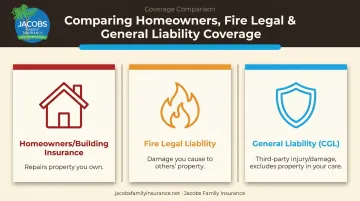
The confusion usually comes down to three different coverages, each doing a different job:
| Coverage type | What it actually pays for |
|---|---|
| Homeowners/building insurance | Repairs to property you own |
| Fire legal liability | Damage you cause to property owned by someone else |
| General liability (CGL) | Bodily injury/property damage to third parties, but typically excludes property in your care, custody, or control |
This distinction matters most if you're a tenant, landlord, or business operating out of leased or shared space. If you assume your general liability policy has you covered for fire damage to a rented building, you may be in for an unpleasant surprise during a claim.
Who Needs Fire Legal Liability Coverage?
Three groups face this exposure regularly, and it's rarely top of mind until something goes wrong.
- Tenants and renters (residential or commercial) whose negligence damages the landlord's building through fire. Many assume the landlord's policy covers this, but it usually doesn't
- Landlords and property owners, including those with rural or ranch properties common across Northern New Mexico who lease outbuildings, guest houses, or barns to others
- Business owners in higher fire-risk operations, such as restaurants, salons, workshops, and auto shops, operating out of leased commercial space
If any of these describe your situation, check whether your current policy actually names this exposure instead of assuming it's bundled in.
What Does Fire Legal Liability Insurance Typically Cover?
When a covered fire liability claim happens, this coverage generally steps in for a few specific costs.
Repair or replacement of third-party property. This includes a landlord's building, a neighbor's structure, or leased equipment damaged by a fire you're legally responsible for.
Legal defense costs, settlements, and judgments tied to the fire claim. Under standard CGL (Commercial General Liability) wording, defense expenses are treated as Supplementary Payments and don't reduce your liability limit, though covered settlements and judgments do.
Beyond what's already covered, coverage limits matter more than most people realize. According to IRMI's overview of the Legal Liability Coverage Form, the basic ISO (Insurance Services Office) program limit for Damage to Premises Rented to You is $100,000, though many insurers offer the option to raise that limit up to the policy's each-occurrence limit. If you're leasing a space worth $400,000, a $100,000 sublimit leaves a serious gap.
Depending on the specific form purchased, coverage can extend to:
- The real property itself (the building structure)
- Personal property of others, in some cases, if a broader Legal Liability Coverage Form is added
- Loss-of-use or related consequential losses for the third party, depending on policy language
Don't assume your base CGL limit is enough just because the coverage exists on paper.
What's Not Covered? Common Exclusions to Know
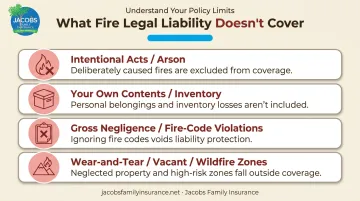
Fire legal liability has real teeth, but it also has real limits. Knowing these exclusions upfront saves you from a painful surprise later.
- Intentional acts or arson. Never covered, and filing such a claim can expose you to fraud liability under New Mexico law.
- Your own contents, inventory, or belongings. This coverage only pays for someone else's property. You'll need separate business personal property or renters/home contents coverage for your own stuff.
- Gross negligence or fire-code violations. Failing to maintain required fire safety equipment or willfully ignoring fire codes can jeopardize or void a claim entirely.
- Wear-and-tear fires, vacant properties, and wildfire zones. These often require special underwriting or may be excluded outright, which matters given New Mexico's growing wildfire exposure.
Fire Codes and Wildfire Market Trends in New Mexico
New Mexico adopted the 2021 International Fire Code as its statewide minimum standard, effective November 2022, covering everything from fire-protection systems to occupancy hazards. Ignoring those requirements doesn't just risk a code violation. It can undercut your insurance claim, too.
Wildfire risk is also reshaping the New Mexico insurance market more broadly. The state's Office of the Superintendent of Insurance reported more than 10,000 homeowner policy nonrenewals by the top 10 insurers between January 2021 and mid-2024, a trend expected to continue. That backdrop makes it even more important to confirm your fire liability protection before a wildfire-adjacent property becomes harder to insure.
One more clarification: if you actually own the property that burns, this coverage isn't the right tool. That belongs under your standard property policy, not fire legal liability.
Real-World Scenarios: When This Coverage Applies
These three scenarios show how fire legal liability coverage works in practice.
Scenario 1: The spreading kitchen fire. A restaurant's grease-duct fire starts small but spreads into an adjoining tenant's space. The restaurant owner didn't own that neighboring unit, but their negligence caused the damage, triggering a fire legal liability claim for the neighbor's repair costs.
Scenario 2: The space heater incident. Overnight, a residential tenant runs a space heater too close to a curtain. The resulting fire damages the landlord's rented unit. Because the tenant's negligence caused the loss, they're held liable for repairs, and their renters liability coverage is what responds.
Scenario 3: The ranch outbuilding fire. A leased barn or guest house on a Northern New Mexico ranch suffers a fire from faulty wiring, damaging the owner's structure. Rural leasing arrangements like this one are common across our service area, and they're exactly the kind of situation where fire legal liability coverage needs a second look.
Each scenario shares the same thread: someone other than the property owner caused the fire, and standard coverage alone wouldn't have closed the gap.
How to Choose the Right Fire Legal Liability Coverage
Getting this right starts with an honest look at your specific exposure, not a generic policy checklist.
- Assess your risk profile. Consider the type of property, your tenancy arrangement, your business operations, and whether you're in a higher wildfire-risk area of New Mexico.
- Review your existing limits. Sit down with an agent to check your CGL, landlord, or renters policy limits and identify where the gaps sit.
- Evaluate endorsement options. If your sublimit is too low for the property's value, ask about raising it before you need it, not after.
This is exactly the kind of review Jacobs Family Insurance handles for clients across Santa Fe and Northern New Mexico. As a local, family-owned Allstate Elite agency with more than 10 years serving this community, the team knows where these gaps typically hide. They offer personalized policy reviews for homeowners, landlords, tenants, and business owners looking to close fire legal liability gaps.

Whether you're renting a downtown storefront, leasing out a ranch outbuilding, or running a kitchen with real fire risk, a quick conversation with a local agent helps. It beats finding out the hard way what your policy doesn't cover. You can reach out through the agency's contact page or call (505) 474-4033 to schedule a free, no-obligation coverage review.
Frequently Asked Questions
What is fire legal liability coverage?
It's protection against legal responsibility for fire damage to property in your care, custody, or control, such as a rented building. It's distinct from coverage that repairs your own property.
Which liabilities are not covered by fire insurance?
Key exclusions include intentional or arson-caused fires, damage to your own contents, gross negligence or fire-code violations, and fires involving vacant or wildfire-designated properties.
Is fire legal liability coverage the same as standard homeowners insurance?
No. Homeowners insurance covers damage to your own property. Fire legal liability covers damage you cause to someone else's property that you rent or control.
Do landlords or tenants need to buy this coverage?
Both can benefit, but tenants often need it most since they're typically the ones liable when negligence causes fire damage to a rented space they don't own.
How much fire legal liability coverage do I need?
It depends on the property's value, your lease terms, and your overall risk exposure. A local agent can review your specific situation and recommend an appropriate limit.
Can I add fire legal liability coverage to an existing policy?
Yes, it's often added via endorsement to a Commercial General Liability (CGL), landlord, or business policy. Talk to a Jacobs Family Insurance agent about which option fits your coverage needs and budget.