That appeal comes with real risk. The Consumer Product Safety Commission estimates 100,400 emergency-department-treated injuries involving off-highway vehicles in 2023 alone, part of an annual average of roughly 102,000 injuries between 2019 and 2023. Many riders assume their car or home policy already has them covered. It usually doesn't.
This guide breaks down exactly what ATV and UTV insurance covers, what it excludes, New Mexico's legal requirements, and what you can expect to pay.
Key Takeaways
- Auto and home policies typically exclude ATV/UTV liability and collision coverage
- ATV/UTV policies cover liability, collision, comprehensive, and often medical payments
- Racing events and illegal public-road use are common coverage exclusions
- New Mexico mandates ATV registration on public land and liability insurance for paved roads
- Bundling ATV coverage with an existing auto or home policy can lower your premium
Does Your Auto or Homeowners Insurance Cover Your ATV/UTV?
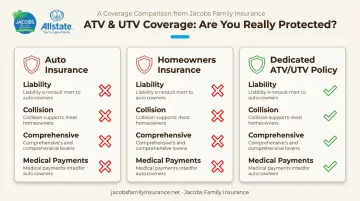
An ATV or UTV is legally classified as an off-highway motor vehicle: three or four low-pressure tires, no highway equipment, not built for street use. That classification is exactly why your standard auto policy won't touch it. According to the National Association of Insurance Commissioners, ATVs simply aren't covered by standard automobile insurance policies.
The Homeowners Gap
Homeowners insurance isn't much better. Allstate notes that most homeowners policies provide little to no protection for off-road vehicles, particularly once the vehicle leaves your property.
Even where a policy offers limited theft or fire protection while the ATV sits in your garage, that protection disappears the moment you head out on a trail.
Here's what homeowners insurance will not do:
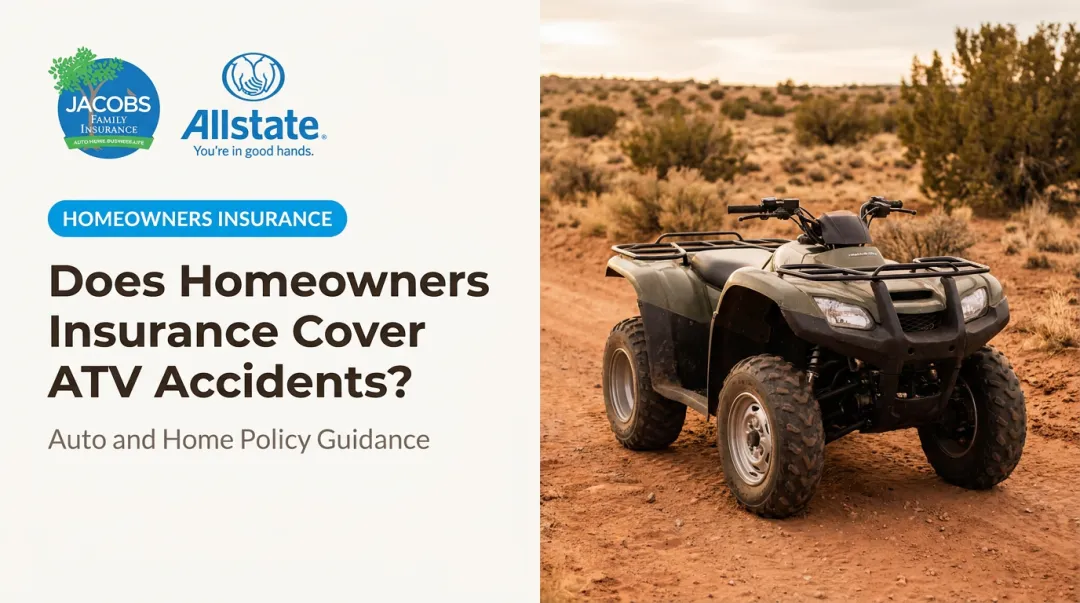
- Cover liability if you injure someone or damage their property while riding
- Pay medical bills for you or a passenger after a crash
- Repair or replace your ATV/UTV after a collision or rollover
This gap is not theoretical. In one case reported by Insurance Journal, Virginia's Supreme Court ruled that an ATV didn't qualify as a covered "farm type vehicle" under a homeowners policy. The owner was left without the protection they assumed they had.
The fix: a dedicated ATV/UTV policy. Bundling that coverage with your existing auto or home policy through Jacobs Family Insurance, a local Allstate Elite agency in Santa Fe, often unlocks savings.
These multi-line discounts apply across your entire insurance portfolio, not just the new ATV policy.
What Does ATV and UTV Insurance Cover?
A dedicated ATV/UTV policy fills the gap your car or home insurance leaves open. Coverage generally breaks down into five core components.
| Coverage | What it does |
|---|---|
| Bodily injury liability | Pays for another person's injuries (plus legal defense) if you're at fault in an accident |
| Property damage liability | Repairs or replaces someone else's fence, shed, land, or vehicle damaged by your ATV/UTV |
| Collision | Repairs or replaces your own vehicle after a crash, rollover, or impact with an object |
| Comprehensive | Covers theft, vandalism, fire, weather damage, and animal strikes on the trail |
| Medical payments | Pays medical costs for you and your passengers, regardless of who caused the accident |
Liability, Collision, and Comprehensive Coverage
These are the two building blocks of any policy. Bodily injury liability responds if your ATV causes someone else's injury or death. Property damage liability picks up the tab when you tear through a neighbor's fence, dent a parked truck, or damage private land during a ride.
Once liability coverage is in place, two more components protect your own vehicle: collision and comprehensive. Collision handles the physical damage to your vehicle after a crash. Comprehensive is broader, covering theft, vandalism, hail, wildfire, and the occasional deer or elk strike, which is a real hazard on New Mexico's forest trails.
Optional Add-Ons Worth Considering
Beyond the core five, most carriers offer optional endorsements:
- Uninsured/underinsured motorist protection, in case another party at fault has no coverage
- Accessory and equipment coverage for aftermarket winches, light bars, and roll cages
- Trailer coverage for the equipment you use to haul your ATV to and from the trailhead
Jacobs Family Insurance's motorcycle policies already list uninsured motorist protection and custom accessories coverage as standard options, so ask your agent whether the same endorsements can be added to your ATV or UTV policy.
What's Excluded from a Typical ATV/UTV Insurance Policy?
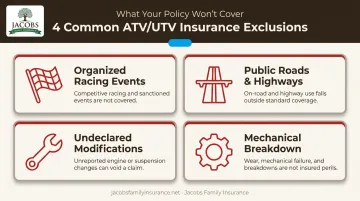
No policy covers everything. Knowing the common exclusions upfront saves you from an unpleasant surprise after a claim.
- Organized racing or competitive events. Recreational and utility riding is covered; sanctioned races and competitions typically are not.
- Public roads and highways. Coverage generally doesn't extend to riding on public streets except for a brief, authorized crossing, and illegal highway operation can void a claim entirely.
- Undeclared aftermarket modifications. Winches, lift kits, and custom exhaust systems may need to be scheduled or declared separately to be covered.
- Mechanical breakdown. Engine failure or wear-and-tear issues fall outside standard liability and physical damage coverage.
Every insurer writes these exclusions a little differently. Before you assume something is or isn't covered, sit down with a Jacobs Family Insurance agent who can walk through the actual policy language for your vehicle.
Is ATV or UTV Insurance Required by Law?
Legal requirements depend heavily on where and how you ride.
New Mexico Rules
- Public land: Every OHV must carry current registration or a recognized permit before hitting public trails
- Private land: New Mexico's Off-Highway Motor Vehicle Act doesn't apply to privately held land, so there's no blanket state insurance mandate for private riding
- Authorized paved roads: Local ordinances or the state transportation commission sometimes permit ATV/UTV use on paved streets. In these cases, the operator needs liability insurance under the Mandatory Financial Responsibility Act, plus a valid license and OHV safety permit
- State parks: New Mexico generally prohibits OHV operation in the state park system, with limited exceptions for disability access and official use
- BLM and national forest land: Riders must register through the appropriate state agency and stick to designated routes. Access rules vary by location, so check with the specific forest or BLM office before heading out
How Other States Compare
| State | Private-land use | Public-road or designated-use trigger |
|---|---|---|
| New Mexico | No general insurance mandate off-highway | Insurance required for authorized paved-road use |
| Utah | Insurance-exempt off public roads | Liability coverage required for street-legal use |
| West Virginia | No blanket off-road mandate | Insurance required in Hatfield-McCoy road areas and for street-legal registration |
Riding out of state? Confirm the destination's specific rules before you load up the trailer, since registration and insurance requirements vary widely.
How Much Does ATV/UTV Insurance Cost and How Can You Save?
Cost varies by rider, vehicle, and coverage level, but industry benchmarks give you a starting point.
Typical Cost Ranges
A recent comparison from ValuePenguin found average premiums of $88 per year for liability-only coverage and $327 per year for full coverage. These figures assume a rider profile with $50,000/$100,000/$25,000 liability limits and a $500 deductible. Treat this as a benchmark, not a New Mexico-specific quote, since your actual rate depends on your vehicle and location.
What Affects Your Premium
- Where you live and store the vehicle
- Your riding and claims history
- Liability limits and deductible you choose
- Whether you've completed a safety course
- Vehicle value, type, and engine size
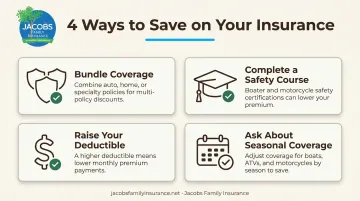
Ways to Save
- Bundle your coverage. Adding ATV insurance to an existing auto or homeowners policy through Jacobs Family Insurance typically triggers multi-line discount savings across your whole portfolio.
- Complete a safety course. Many carriers reward documented rider training; ask your agent if it applies to your policy.
- Raise your deductible. A higher out-of-pocket amount on collision and comprehensive claims can lower your annual premium.
- Ask about seasonal coverage. If you store your ATV part of the year, a seasonal adjustment may reduce costs during off-months.
A local agent who knows New Mexico's terrain and riding conditions can compare these options against your actual usage and recommend where the real savings are.
Choosing the Right ATV/UTV Insurance Policy for Your Needs
Not every rider needs the same policy. Start with how you actually use your vehicle.
- Recreational trail riding usually calls for solid liability limits and medical payments coverage, since you're sharing trails with other riders and unpredictable terrain
- Ranch or utility work often involves hauling, livestock management, and higher-value equipment, which may change your liability exposure and the coverage limits worth carrying
- Combination use riders who split time between trails and ranch chores may need blended limits that cover both recreational risk and equipment value
If you've added a winch, light bar, or other aftermarket gear (common upgrades among New Mexico's ranch and outdoor community), ask specifically about accessory or equipment coverage. Standard policies don't automatically include aftermarket parts.
The most reliable way to land on the right combination of coverage and price is a personalized quote from a local agency that understands New Mexico's regulations and terrain.
Jacobs Family Insurance has served Santa Fe and northern New Mexico for more than a decade and can walk through your specific riding habits before recommending coverage.
Frequently Asked Questions
What does ATV insurance cover?
A standard ATV policy covers bodily injury liability, property damage liability, collision, comprehensive, and often medical payments. Optional add-ons like uninsured motorist protection and accessory coverage can be layered on top.
Is ATV insurance required in New Mexico?
New Mexico doesn't mandate liability insurance for ATVs used solely on private land. However, the state's OHV Act requires proof of insurance for authorized road crossings or use on designated public trail systems, so check local trail rules first.
Should you put insurance on an ATV?
Yes, even where it's not legally required. Without coverage, you're personally on the hook for liability claims, medical bills, and repair or replacement costs after an accident.
Can I ride a quad on a full car license?
On private land, New Mexico's OHV Act generally doesn't require a specific license for adult riders. Authorized paved-road use, though, does require a valid driver's license, an OHV safety permit, and liability insurance.
What's the difference between ATV insurance and UTV insurance?
Coverage types are largely identical between the two. UTVs typically carry higher premiums because of their higher value, passenger capacity, and speed capability.
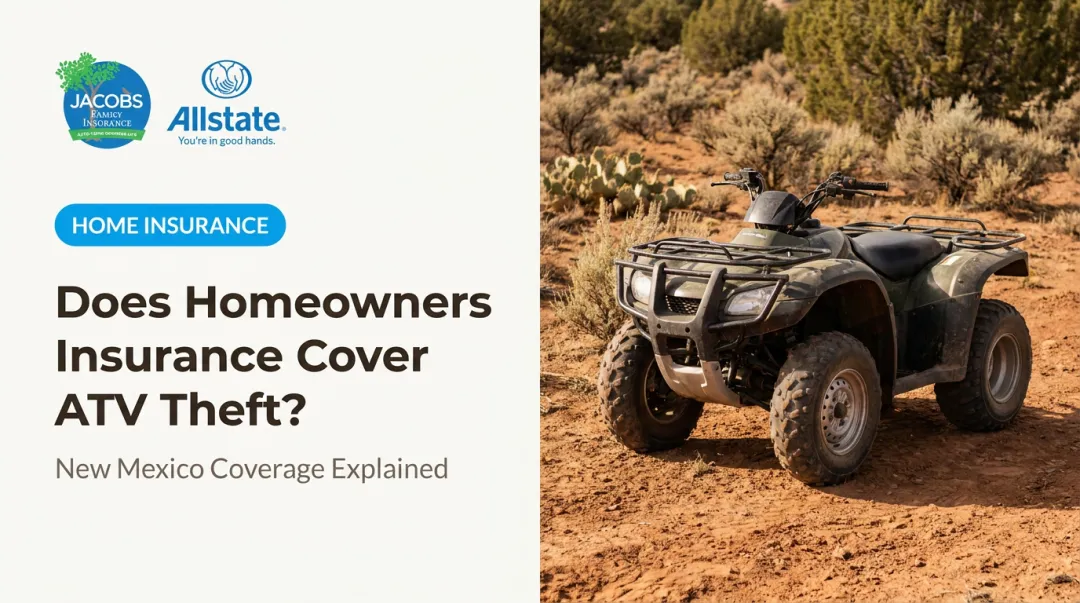
Does homeowners insurance cover ATV or UTV theft?
Some homeowners policies offer very limited theft or fire protection while the vehicle is parked at home, but coverage is often minimal and provides no liability protection while riding. A dedicated ATV policy closes that gap.