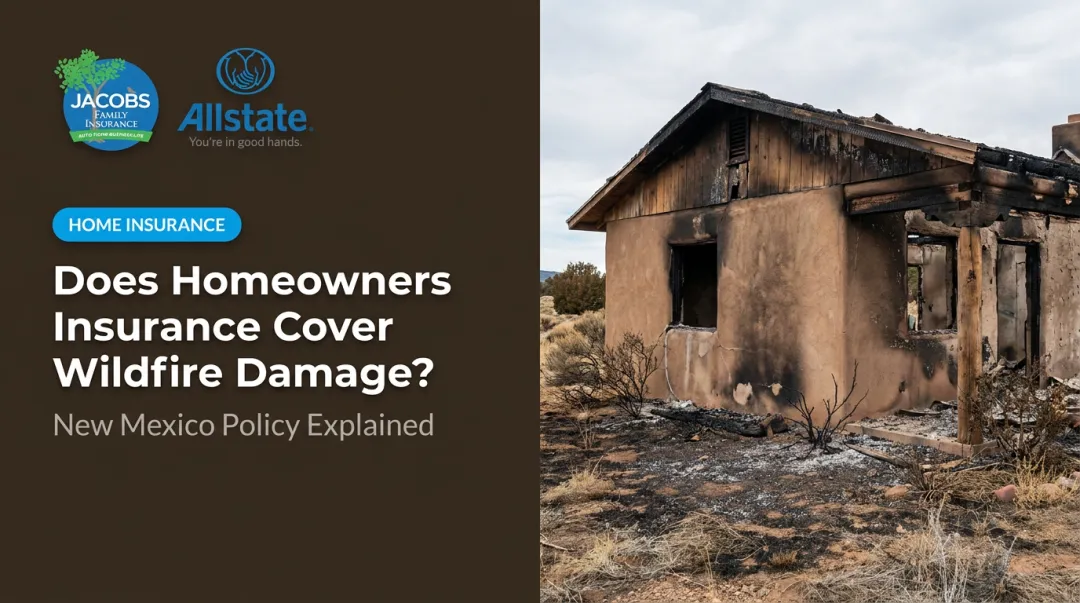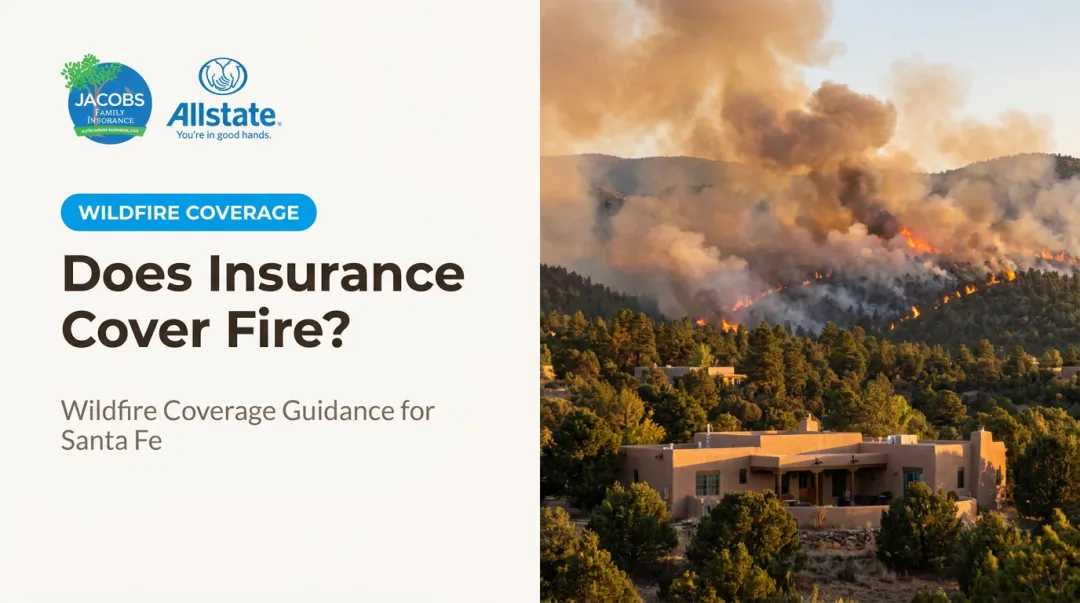
Here's where confusion often creeps in. Many people assume "fire insurance" is its own separate policy they need to shop for. In reality, for most primary residences, fire coverage is already built into your standard homeowners policy. That mix-up causes real problems at claim time, when homeowners discover gaps they didn't know existed.
This guide breaks down exactly what's covered, what's excluded, and how New Mexico homeowners in wildfire-prone areas can close coverage gaps before disaster strikes.
Key Takeaways
- Fire coverage is built into your homeowners policy, not sold separately
- Coverage extends to your dwelling, belongings, structures, and temporary housing
- Exclusions can include arson, nuclear damage, vacancy, and wildfire in high-risk zones
- Replacement cost vs. actual cash value determines your payout after a loss
- Northern New Mexico homeowners should review wildfire coverage annually
What Is Fire Insurance and How Does It Work?
Fire insurance protects property owners from financial loss caused by fire. For the vast majority of homeowners, fire is simply one of the perils already covered inside their homeowners insurance policy, rather than a separate purchase. Some property owners, though, purchase a standalone dwelling fire policy instead.
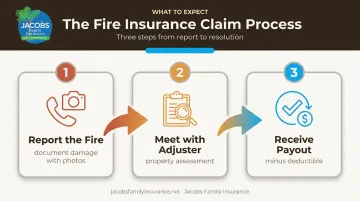
The claims process generally follows the same path:
- Report the fire to your insurer as soon as it's safe, documenting damage with photos before cleanup begins
- Meet with an adjuster, who inspects the property and assesses the extent of structural and content damage
- Receive a payout up to your policy limits, minus your deductible, once the claim is approved
Most homeowners policies run on one-year terms and renew automatically under similar conditions, assuming nothing about your risk profile has changed.
What Causes Most House Fires?
Not every fire starts the same way, and the cause can affect coverage details. According to the U.S. Fire Administration, cooking was responsible for 46.7% of the estimated 343,000 residential building fires in 2024, making it by far the leading cause of house fires nationally. Electrical malfunctions, heating equipment, candles, and smoking materials account for most of the rest, with lightning-related fires making up a smaller share.
Standard fire coverage typically applies whether the fire starts inside the home (a grease fire in the kitchen) or outside it (a wildfire sweeping through dry brush). The source of the blaze, however, can affect how a claim is evaluated.
When Does a Standalone Dwelling Fire Policy Make Sense?
Given how differently claims can be evaluated, some properties are better suited to a standalone dwelling fire policy (sometimes called a DP-1, DP-2, or DP-3) than a standard homeowners policy. It isn't the right fit for everyone, but it fills a real gap for:
- Seasonal or second homes that sit vacant part of the year
- Rental properties where the owner doesn't live on-site
- Rural properties in especially fire-prone areas that don't qualify for standard homeowners coverage
What Does Fire Insurance Cover?
A standard homeowners policy typically bundles four types of protection related to fire loss. Understanding each one matters, because your limits for each can differ significantly.
Dwelling Coverage
This is the core of your policy. Dwelling coverage pays to repair or rebuild the physical structure of your home, including walls, the roof, flooring, and built-in fixtures like cabinetry damaged by fire. It does not cover the land itself.
Most policies use replacement cost value, meaning your insurer pays to rebuild with today's construction costs rather than depreciated value.
Personal Property and Contents
Contents coverage reimburses you for furniture, appliances, clothing, and other belongings lost in the fire. Industry guidance from the Insurance Information Institute puts this limit at roughly 50% to 70% of your dwelling coverage amount. Your actual limit is set on your declarations page and can vary by insurer.
Other Structures
Detached structures on your property are typically covered under a separate "other structures" limit, often set at around 10% of your dwelling coverage. Common examples include:
- Sheds
- Detached garages
- Fences
- Gazebos
If a fire spreads from your home to your garage, this coverage kicks in separately from your dwelling limit.
Additional Living Expenses (Loss of Use)
If your home becomes unlivable after a fire, loss of use coverage pays for hotel stays, temporary rentals, and reasonable extra food costs while repairs are underway. For example, if rebuilding takes six months, this coverage helps cover housing costs for that entire period.
Smoke damage and water damage from firefighting efforts are also generally included under standard fire coverage, not treated as separate claims.
What Isn't Covered by Fire Insurance?
Fire coverage is broad, but it isn't unlimited. Insurers build in specific exclusions, and knowing them ahead of time saves a lot of frustration during a claim.
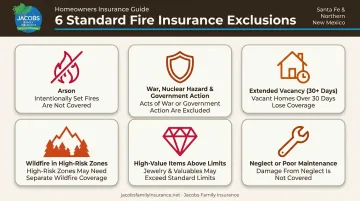
Standard exclusions include:
- Arson: insurers never cover intentionally set fires, and suspicious claims may trigger a formal investigation
- War, nuclear hazards, and government action: nearly every homeowners policy on the market excludes these events
- Extended vacancy: homes left unoccupied for 30+ days often lose fire coverage unless you add a vacant home endorsement
- Wildfire in some high-risk zones: certain standard policies exclude wildfire outright in the highest-risk areas, pushing homeowners toward specialized coverage or a state FAIR plan
- High-value items above policy limits: standard policies usually cap jewelry, fine art, and fur coats at low payout amounts unless you add a scheduled personal property endorsement
- Neglect or poor maintenance: insurers don't treat damage tied to deferred upkeep or normal wear and tear as a covered fire loss
If you own jewelry, firearms, or collectibles worth more than a few thousand dollars, ask your agent about scheduling those items separately. Standard caps rarely cover their true value.
Replacement Cost vs. Actual Cash Value: Which Payout Will You Get?
This distinction determines whether a fire loss sets you back financially or lets you rebuild without a major gap.
Insurance policies typically use one of two payout methods:
| Coverage Type | Payout Basis | Example |
|---|---|---|
| Replacement Cost | Full cost to rebuild with similar materials; no depreciation deducted | A 15-year-old roof is replaced at today's prices |
| Actual Cash Value (ACV) | Depreciated value of your home or belongings; lowers your premium | That same roof pays out well below replacement cost |
The lower ACV premium can leave a significant shortfall after a total loss.
This gap matters more than ever given current construction costs. The National Association of Home Builders reports the average cost to construct a single-family home hit $428,215 in 2024, up from $392,241 just two years earlier. A dwelling limit set even three or four years ago may no longer reflect what it would actually cost to rebuild.
Check your declarations page to confirm which basis applies to your policy, and revisit your dwelling limit periodically as construction costs climb.
Do You Need Extra Fire Coverage in New Mexico?
New Mexico's dry climate, forested foothills, and recurring drought conditions put a lot of communities squarely in wildfire territory. This isn't a hypothetical risk. The National Interagency Fire Center's 2025 annual report recorded 907 wildfires burning 179,388 acres across New Mexico in a single season, split between human-caused and lightning-caused ignitions.
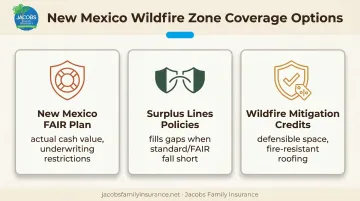
For homeowners in the highest-risk zones, a standard policy may exclude wildfire damage outright. Options at that point include:
- New Mexico's FAIR Plan, a last-resort option for properties denied in the standard market, though coverage is generally limited to actual cash value and comes with underwriting restrictions
- Surplus lines policies, placed through specialty carriers when standard and FAIR Plan options fall short
- Wildfire mitigation credits, discounts some carriers offer for defensible space, fire-resistant roofing, or other risk-reduction upgrades
Neither of these replaces a full replacement-cost homeowners policy, which is why closing gaps before a fire starts matters so much.
This is exactly the kind of review Jacobs Family Insurance handles for clients across Santa Fe and northern New Mexico. As a local, family-owned Allstate Elite Agency, the team checks dwelling limits, confirms whether wildfire coverage applies, and adds endorsements suited to rural and ranch properties.
These endorsements often include ordinance-or-law coverage and extended replacement-cost buffers, backed by personal, neighborly service from agents who know the area.
If it's been a while since anyone looked at your policy, a free coverage review is worth the phone call.
Frequently Asked Questions
What does fire insurance cover?
Fire insurance typically covers your dwelling, personal belongings, other structures like sheds and garages, and additional living expenses if you're displaced during repairs. Smoke and firefighting water damage are usually included too.
What is not covered under fire insurance?
Standard exclusions include arson, war and nuclear damage, homes vacant for 30+ days without an endorsement, and, in some high-risk zones, wildfire damage. Neglect-related damage and normal wear and tear are also excluded.
What is the purpose of a fire insurance policy?
It protects homeowners financially by covering the cost to repair, rebuild, or replace property damaged or destroyed by fire. Without it, homeowners would bear the full cost of rebuilding out of pocket.
Is fire insurance the same as homeowners insurance?
Not exactly. Fire coverage is usually one component within a broader homeowners policy, though standalone dwelling fire policies exist for seasonal homes, rentals, and certain rural properties.
Do I need separate wildfire insurance in New Mexico?
Possibly. Homeowners in high-risk wildfire zones whose standard policy excludes wildfire damage may need supplemental coverage or New Mexico's FAIR Plan to fill the gap.
How much does a typical fire damage claim cost?
Costs vary widely based on the extent of structural damage, home size, and local rebuilding costs, which have risen sharply in recent years. Our agents at Jacobs Family Insurance can help estimate realistic rebuild costs for your specific property.