This mix-up happens constantly. Renters insurance and liability insurance sound like they overlap, but they solve different problems. One protects you. The other mostly protects your landlord. Getting this wrong can mean paying out of pocket for losses you assumed were covered.
The stakes are real: 45% of U.S. renters carry no renters insurance at all, according to a National Apartment Association analysis of MRI Software data. With landlords — especially in student and off-campus housing — increasingly requiring proof of one coverage type or the other, knowing the difference matters more than ever.
Key Takeaways
- One renters policy covers property, liability, and living expenses
- Most renters policies already include liability protection built in
- Liability waiver programs cover the landlord's unit, not your belongings
- Standard liability limits range from $100,000 to $500,000 based on your assets
- A full policy offers more protection per dollar than liability-only coverage
Renters Insurance vs Liability Insurance: Quick Comparison
Here's how the two stack up side by side:
| Factor | Renters Insurance | Liability Insurance/Waiver |
|---|---|---|
| Cost | About $13–$23/month for a policy with $100K liability, per NerdWallet's 2026 rate analysis | Roughly $10–$25/month, commonly $15–$18/month in student housing programs |
| Coverage scope | Personal property, personal liability, loss-of-use | Only damage or injury you cause to others or the unit |
| Who it protects | You — your belongings, finances, and housing situation | Mainly your landlord's property interest |
| Deductible | Applies to personal property claims (often $500–$1,000) | Typically none on liability-only claims |
| Landlord requirement | Usually satisfies lease insurance clauses; you pick the provider | Sometimes auto-enrolled by the landlord if you skip renters insurance |
Liability-only coverage checks a box on your lease. Renters insurance protects what you own.
What Is Renters Insurance?
Renters insurance, sometimes called an HO-4 policy, bundles three protections into one affordable package: your personal belongings, your liability exposure, and temporary housing costs if you're displaced. For New Mexico renters, that matters. Wildfire, high wind, and theft are real risks here, not abstract ones.
Core benefits include:
- Reimbursement for stolen or damaged belongings, from electronics to furniture
- Protection for your savings if someone sues you after an accident in your unit
- Coverage for hotel stays and extra food costs if your rental becomes unlivable after a covered loss
Coverage Limits and Add-Ons
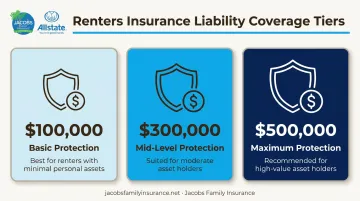
Most policies start with $100,000 in personal liability, with $300,000 and $500,000 tiers available depending on your assets and risk tolerance. Personal property limits typically range from $20,000 to $100,000-plus, and renters with high-value jewelry, art, or collectibles can add scheduled endorsements to cover items beyond standard limits.
This is where working with a local agency helps. At Jacobs Family Insurance, our team reviews each renter's actual belongings and local risk factors before recommending a coverage level, not a generic number.
Use Cases of Renters Insurance
Renters insurance is standard for apartment, condo, and single-family rental leases across the state. It fits young professionals in Albuquerque, students renting off-campus in Santa Fe, and families settling into northern New Mexico communities.
Adoption is climbing but still incomplete. Just 55% of U.S. residents currently carry renters insurance, per NAA/MRI Software research — leaving a substantial share of tenants exposed if a fire, theft, or liability claim hits.
What Is Liability Insurance?
Liability insurance, or a landlord-run liability waiver program, covers claims for property damage or injury you cause to others or to the unit itself. It exists for one purpose: protecting the landlord's building, not your possessions.
What it typically covers:
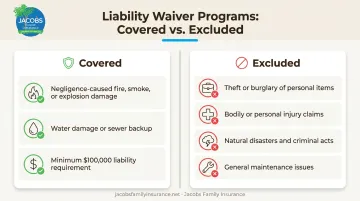
- Negligence-related fire, smoke, or explosion damage to the unit
- Water damage or sewer backup you're responsible for causing
- A minimum liability requirement, often around $100,000, satisfying a lease clause
Where Waiver Programs Show Up
These programs are most common in student and off-campus housing near universities. A typical program costs around $15 per resident/month, provides $100,000 in mandatory liability coverage, and includes up to $1,000 for displacement if the unit becomes uninhabitable.
But read the exclusions carefully. Most waiver programs explicitly exclude:
- Theft and burglary of your personal items
- Bodily injury and personal injury claims
- Natural disasters and criminal acts
- General maintenance issues
Use Cases of Liability Insurance
Given these exclusions, a liability waiver functions mainly as a lease-compliance tool, not a safety net for your belongings. If your bike is stolen from the patio or your laptop is damaged in a break-in, those losses fall entirely on you.
Which Coverage Do You Actually Need?
Deciding between the two comes down to three questions:
- How much do your belongings add up to? If you own more than a few hundred dollars in electronics, furniture, or clothing, a liability waiver won't help you recover any of it.
- What does your lease require? Some landlords accept either option; others mandate a specific minimum liability figure.
- Are you in short-term or student housing with minimal possessions? A waiver might work as a temporary stopgap, but it's rarely a long-term solution.
Here's the practical gap: a renter carrying only a liability waiver who suffers a break-in has no path to reimbursement — waiver programs explicitly exclude theft and burglary. A renter with a standard policy covering personal property, by contrast, can file a claim for those same stolen items, subject to their deductible and limits.
For most people, full renters insurance wins on value. You're paying roughly the same $15–$25/month either way, but one option actually replaces your stuff.
If you're renting in Santa Fe, Albuquerque, or anywhere in northern New Mexico and aren't sure which option fits your lease and budget, Jacobs Family Insurance can help. We'll walk you through both options side by side and find the right liability tier for your situation.
Conclusion
Liability-only coverage leaves your belongings and your temporary housing costs completely unprotected. Renters insurance covers liability and everything else, usually for a comparable monthly cost. The right call depends on what you own and what your lease actually requires.
Getting this right means more than avoiding a denied claim: it protects your savings from a lawsuit, keeps you compliant with your lease terms, and stops you from paying out of pocket for a loss you assumed was covered.
If you're unsure whether your current coverage fits your rental situation, talk to a licensed local agent. Jacobs Family Insurance has served Santa Fe and northern New Mexico renters for more than a decade, and a quick call can confirm you're fully protected.
Frequently Asked Questions
Are personal liability and renters insurance the same?
No. Personal liability coverage is one component inside a standard renters insurance policy, not a standalone or identical product. Renters insurance also covers your belongings and additional living expenses, which liability coverage alone does not.
How much is $100,000 personal liability renters insurance?
Full renters insurance policies with $100,000 liability coverage typically average $13–$23 per month, depending on personal property limits, deductible, and location. Raising the liability limit alone usually adds only a few dollars monthly.
Is personal liability coverage worth it?
Yes. It's a low-cost way to protect against large legal and medical costs. These can add up quickly if someone gets hurt in your rental or you accidentally damage their property. The premium is minor compared to the financial exposure it removes.
What is not covered by personal liability?
Common exclusions include intentional damage, injuries or losses from a home-based business, and injuries to you or members of your own household. It also doesn't cover damage to your own belongings.
Do I need both renters insurance and liability insurance?
Usually not. Most renters insurance policies already include personal liability coverage, so a separate liability-only policy is redundant unless your landlord specifically requires their own waiver program.
Can my landlord require liability insurance instead of renters insurance?
Yes, some landlords, particularly in student housing, offer a liability waiver as an accepted alternative to renters insurance. It satisfies the lease requirement, but it won't protect your personal belongings if they're stolen or damaged.