 in 2026](https://file-host.link/website/jacobsfamilyinsurance-eaq1pw/assets/blog-images/e16441fd-9e82-4b46-ba9e-989b1256c5ab/1785262584549115_eb3606604072489f8a515468c8599445/360.webp)
Many renters still skip coverage, assuming it's an unnecessary expense or that their landlord's policy has them covered. It doesn't, and that gap becomes painfully clear the moment a fire, theft, or lawsuit actually happens.
This article breaks down five concrete, practical reasons you need renters insurance in 2026, not just the usual "peace of mind" talk.
Key Takeaways
- Renters insurance covers your belongings after theft, fire, or water damage your landlord won't cover
- Liability coverage protects you if a guest is hurt or you damage another's property
- Many New Mexico landlords now require proof of coverage before you sign a lease
- Coverage typically costs less than $15 a month for most renters
- Loss-of-use benefits pay for hotels and meals if your rental becomes unlivable
What Is Renters Insurance, Exactly?
Renters insurance is a policy that covers three key areas if something goes wrong in your rental:
- Personal belongings damaged by fire, theft, or similar events
- Liability costs if someone is injured or you accidentally damage another unit
- Additional living expenses like temporary housing if your rental becomes uninhabitable
It's completely separate from your landlord's building insurance, which only protects the structure itself.
It doesn't matter whether you're renting an apartment in downtown Santa Fe, a house in Española, or a room in a shared condo. The coverage applies the same way, and it can often be bundled with your auto policy for extra savings.
Despite these savings, renters insurance isn't legally required in most states, including New Mexico. It's increasingly expected, though, and often required, by landlords and property managers as a standard condition of leasing.
Why These 5 Reasons Matter Right Now
These aren't abstract benefits pulled from an insurance brochure. They reflect what's actually happening in 2026: rising replacement costs, stricter lease terms, more frequent extreme weather, and liability exposure that keeps growing every year.
1. More Landlords Are Requiring Proof of Coverage
Landlords are no longer treating renters insurance as optional. It's becoming a standard lease requirement, especially in larger apartment complexes and for tenants with pets.
Among insured renters, 75% reported that their landlord required them to carry coverage, according to a National Apartment Association report citing 2022 industry survey data. That's a strong signal of where the rental market is heading.
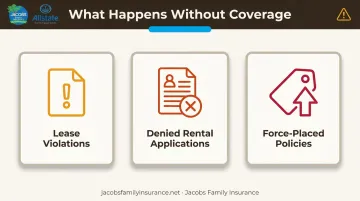
Skipping this requirement carries real consequences:
- Lease violations that can jeopardize your tenancy
- Denied rental applications before you even move in
- Force-placed policies arranged by the landlord, which typically cost more and cover less than a policy you choose yourself
A tenant-selected policy through a local agency almost always beats a force-placed one on both price and coverage. You control your limits, and you can bundle with auto insurance for additional savings that a landlord-arranged policy simply won't offer.
2. Your Belongings Aren't Covered by Your Landlord's Policy
Here's the misconception that trips up most renters: the building's insurance policy protects the structure, not what's inside your unit. If a pipe bursts or a fire breaks out, your landlord's insurer pays to fix the walls and floors. Your laptop, television, and furniture are your responsibility.
A standard renters policy protects against named perils, including:
- Fire and smoke damage
- Theft and vandalism
- Water damage from burst pipes or plumbing failures
- Lightning and explosion
Through Jacobs Family Insurance's standard HO-4 renters policy, personal property coverage typically ranges from $20,000 to $100,000+, scaled to what you actually own. If you've got high-value electronics, jewelry, or collectibles, that upper range matters.
There's also a choice to make between actual cash value (which factors in depreciation) and replacement cost coverage (which pays to replace items new). That decision affects both your payout after a claim and your monthly premium, so it's worth discussing with an agent before you pick a policy.
3. You Get Liability Coverage for Injuries and Accidental Damage
This is the reason most renters underestimate until they need it. Liability coverage steps in when someone else gets hurt in your rental, or when you accidentally damage someone else's property.
Think about scenarios like:
- A guest slips and gets injured at a party in your apartment
- Your dog bites a visitor
- A kitchen fire spreads and damages the unit next door
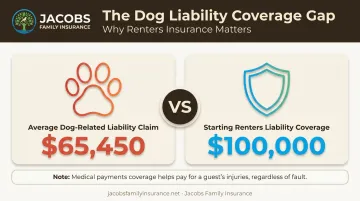
Dog-related injury claims alone averaged $65,450 per claim in 2025, with total industry payouts reaching $1.86 billion, according to Triple-I data reported with State Farm. While that figure spans all homeowners and renters liability claims broadly, it shows just how expensive a single incident can get without coverage backing you up.
A standard renters policy through Jacobs Family Insurance includes personal liability coverage starting at $100,000, with the option to raise that limit through an endorsement. It also includes medical payments coverage for guests injured on the premises, regardless of fault, which matters more than ever as medical and legal costs keep climbing.
4. It Covers Additional Living Expenses If You're Displaced
If a covered event, like a fire or serious water damage, makes your rental unlivable, someone has to pay for where you sleep in the meantime. That's where loss-of-use coverage comes in.
This benefit typically pays for:
- Hotel or temporary housing costs
- Additional meal expenses above your normal food budget
- Other reasonable costs tied directly to displacement
U.S. lodging prices rose 4.9% over the twelve months ending June 2026, according to U.S. Bureau of Labor Statistics inflation data. That's a meaningful jump when you're suddenly paying for a hotel room out of pocket, on top of still owing rent on a unit you can't live in. Without loss-of-use coverage, those costs land entirely on you.
5. It's Surprisingly Affordable Protection
Most renters underestimate one thing: coverage is cheap. NerdWallet's 2026 rate analysis puts the national average at $151 per year, roughly $13 a month, and $168 per year, about $14 a month, here in New Mexico.
That's less than most people spend on a single streaming subscription or two coffee runs a month.
A few factors that can move your premium:
| Factor | Effect on Premium |
|---|---|
| Recent theft claim | Increases cost |
| Poor credit history | Raises premium substantially |
| Replacement-cost coverage vs. actual cash value | Slightly higher cost, better payout |
| Higher deductible | Lowers monthly premium |
| Higher personal property limit | Increases premium |
Bundling your renters policy with an auto policy through a local agency typically produces a multi-line discount that offsets much of the renters premium on its own. It's often the easiest savings you'll find in your insurance budget.
What Happens If You Skip Renters Insurance
Going without coverage means you're personally on the hook for every dollar of loss. Recent survey data suggests roughly 45% to 50% of renters don't carry coverage, based on separate 2023 surveys from NAA and Zillow.
Without a policy in place:
- You pay full replacement cost for stolen or destroyed belongings out of pocket
- Lawsuit and medical costs land directly on you if someone gets injured in your rental with no liability backup
- You risk lease violations or application denials if your landlord requires proof of insurance you don't have
None of these risks are hypothetical; they're the exact scenarios a $13-a-month policy is built to prevent.
How to Get the Right Coverage for 2026
Getting properly covered starts with knowing what you actually own and how much it would cost to replace.
- Build a home inventory - Take photos, keep receipts, and note serial numbers for anything valuable. This determines the coverage limit you actually need.
- Choose your valuation method - Decide between actual cash value and replacement cost coverage, since it affects both your premium and your payout.
- Talk to a local agent - A licensed agent can tailor your coverage to your specific belongings and rental situation, not a generic online estimate.
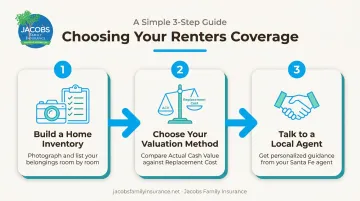
Jacobs Family Insurance, a Santa Fe-based Allstate Elite agency serving northern New Mexico, offers free renters insurance quotes with personal-property inventory guidance included before you sign up. A local agent will help you nail down the right valuation method and coverage limits for your specific belongings.
Final Thoughts
Renters insurance in 2026 has become essential protection against real financial risks tenants face today, including landlord mandates, rising replacement costs, and liability exposure that keeps growing year over year.
Its value compounds over time. A single uncovered incident, whether it's a break-in, a kitchen fire, or a guest injury, can cost far more than years of premiums combined.
Review your coverage needs annually, and reach out to Jacobs Family Insurance for guidance built around your actual situation, not a one-size-fits-all quote.
Frequently Asked Questions
What are the benefits of renters insurance?
Renters insurance offers three core protections:
- Covers your personal belongings against theft, fire, and water damage
- Provides liability coverage for injuries or accidental damage to others
- Pays additional living expenses if your rental becomes temporarily uninhabitable
Is renters insurance required by landlords?
It's not legally mandated in most states, including New Mexico. However, many landlords and property managers now require it as a standard lease condition, especially in larger complexes.
How much does renters insurance cost in 2026?
National averages run about $13 a month, with New Mexico averaging closer to $14 a month. Your actual rate depends on coverage limits, deductible, credit history, and claims history.
What doesn't renters insurance cover?
Standard policies typically exclude floods, earthquakes, and pest infestations like bed bugs. These require separate coverage or endorsements, so ask your agent about specific exclusions.
Does renters insurance cover my roommate's belongings?
Generally, no. Roommates need their own separate policy unless they're specifically named on the same policy as an insured party.
How much renters insurance coverage do I need?
Start with a home inventory listing your belongings and their approximate value. A local agent can help you match that inventory to an appropriate coverage limit, often between $20,000 and $100,000 or more.