Most homeowners assume "fire" is simply covered, full stop. The truth is more layered. Yes, most standard homeowners, auto, and business insurance policies cover fire damage — but coverage limits, exclusions, and Northern New Mexico's growing wildfire risk all affect what you actually get paid.
This guide breaks down what's included, what's excluded, how a fire claim affects your premium, and how Jacobs Family Insurance helps Santa Fe-area residents confirm their coverage actually matches their risk.
Key Takeaways
- Fire is a named peril, covered by most homeowners, renters, auto, and business policies.
- Coverage includes dwelling, belongings, living expenses, and liability, though sub-limits and depreciation affect your payout.
- Arson, neglect, vacant properties, and certain wildfire zones can restrict or void coverage.
- Filing a fire claim can raise your premium, so regular policy reviews matter.
How Standard Homeowners Insurance Covers Fire Damage
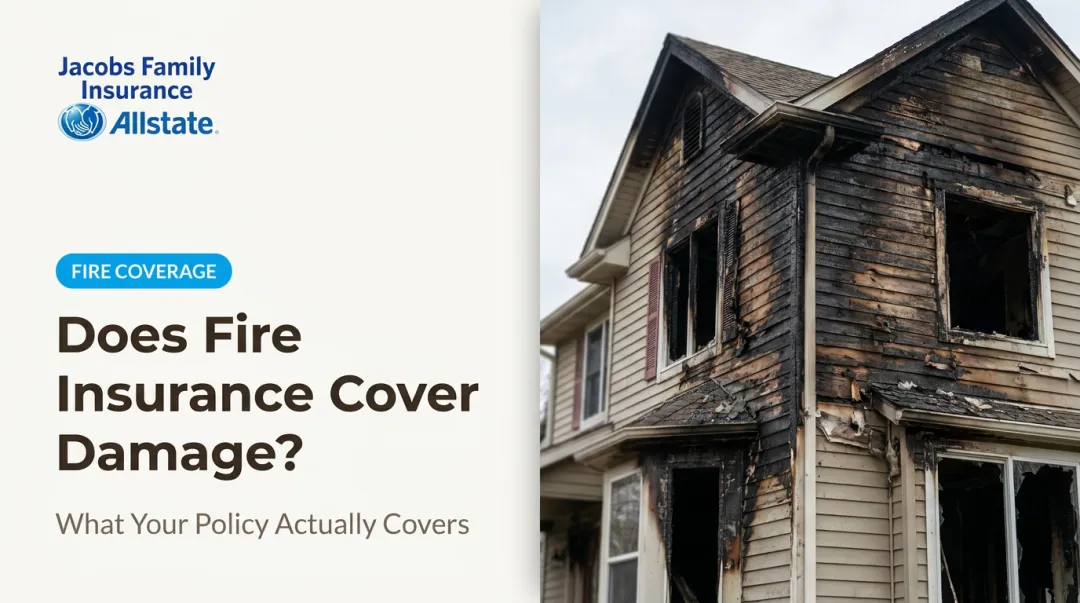
Fire and lightning rank among the most common perils in a standard HO-3 policy. This includes accidental causes like electrical faults, cooking mishaps, faulty heating equipment, and lightning strikes, plus the smoke damage that often accompanies them.
In 2024 alone, NFPA estimates there were 329,500 home structure fires in the U.S., causing $11.4 billion in direct property damage, according to NFPA's fire loss research. These numbers reflect a real, ongoing risk that every homeowner insures against.
Dwelling and Other Structures Coverage
Your policy typically splits property coverage into two buckets:
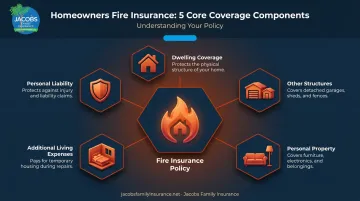
- Dwelling coverage pays to rebuild or repair the home's structure, including walls, roof, and built-in fixtures.
- Other structures coverage (usually about 10% of your dwelling limit) covers detached garages, sheds, and fences.
If you have a large detached garage or a barn on a rural property, that 10% default might not be enough. Worth confirming before a fire ever happens.
Personal Property Coverage
Furniture, clothing, and electronics are covered up to your policy's personal property limit. Where things get tricky is high-value items:
- Jewelry, fine art, and collectibles typically fall under low sub-limits (sometimes just a few thousand dollars total).
- Firearms and antiques carry similar per-item caps, often surprising owners after a loss.
- A scheduled personal property endorsement removes that cap and insures specific items at their appraised value.
Jacobs Family Insurance has helped Santa Fe clients schedule everything from heirloom jewelry to art collections, since standard limits rarely reflect what these pieces are actually worth.
Fire coverage extends beyond the structure and belongings, too. If a fire makes your home unlivable, additional living expenses (ALE) coverage reimburses hotel stays, meals, and related costs while you're displaced. Separately, personal liability coverage protects you if a fire that started on your property spreads and damages a neighbor's home or injures someone.
Replacement Cost vs. Actual Cash Value
This distinction can make or break your recovery after a fire:
| Coverage Type | How It Pays | Premium | Best For |
|---|---|---|---|
| Replacement Cost (RCV) | Full cost to rebuild/replace, no depreciation deducted | Higher | Homeowners wanting full protection |
| Actual Cash Value (ACV) | Replacement cost minus depreciation | Lower | Budget-conscious owners, older structures |
For New Mexico properties facing rising construction costs and wildfire exposure, an agent at Jacobs Family Insurance can walk through which option, and which endorsements like extended replacement cost, actually fits your rebuild scenario.
Beyond the Home: Fire Coverage for Vehicles, Renters, and Businesses
Beyond the Home: Fire Coverage for Vehicles, Businesses, and Renters
Fire risk doesn't stop at your front door. Coverage looks different depending on what's burning.
Vehicles:
- Fire damage to your car is only covered if you carry comprehensive coverage — an optional add-on.
- Liability-only policies pay for damage you cause to others, not fire damage to your own vehicle.
Businesses:
- A Business Owner's Policy (BOP) typically covers fire damage to the building, equipment, and inventory.
- Business interruption coverage replaces lost income and extra operating costs while you're closed for repairs or rebuilding.
Renters:
- Renters insurance covers your belongings and ALE (Additional Living Expenses) after a fire.
- It does not cover the building itself ; that's the landlord's responsibility under their own property policy.
Whether you're insuring a truck, a small shop on the Plaza, or a rental apartment, fire coverage only applies to what your specific policy names.
What Type of Fire Is Typically Not Covered by Insurance?
Not every fire loss gets paid. Insurers draw firm lines around a handful of scenarios:
- Arson or intentional acts: fires deliberately set by the policyholder are universally excluded.
- Neglect or poor maintenance: an uncleaned chimney or a known faulty space heater left unaddressed typically leads to a denied claim.
- Vacant or unoccupied homes: properties left empty for an extended stretch may lose fire coverage unless a vacant-property endorsement is added.
- War and nuclear-related damage: standard exclusions found in nearly every homeowners policy.
Wildfire: A Special Case for Northern New Mexico
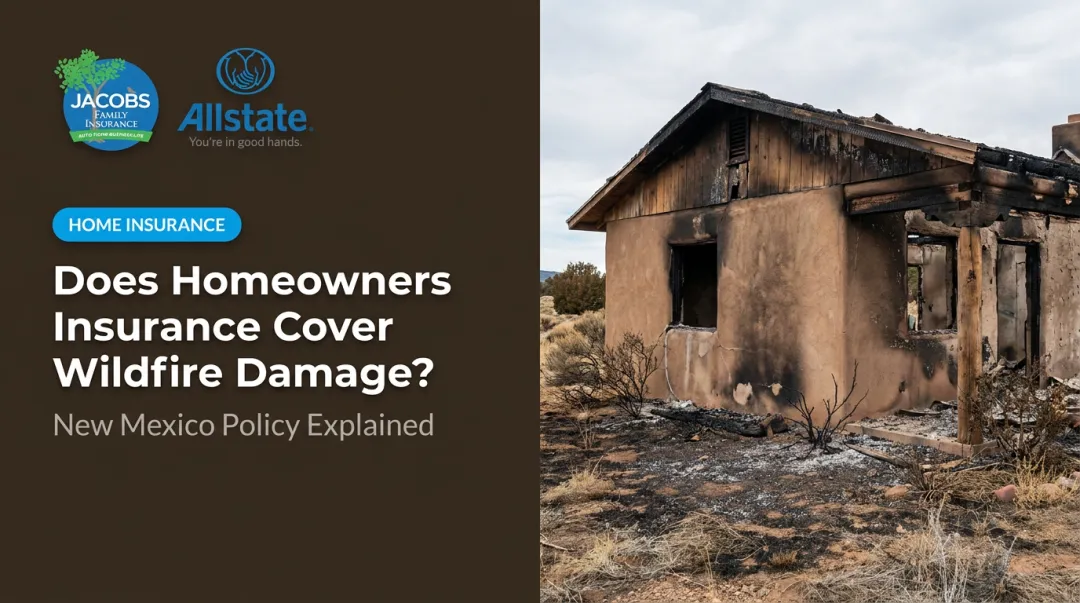
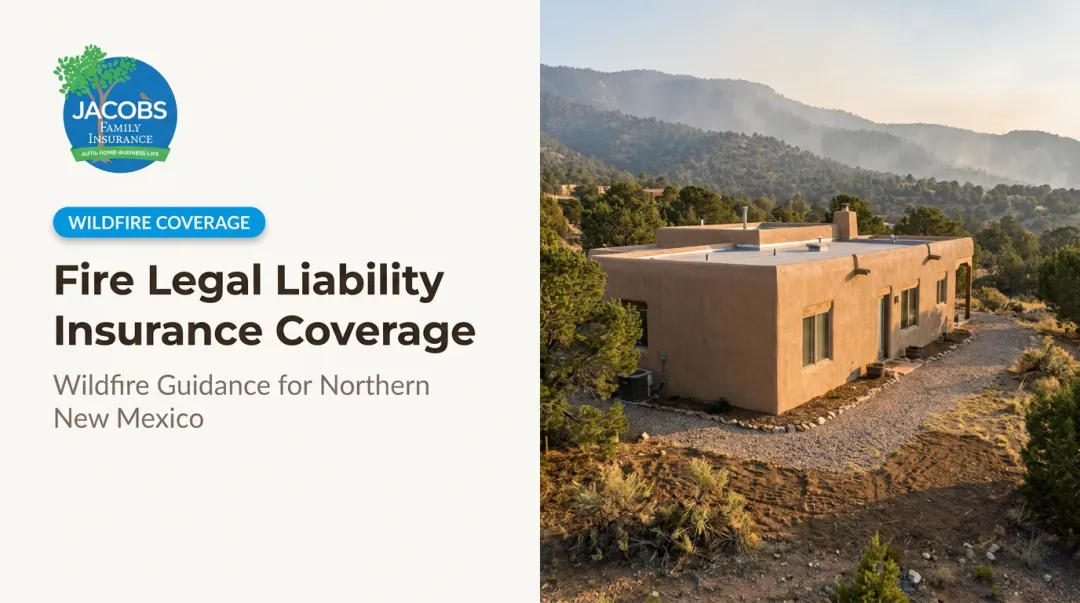
Wildfire generally falls under the fire peril in a standard policy, but high-risk zones complicate things. Some insurers limit or exclude wildfire coverage entirely in the most exposed areas, pushing homeowners toward a separate endorsement or the state's residual market.
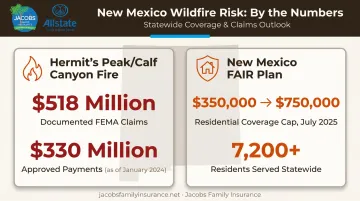
This isn't a hypothetical risk. The Hermit's Peak/Calf Canyon fire, the largest wildfire in New Mexico's recorded history, destroyed hundreds of homes and displaced thousands of residents. As of January 2024, FEMA reported $518 million in documented claims and $330 million in approved payments through the federal compensation program tied to that disaster.
New Mexico's FAIR Plan exists precisely for homeowners in high-risk areas who can't secure standard coverage. Its residential maximum jumped from $350,000 to $750,000 in July 2025, and it now serves more than 7,200 residents statewide.
If you live in Santa Fe, Los Alamos, or Taos, a policy review with a local agent shows whether you're actually protected before the next fire season, not after.
Will Your Homeowners Insurance Go Up After a Fire Claim?
Filing a fire claim, especially a large one, commonly leads to a premium increase at your next renewal. According to the NAIC's consumer guide to home insurance, your claims history, including past fire, water, and theft claims, is one of the factors insurers weigh when setting your price.
How much your premium rises depends on:
- Claim severity: a total-loss fire affects pricing more than a small kitchen mishap.
- Your insurer's underwriting guidelines: these vary company to company.
- Your overall claims history: a first claim in ten years is treated differently than a repeat pattern.
Ways to offset a potential increase:
- Install fire-safety devices like monitored smoke detectors, which may qualify for discounts.
- Bundle your home and auto policies under one carrier.
- Compare quotes with a local agent rather than assuming your current rate is competitive.
A quick call to Jacobs Family Insurance can clarify what discounts and bundling options apply to your specific situation before renewal notices arrive.
Filing a Fire Insurance Claim and Preventing Future Damage
The moments right after a fire matter, both for safety and for your claim.
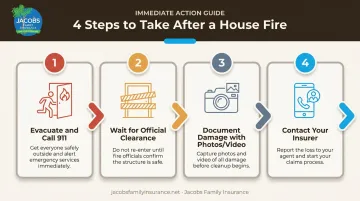
Immediate steps:
- Get everyone out safely and call emergency services.
- Don't return inside until officials confirm it's safe.
- Document damage with photos and video before cleanup begins.
- Contact your insurer promptly to start the claims process.
Prevention measures that reduce risk (and sometimes your premium):
- Install functioning smoke alarms on every level of the home.
- Keep charged fire extinguishers accessible in the kitchen and garage.
- Schedule routine electrical and heating equipment inspections.
- Maintain defensible space around rural or ranch properties to slow wildfire embers.
Smoke alarms matter more than most people realize. Between 2018 and 2022, alarms were present in 74% of reported home fires, and NFPA's research on smoke alarms shows the death rate per 1,000 home fires was roughly 60% lower where a working alarm was present.
For Northern New Mexico properties, defensible space guidelines call for clearing dead vegetation within 5 feet of the structure and keeping tree canopies 10 feet away in the 5-30 foot zone. Trees beyond that point should be spaced appropriately out to 100 feet.
Many of these upgrades double as discount opportunities, so bring them up with your Jacobs Family Insurance agent at your next policy review.
Frequently Asked Questions
Is it worth it to have fire insurance?
Fire remains one of the leading causes of catastrophic home loss, and rebuilding costs after a total loss can run into hundreds of thousands of dollars. For nearly all homeowners, adequate fire coverage is worth the premium.
Which type of fire is typically not covered by insurance?
Intentionally set fires (arson) and damage stemming from clear neglect or poor maintenance are the most commonly excluded types of fire loss. Vacant properties without the right endorsement face similar gaps.
Will my homeowners insurance go up after a fire?
Often, yes. A fire claim frequently results in a premium increase at renewal, with the exact amount depending on claim size, your insurer's guidelines, and your broader claims history.
Does homeowners insurance cover wildfires?
Most standard policies cover wildfire damage under the fire peril. However, homes in designated high-risk zones, like parts of Northern New Mexico, may face restrictions, higher premiums, or the need for a separate endorsement.
Does auto insurance cover fire damage to my car?
Only if you carry comprehensive coverage. Liability-only policies never pay for fire damage to your own vehicle, regardless of what caused the fire.
What should I do immediately after a house fire for insurance purposes?
Prioritize safety first, then document all damage with photos and video before any cleanup. Contact your insurance agent as soon as possible to begin the claims process.
Fire coverage comes down to specific terms and endorsements that must match your actual property and risk.
If you're in Santa Fe, Los Alamos, Taos, or anywhere across Northern New Mexico, Jacobs Family Insurance offers a free wildfire coverage review to check for gaps before fire season tests your policy.
Call (505) 557-2067 or stop by 1547 South St. Francis Drive to talk with a local agent, not a call center.