
This scenario plays out across Santa Fe, Taos ski communities, and Rio Rancho more often than owners expect. Your association's master policy handles the building's bones. Everything inside your unit's walls? That's typically your responsibility.
HO-6 insurance is the policy that fills that gap. It covers your unit's interior, your belongings, and your liability when the master policy stops short.
This guide breaks down what HO-6 covers, what it excludes, how it stacks up against HO-3 and your association's master policy, and what's changing for condo owners heading into 2026.
Key Takeaways
- HO-6 covers your interior, belongings, liability, and loss of use — not the exterior or common areas.
- Your HOA's master policy type (bare walls, single entity, or all-in) determines your dwelling coverage needs.
- 2026's tighter reserve-funding and inspection laws raise your loss assessment risk.
- Lenders often require HO-6, and paid-off owners should keep it to protect their investment.
What Is Condo (HO-6) Insurance?
HO-6 is a homeowners insurance policy form built specifically for condominium and co-op unit owners. It's different from HO-3 (designed for single-family homes) and HO-4 (renters insurance), each matching a distinct ownership situation.
Condo ownership splits responsibility into two layers: the association insures the building shell, roof, and common areas through a master policy, while you insure your unit's interior and everything inside it through HO-6.
This split exists because you don't own the building: you own a defined space inside it, plus a share of common property. Your policy needs to reflect that.
HO-6 isn't limited to traditional condos, either. Townhomes, rowhomes, and subdivisions governed by condo-style HOA bylaws often fall under this same coverage structure. If your community has a master policy and bylaws dictating shared responsibility, HO-6 likely applies to you regardless of what the building looks like.
Why HO-6 Matters More in 2026
Condo buildings are aging, and regulators are responding. Since 2021, industry advocacy has helped push reserve-funding and structural-inspection laws through 39 states and Washington, D.C., according to the Community Associations Institute.
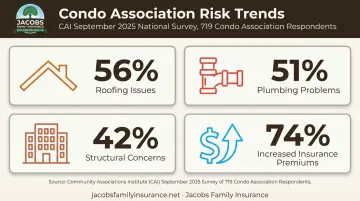
The pressure is showing up in survey data, too. In CAI's September 2025 snap survey of 719 respondents:
- 56% reported significant roofing issues
- 51% reported plumbing problems
- 42% flagged structural concerns
- 74% saw increased insurance premiums
More inspections and stricter reserve rules mean associations are finding, and having to fund, expensive repairs they might have deferred in years past. When reserves fall short, special assessments follow. That's exactly where your HO-6 loss assessment coverage becomes critical. Getting that limit right takes local knowledge of how nearby associations are funding repairs.
Jacobs Family Insurance, a local Allstate Elite agency, works with condo owners across Santa Fe and northern New Mexico to make sure HO-6 policies keep pace with these shifting risks, reviewing coverage limits as building age and association funding realities change.
What Does HO-6 Insurance Cover?
A standard HO-6 policy covers several distinct areas, each addressing a different type of exposure you face as a unit owner.
Dwelling/unit coverage pays to repair or rebuild the interior of your unit after a covered peril, such as drywall, flooring, cabinets, or built-in fixtures. If a windstorm cracks a window or a fire damages your kitchen, this is the coverage that responds.
Personal property coverage reimburses you for belongings damaged, destroyed, or stolen, including furniture, electronics, and clothing, up to your policy limit. Most owners underestimate this number until they actually inventory their possessions.
Personal liability and medical payments cover legal costs and injury claims if a guest gets hurt in your unit, or if you're found responsible for damage to someone else's property.
Loss of use / additional living expenses pay for temporary housing, meals, and related costs if your unit becomes unlivable during covered repairs.
Loss assessment coverage helps cover your share when the association levies a special assessment for damage exceeding master policy limits. This is worth watching closely:
- Standard included limits are often just $1,000 to $2,000
- Higher limits are available in some cases, but availability and pricing vary by carrier, so confirm specifics with your agent rather than assuming a number
Perils Typically Covered
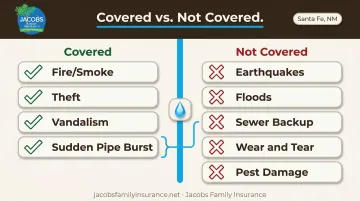
Most HO-6 policies protect against these named perils:
- Fire and smoke
- Lightning
- Windstorm and hail
- Explosions
- Vandalism
- Theft
- Weight of ice, snow, or sleet
What's Not Covered by an HO-6 Policy?
Standard HO-6 policies exclude several categories of risk, and knowing these gaps matters just as much as knowing what's included.
Natural disasters requiring separate coverage:
- Earthquakes
- Floods
- Other regional catastrophic events, depending on location
These generally require a standalone policy or endorsement; they're not bundled into a standard HO-6 form.
Other common exclusions:
- Routine wear and tear
- Pest or rodent damage
- Gradual deterioration
- Intentional injuries you cause to others
Water damage nuance: A pipe that suddenly bursts inside your unit is typically covered. A sewer backup or underground water intrusion usually isn't — that requires a separate water backup endorsement. It's a distinction that trips up a lot of owners after the fact, so it's worth asking your agent directly whether your policy includes this add-on.
HO-6 vs. HO-3 vs. the Master Policy: Knowing Where Your Coverage Starts
HO-3 policies insure the entire structure of a single-family home, including walls, roof, and foundation. HO-6 policies only cover your unit's interior and contents, because the building itself is a shared asset governed by your HOA.
That means your HO-6 coverage needs depend heavily on what your association's master policy already includes.
Three Master Policy Types
| Master Policy Type | What It Covers | Your HO-6 Responsibility |
|---|---|---|
| Bare walls | Structure to unfinished shell only | Broadest: you insure all finishes, fixtures, cabinets, flooring |
| Single entity | Shell plus original built-in fixtures | Moderate — you cover upgrades and items beyond original build |
| All-in | Shell, fixtures, and sometimes cabinets/flooring | Narrower dwelling need, but liability, contents, and assessments remain yours |
Regardless of type, the master policy typically handles common areas, building exterior, and shared amenities like pools or elevators. HO-6 handles your unit's interior, belongings, and valuables.
Before choosing coverage limits, request a copy of your association's master policy and bylaws. Coverage gaps are common, and guessing at limits leaves you exposed.
New Mexico condo and townhome communities, from Santa Fe to the Taos ski areas to Rio Rancho, often use different master policy structures even within the same region. A personalized review from Jacobs Family Insurance, rather than a generic online calculator, is the better move here.
How Much Does HO-6 Insurance Cost and How Much Coverage Do You Need in 2026?
Condo insurance premiums vary based on:
- Location and regional risk exposure
- Coverage limits selected
- Deductible amount
- Claims history
- Building age and condition
Nationally, NerdWallet's 2026 modeled average sits around $510 per year, or roughly $43 per month, based on a two-bedroom unit with a $1,000 deductible, $70,000 dwelling coverage, $50,000 personal property, and $300,000 liability. Your actual premium will differ based on your specific unit and location.
Setting Your Coverage Limits
- Personal property: Base this on an actual home inventory, not a guess. Walk through your unit and tally real replacement values.
- Liability: Start at $100,000 minimum; consider an umbrella policy if you have significant assets to protect.
- Loss of use: Align this with your dwelling and personal property limits combined. Ask your agent for a figure suited to your unit, since no universal formula applies.
Averages are a starting point, not a plan. A personalized quote accounts for your unit's actual value, your HOA's master policy structure, and your specific risk profile.
Jacobs Family Insurance, a local Allstate Elite agency serving Santa Fe and northern New Mexico, reviews your HOA's master policy alongside your HO-6 needs. The agency helps set limits that match your exposure, with competitive pricing and no call-center runaround.

Frequently Asked Questions
What is HO-6 condo insurance?
HO-6 is the individual policy condo owners need to cover their unit's interior, personal belongings, and liability. It works separately from, but alongside, your association's master policy.
What perils does HO-6 condo insurance cover?
Common covered perils include fire, theft, windstorm, vandalism, and burst pipes. Flood and earthquake damage require separate coverage or endorsements.
What is the difference between HO-3 and HO-6 condo insurance?
HO-3 covers an entire single-family home structure, including the exterior and roof. HO-6 covers only your condo unit's interior and contents, since the building itself is insured through your HOA's master policy.
How do new state laws affect HO-6 condo insurance in 2026?
States like Florida now require post-Surfside structural inspections and reserve funding starting January 1, 2026, often raising association costs and assessment exposure. This trend makes HO-6 loss assessment coverage increasingly valuable for condo owners everywhere, including New Mexico.
Is HO-6 condo insurance required in 2026?
Mortgage lenders typically require it when the master policy doesn't cover unit interiors, and many HOAs mandate it regardless of financing. Even paid-off owners should carry it to protect their investment.
How much does HO-6 insurance cost in New Mexico in 2026?
Costs depend on your unit's value, location, and chosen coverage limits. For accurate New Mexico pricing, get a personalized quote from a local agent like Jacobs Family Insurance rather than relying on national averages.