
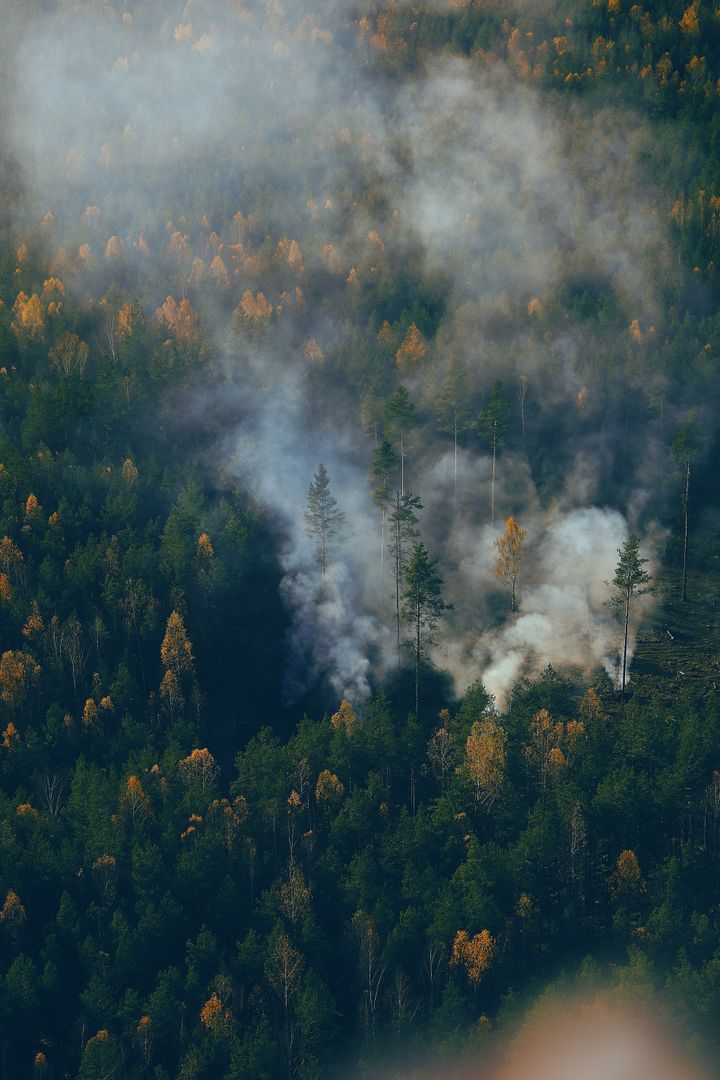
Wildfire Hazard Mitigation and the 45-Day Inspection
This is the question we answer more than any other, at seminars, at homeowner meetings, and on the phone: my policy is bound, so why is an inspector taking pictures of my property, and what happens if I don't do the work? Here is the whole process in plain language, plus exactly how to protect your home before fire season.
Two Different Things People Confuse
Almost every misunderstanding we untangle comes down to mixing up wildfire mitigation with the insurance company's inspection. They are related, but they are not the same thing, and only one of them can cost you your policy.
Hazard mitigation is the work
The physical work you do on your property to make it survivable in a wildfire: defensible space, trimming, clearing debris, hardening the building itself. Anyone can start today, and it is the single most effective thing a homeowner in the wildland-urban interface can do.
Jump to the mitigation guidanceThe inspection is the enforcement
After your policy is bound, the carrier sends an inspector to photograph the property. If they document hazards, correcting them becomes a condition of keeping the policy, with a deadline. This is where homeowners get caught off guard.
Jump to the 45-day processWhat Happens in the First 45 Days
Binding a policy is not the end of underwriting, it is the beginning. Most carriers reserve an inspection window of roughly the first 45 days after a new home policy is bound to physically look at the property they just agreed to insure. Here is how it plays out.
Your policy is bound
Coverage starts. You are insured from day one, and nothing about this step is conditional. But underwriting has not finished its work yet, and that surprises people.
The inspection window opens
The carrier orders an inspection, typically within the first 45 days. For an exterior inspection you usually do not need to be home, and you may not get much notice.
An inspector photographs hazards
They walk the property and take pictures of anything that raises wildfire risk. Photographs, not opinions, are what go back to underwriting, so what the camera sees is what counts.
You complete the required work
You receive a list of conditions to correct. Clear the brush, trim the limbs, move the woodpile off the deck, clean the roof and gutters, screen the vents. The work is on you, not the carrier.
You send proof, and the file closes
Photograph the finished work and send it in before the deadline. Once underwriting accepts it, the requirement is cleared and your policy carries on normally.
If the Work Isn't Done, the Policy Can Be Terminated
This is the part we most want Santa Fe homeowners to hear, because it is the part nobody expects. When underwriting identifies wildfire hazards and gives you a deadline to correct them, completing that work is a condition of keeping your insurance. It is not a suggestion, a courtesy notice, or a recommendation you can file away.
If the mitigation is not completed and documented within the window you were given, the carrier can decline to continue the policy. Depending on the timing and the carrier, that means cancellation or non-renewal, and the practical result is the same: you are unwinding coverage on your home while your mortgage servicer is asking why.
Getting replacement coverage afterward is harder, not easier. You are now a homeowner with a lapse or a cancellation on record, shopping in a market that has grown far more selective about wildfire-exposed property in Northern New Mexico. The hazards that triggered the notice are still there, and the next carrier will want them fixed too, often before they will quote at all.
What this means in practice
- Open the mail. An inspection notice looks like routine paperwork and is not. Read it the day it arrives.
- Note the deadline, not just the list. The date matters as much as the work. If the timeline is genuinely not achievable, say so early, while there is still room to ask.
- Document everything. Before-and-after photographs of each corrected item are what close the file.
- Call us the moment it lands. We read these notices constantly. We will tell you what the inspector actually wants, in what order to tackle it, and what proof underwriting will accept.
Inspection windows, required corrections, and deadlines vary by carrier, by policy, and by how exposed your specific property is. The 45-day window described here is the common pattern, not a universal rule. Your notice governs, and we will go through yours with you line by line.
The Fire Department Advises. The Insurer Requires.
Homeowners often assume the fire department is the one making them do the work, or that a free fire-department assessment satisfies their insurance company. Neither is true, and understanding why makes the whole process much less confusing.
| Fire department & land agencies | Your insurance company | |
|---|---|---|
| What they give you | The rules, guidelines, and best practices, plus free home assessments and community wildfire programs like Ready, Set, Go! | A specific list of conditions on your property that must be corrected, drawn from an inspector's photographs. |
| Can they make you do the work? | No. On private property they advise and educate. They generally have no authority to compel a homeowner to clear brush or harden a house. | Effectively yes. Not by force, but by making the work a condition of the policy they are willing to keep writing. |
| What happens if you ignore them | Nothing formal. Your risk goes up, and so does your neighborhood's, but no one issues a penalty. | The policy can be cancelled or non-renewed, which puts your coverage and often your mortgage compliance at risk. |
| Why they care | Public safety, firefighter safety, and defending the community as a whole during an active fire. | Underwriting exposure. They have agreed to pay to rebuild your home and want the odds of that improved. |
| Does their sign-off satisfy the other? | A fire-department assessment is excellent guidance and strong preparation, but it is not proof for underwriting. | Underwriting wants its own listed items corrected and documented. Send proof to the carrier, not the fire department. |
So who is actually in charge of your defensible space?
You are. The fire department tells you what good looks like and will often walk your property for free to show you. Your insurance company decides whether what you have done is good enough to keep insuring, and it is the only one of the two with real leverage over you.
That is not a criticism of either. The guidelines exist because they work, and carriers lean on them because post-fire studies keep pointing at the same handful of fixes. The practical takeaway is simply this: do the work on the fire department's guidance, and document it for your insurer.
Read Santa Fe County's Ready, Set, Go! Guide
Defensible Space: Work Outward in Three Zones
Defensible space is the buffer you create between your house and everything that can burn around it. Santa Fe County's Ready, Set, Go! program organizes it into three zones measured outward from the structure. Aim for at least 100 feet of treated space, and more if you are on a slope or in a severe hazard area.
Zone 1 — 0 to 30 feet
The most important 30 feet you own. This is the ember-catching zone, and it should be the leanest.
- Keep the first five feet around the foundation non-combustible: gravel, stone, or bare soil rather than bark mulch
- Remove all dead plants, dry grass, needles, and leaf litter, including from the roof and gutters
- Move woodpiles, propane tanks, and stored lumber well away from the house and from sheds and barns
- Clear anything flammable out from under decks, porches, and stairs
- Trim limbs back so nothing overhangs the roof or chimney
- Keep plantings low, green, and well spaced, and water them through fire season
Zone 2 — 30 to 100 feet
The zone that slows a fire down and lowers the heat reaching your walls and windows.
- Thin trees and shrubs so crowns are separated rather than touching in a continuous canopy
- Break up ladder fuels — the low branches and brush that let a grass fire climb into the treetops
- Prune the lower limbs of mature trees up off the ground
- Mow dry grass and weeds low, and do it in the cool of the morning rather than in afternoon heat and wind
- Keep the ground clear of accumulated slash, deadfall, and piles of cuttings
- Space plantings farther apart as the slope gets steeper — fire moves uphill fast
Zone 3 — 100 to 200 feet
The wider landscape, and the zone most homeowners skip. On acreage it matters a great deal.
- Continue thinning to a healthier, more open stand of trees rather than dense thicket
- Remove dead and dying trees, which burn fast and throw embers
- Keep trees well clear of power lines, and report any that are not
- Look past your property line — a neighbor's untreated slope or yard affects your risk directly
- Keep driveways and access roads clear and wide enough for a fire engine to get in and turn around
- Make sure your address is visible from the road in non-combustible numbers
Adapted from Santa Fe County Emergency Management's Ready, Set, Go! wildland fire action guide. Zone widths are a starting point — steep terrain and heavy fuels call for more.
Hardening the House Itself
Most homes lost to wildfire are not overrun by a wall of flame. They are ignited by wind-driven embers that arrive well ahead of the fire and find a way in. Hardening means closing those openings and replacing the parts of the building that catch most easily.
Roof
The most vulnerable part of the house. Use a Class A fire-rated covering, keep it swept clear of needles and leaves, and close any gaps at the edges and ridge where embers lodge.
Vents
Attic, crawlspace, and soffit vents are a direct path for embers into the structure. Screen them with fine metal mesh, or fit ember-resistant vents.
Eaves
Open eaves trap rising embers and heat. Box them in with non-combustible material so there is no pocket for embers to collect in.
Siding
Wood boards, shingles, and vinyl are combustible. Non-combustible stucco, brick, masonry, or cement board is far better, and it needs to run all the way from foundation to roofline.
Windows
Glass fails from radiant heat before flames ever arrive, and once it does the fire is inside. Multi-pane or tempered glass buys real time; single-pane is the weak point.
Decks
Build with heavy timber or non-combustible material, and keep the space underneath swept clear. A deck stacked with firewood is a fire set against your wall.
Chimney
Fit a spark arrestor of approved metal mesh so your own chimney cannot throw embers into the trees, and so wildfire embers cannot come down it.
Gutters
Screen or enclose them. An open gutter full of dry needles is one of the most reliable ways to start a roof fire from a single ember.
Fencing
A wood fence running up to the house is a fuse. Use non-combustible fencing, or at minimum break the connection where it meets the structure.
Garage
Weather-strip the door so embers cannot blow under it, keep a fire extinguisher inside, and store flammable liquids and paints away from the interior wall it shares with the house.
Water
Keep garden hoses long enough to reach every side of the house and any outbuilding. If you have a well or a pool, a pump makes that water usable when the power is out.
Access
A fire engine has to reach you. Keep the driveway clear and wide with room to turn around, keep gates operable, and post your address in reflective non-combustible numbers visible from the road.
Wildfire Is Not a Side Specialty Here
We are a family owned Allstate Elite agency in Santa Fe, and wildfire is the risk that defines property insurance in Northern New Mexico. We have spent years walking homeowners through mitigation notices, inspection deadlines, and the coverage questions that follow.
We live in the risk
Santa Fe, Eldorado, Tesuque, Los Alamos, Pojoaque, Taos. We know which neighborhoods underwriting scrutinizes and why.
We teach this in person
Seminars and homeowner meetings across the county, because the inspection process is the question we get asked most.
We handle the paperwork side
We translate the notice, prioritize the list, and tell you what documentation underwriting will actually accept.
Mitigation and coverage together
Hardening the house lowers the odds. The right policy limits handle the rest. We work both sides of the same job.
Related Coverage
Hazard Mitigation & Inspection FAQs
The questions we field at every seminar and homeowner meeting.